DWD shortwave listeners
If you want to receive the DWD spoken-word broadcast directly, choose your radio based on its frequencies and broadcast times. The German Weather Service lists 5905 and 6180 kHz for its technical test broadcasts.


Choose a radio to suit the broadcast you want to hear. To receive the DWD spoken-word broadcast directly, you’ll need an AM shortwave radio that covers 5905 and 6180 kHz. For the marine weather forecast on NDR Info Spezial, DAB+ is an option if you can receive the station at your desk. An FM radio alone isn’t a reliable choice for either of these reception methods.
If you want to receive the DWD spoken-word broadcast directly, choose your radio based on its frequencies and broadcast times. The German Weather Service lists 5905 and 6180 kHz for its technical test broadcasts.
If you want to listen to the marine weather forecast on NDR Info Spezial at your desk, a DAB+ radio is an option. Check indoor reception at your location and search specifically for NDR Info Spezial.
If you’d like to use headphones or a built-in speaker while you work, consider connections, controls and the space available, as well as the reception method you need. These features are listed by the relevant device manufacturer, among others.
A good fit if: You want to listen to the DWD spoken-word broadcast independently of NDR programmes. The DWD lists 5905 and 6180 kHz, along with set broadcast times in UTC.
Bear in mind: The radio must cover AM shortwave at both frequencies; reception at your particular desk isn’t guaranteed.
A good fit if: You want to listen to the NDR marine weather forecast and can receive NDR Info Spezial in your home office. Norddeutscher Rundfunk lists the programme as a DAB+ service.
Bear in mind: DAB+ doesn’t receive the DWD shortwave frequencies listed above, and a coverage prediction is no substitute for testing reception where you plan to use the radio.
A good fit if: You’ve confirmed that the marine weather programme you want is broadcast on an FM station you can receive at work.
Bear in mind: FM alone covers neither DWD shortwave nor DAB+ reception of NDR Info Spezial.
The German Weather Service lists 5905 and 6180 kHz for its shortwave spoken-word broadcast, while Norddeutscher Rundfunk broadcasts NDR Info Spezial via DAB+. The Digitalradio Büro Deutschland provides a location-based coverage prediction for DAB+.
| Buying criteria | What to check | Who it matters most to |
|---|---|---|
| DWD shortwave | Check that the AM shortwave range covers 5905 and 6180 kHz and that the tuning is sufficiently precise. | If I want to listen to the DWD spoken-word broadcast directly, these two frequencies are my top priority. Around 36% of consumers prioritise direct DWD reception. |
| NDR Info Spezial | Check the indoor coverage prediction for your location, then search specifically for NDR Info Spezial once you’ve set up the radio. | If I want to listen to the NDR marine weather forecast, being able to receive this particular programme in my home office is essential. Around 29% of consumers prioritise NDR Info Spezial via DAB+. |
| Listening at your desk | Check the headphone socket, speaker, volume controls and dimensions of the specific model. | If I want to listen quietly or through headphones while I work, I look for a suitable listening option and easy-to-use controls at my desk. Around 21% of consumers prioritise comfortable, uninterrupted listening. |
| Power supply | Check the battery or rechargeable battery type, charging options and included accessories. Compare battery-life figures only for the same operating mode. | If I want to move the radio between my desk and other locations, how it’s powered and charged matters to me. Around 14% of consumers prioritise flexible power options. |
AM can also refer to medium wave. The Sony ICF-P37’s stated medium-wave range ends at 1710 kHz, while the DWD lists 5905 and 6180 kHz.
Check the shortwave range of the specific model and make sure it covers both DWD frequencies.
A radio without the right reception range would need to be replaced or supplemented with a suitable model for direct DWD reception.
According to Norddeutscher Rundfunk, the marine weather forecast is broadcast on NDR Info Spezial. An FM frequency for NDR Info doesn’t mean that NDR Info Spezial is available on that frequency too.
Check the programme name and the intended reception method separately.
The coverage prediction distinguishes between locations and indoor reception, and conditions where you actually set up the radio may differ.
Check the prediction for your postcode and, if possible, test the radio where you plan to use it.
Charging-port details vary between Tecsun PL-330 product versions, so the charging accessories you need may vary too.
Before buying, confirm the connection type and what’s included with the specific version on offer.
If suitable charging accessories aren’t included, you may need to buy them separately.
The PL-330 is a compact multi-band receiver with shortwave and direct frequency entry. Tecsun’s published frequency range of 1711 to 29999 kHz includes both frequencies listed by the German Weather Service.
According to Sangean, the ATS-405 offers AM, FM and continuous shortwave reception from 2.3 to 26.10 MHz, a range that includes 5905 and 6180 kHz.
According to TechniSat, the DIGITRADIO 1 is a portable DAB+/FM radio with a built-in rechargeable battery and power supply. It’s suited to the DAB+ route for NDR Info Spezial, not DWD shortwave reception.
The Sony ICF-P37 is designed for straightforward FM and medium-wave reception, not direct DWD shortwave reception.
This selection includes radios and a compact stereo system with DAB+ for listening to NDR. Alongside portable models, there’s also a device for a permanent spot on your desk.
 No image available
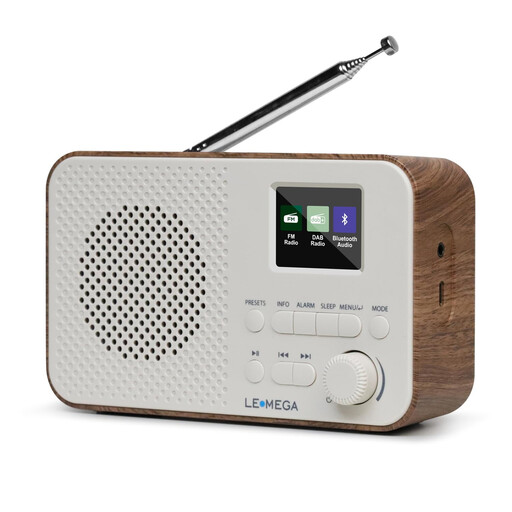
For listening to NDR Info Spezial via DAB+; the headphone socket lets you listen privately at your desk.
Features listed include a 2200 mAh rechargeable battery, USB-C charging, Bluetooth, an LCD display and 40 station presets. This variant is listed in walnut.
 No image available
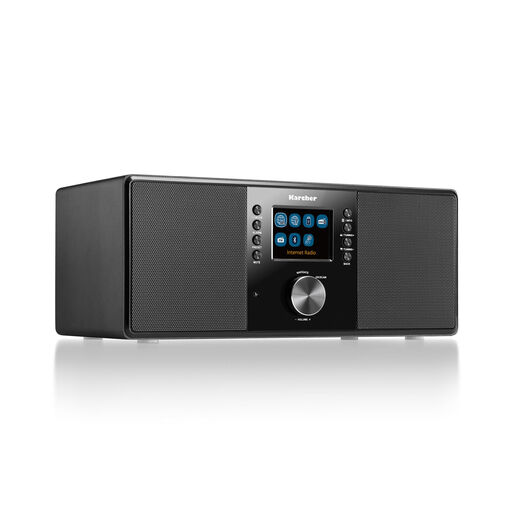
For listening to NDR Info Spezial via DAB+ at your desk; product details also list a headphone socket.
Features listed include Wi-Fi, Bluetooth, DAB+, FM, a 2.4-inch colour display and 14 W. The device is described as an internet radio.
 No image available
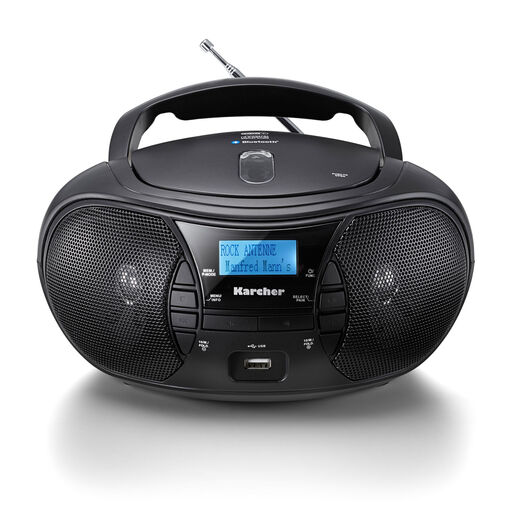
A portable DAB+ option for listening to NDR; a headphone socket is also listed.
Features listed include a CD player, Bluetooth, USB, MP3 playback, and mains and battery power. According to the product description, battery operation requires six C batteries, which are sold separately.
 No image available
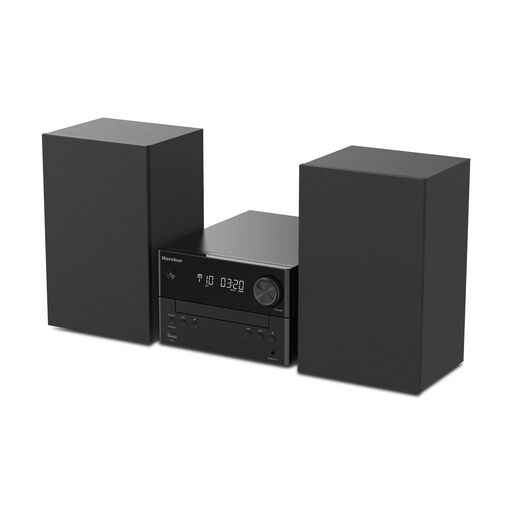
For listening to NDR Info Spezial via DAB+ in a fixed spot; this is a compact stereo system, not a pocket radio.
Features listed include a CD player, Bluetooth, USB, FM and DAB+. The product description lists speakers with 20 W RMS.
For the North Sea, Baltic Sea and German coastal areas, the German Weather Service currently lists 06:00–06:30, 12:00–12:30 and 20:00–20:15 UTC. Convert UTC to your local time for the day you’re listening, and check the latest schedule, as the DWD describes the spoken-word broadcast as a technical test service.
First, check DAB+ coverage at your location and run a station scan. Then select NDR Info Spezial specifically. On 14 April 2026, Norddeutscher Rundfunk announced changes to DAB+ reception for NDR Info and recommended that many devices run a new scan. NDR Info and NDR Info Spezial are different programme names.
Yes. Norddeutscher Rundfunk also offers the DWD marine weather forecast for the North Sea and Baltic Sea as a podcast. You’ll need an internet connection, making it an alternative to listening live on a portable radio.
According to ARD ZDF Deutschlandradio Beitragsservice, the broadcasting fee is generally charged per home, not per reception device. The Beitragsservice says there’s no additional fee for a self-employed or freelance business premises within a private home that’s already registered, but the business premises must be registered. Different rules apply to separate business premises.