
Lieferung heute & morgen

Qualitätsgarantie

Willkommens-Angebote freischalten: KOSTENLOSE Lieferung | Bis zu 80 % RABATT | Kostenlose 30-Tage-JoyPlus-Testphase
App herunterladen
A marker pen set can vary considerably depending on how it is going to be used. Fine lines and flexible brush pens are important for bullet journalling, while pupils and office users often need a practical highlighter set. For drawing, on the other hand, the colour selection, nib shape and ink base are key.
Many disappointing purchases are not caused by too few colours, but by unsuitable product features. A set with lots of colours is of little use if the nibs do not suit your preferred style or if the ink bleeds through the paper you are using.
A large number of markers may sound appealing at first. However, what matters is whether the colours suit your project. A set with 120 shades may be useful for illustrations, while four clearly distinguishable colours are enough for making notes. An unbalanced palette containing many similar shades is also less flexible than a smaller, well-coordinated selection.
A classic fibre-tip pen with a firm nib is suitable for creating even lines and areas of colour. A dual-tip marker, on the other hand, combines two applications, such as a fine nib for details and a brush nib for variable line widths. Brush pens are designed for hand lettering, shading and calligraphic strokes, but they require controlled pressure.
Water-based markers can sometimes be blended or worked with water, depending on the formulation. This can be useful for watercolour effects, but it also increases the risk of smudging. Alcohol markers usually dry quickly and are suitable for layering and creating transitions, but they can bleed through paper more readily and require good ventilation. Permanent markers often adhere to a range of surfaces, but they are not suitable for every project or type of clothing.
First, check whether water-based, alcohol or permanent ink is suitable for your intended use:
Descriptions such as ‘washable’, ‘waterproof’ or ‘lightfast’ relate to the individual product description and should not automatically be applied to every surface. Lightfastness is also important for artwork. For school supplies, the recommended age, the risk of swallowing caps and information about the ink are more important.
For precise technical drawings or labelling, a fineliner set with graduated line widths is a good choice. The specified sizes for the Ohuhu fineliner pens range from 0.05 to 1.0 mm; a brush nib is also included.
Depending on the angle, a chisel nib can create narrow and broad strokes. This is useful for a highlighter set: the STAEDTLER Textsurfer is described as having a soft chisel nib of approximately 1 to 5 mm. A flexible brush nib, on the other hand, allows you to vary the line width by applying different levels of pressure. For hand lettering pens, the nib should retain its shape and allow you to create both fine upstrokes and broader downstrokes with control.
Markers often dry out if the cap is not put back on fully. A sturdy box, case or folder makes it easier to organise colours and protects the nibs. With larger sets, a colour chart can be helpful, as the colour of the cap does not always exactly match the result on paper.
Also look for replacement nibs, horizontal storage where recommended by the manufacturer, and clear colour coding. Children should not use small caps or replacement parts without supervision.
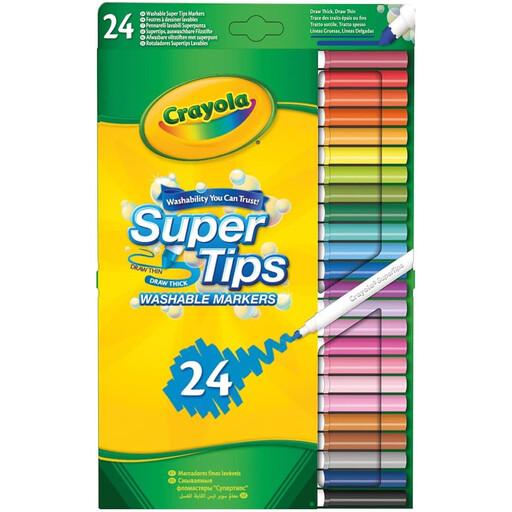
Why this product suits this profile: According to the product information, this 24-piece set is intended for children aged around 4 and over, as well as creative school and leisure projects. The nib can create different lines depending on the angle at which it is held.
The stated washable ink is suited to typical family use. Nevertheless, fabrics and surfaces should be protected.
24 colours, a wide range of uses for drawing and writing, plus ink that can be removed from skin and clothing according to the product description.
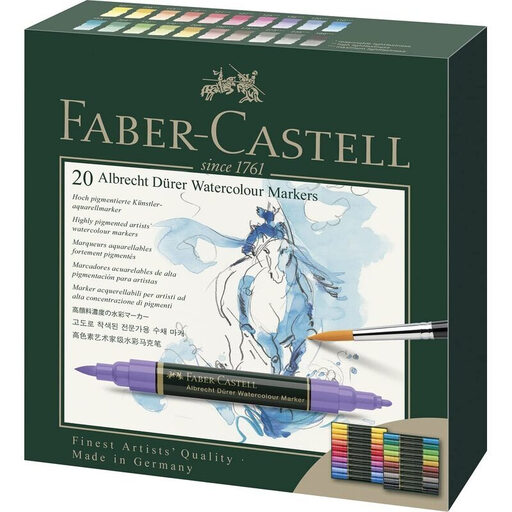
Why this product suits this profile: According to the product data, the 20 artists’ markers combine a soft brush nib with a sturdy fibre-tip nib. The water-soluble, pigmented ink is designed for creating watercolour effects on watercolour paper.
The clearly stated ink base prevents confusion with permanent markers. Suitable watercolour paper is required for water-based techniques.
20 colours, two nibs per marker, a case and, according to the product description, high lightfastness and no bleed-through on paper.
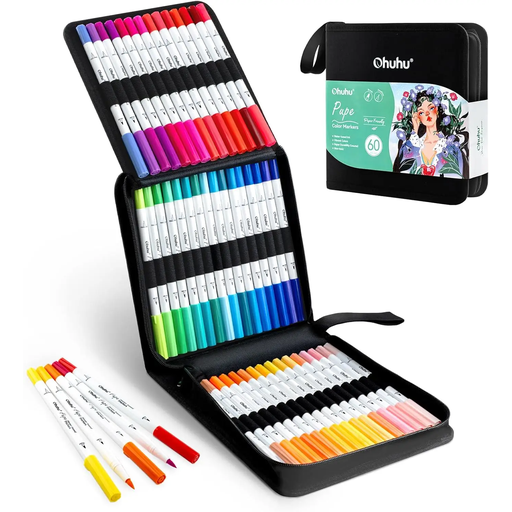
Why this product suits this profile: The set contains 59 shades and one colourless blender. A 0.4-mm fineliner nib and a flexible 1 to 5 mm brush nib cover writing, colouring and hand lettering.
The two clearly specified nibs reduce the need for separate fineliners and brush pens. A colour chart is included for testing colours.
60 pens, a storage case, water-based ink and, according to the product description, ASTM-D-4236 certification.
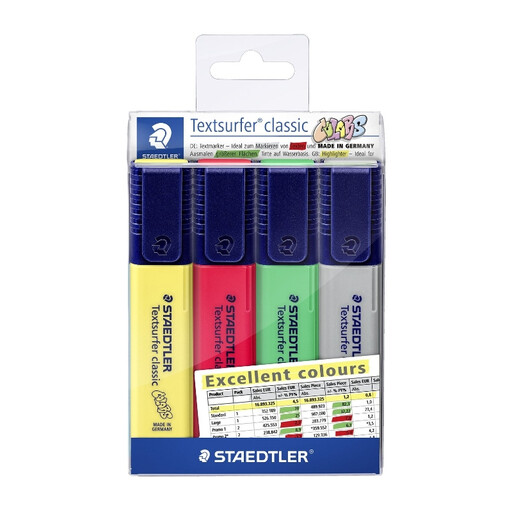
Why this product suits this profile: The 4-colour set is designed for highlighting and underlining on paper. The chisel nib is specified as approximately 1 to 5 mm.
The limited colour selection focuses on the core task of highlighting text rather than promising an unnecessarily wide range of drawing colours.
Water-based, quick-drying ink, a large ink reservoir and a twistable protective cap according to the product information.
We have put together a complete, regularly updated list of products that fully meet these strict selection criteria and the safety regulations applicable in the EU.
Brush pens with a flexible brush nib are suitable for hand lettering. An additional fine nib makes outlines, small letters and details easier. For lettering that is permanently waterproof, consider a product with permanent pigment ink; for watercolour effects, water-based watercolour markers are a better choice.
How long they last depends on the amount of ink, pressure applied to the nib, paper and cap. Caps should be replaced firmly immediately after use. Horizontal storage is recommended for some pigmented products. If you use markers frequently, replacement nibs or a set with a larger ink reservoir can help reduce ongoing costs.
No marker is completely resistant to bleed-through on every type of paper. Water-based fibre-tip pens will usually bleed through thin copier paper less than alcohol markers, while absorbent paper spreads the ink more readily. Test new markers for drawing on an inconspicuous area first and, if necessary, place a protective sheet beneath the page you are working on.