
Lieferung heute & morgen

Qualitätsgarantie

Willkommens-Angebote freischalten: KOSTENLOSE Lieferung | Bis zu 80 % RABATT | Kostenlose 30-Tage-JoyPlus-Testphase
App herunterladen
Marker pens are among the most versatile products in stationery and art supplies. They can be used to label paper, plastic, glass, metal and wood, support presentations and, depending on the design, are also suitable for garden labels. However, this wide range of uses can make choosing the right marker surprisingly difficult.
Three common buying misconceptions particularly often lead to the wrong purchase:
The tip determines how precisely and visibly you can write:
When choosing dual-tip markers, check whether both ends really are designed for different tasks. For example, a combination of a 0.4 mm fineliner and a 1 to 6 mm brush tip covers both detailed work and broad areas of colour.
The type of ink should suit both the surface and the level of durability you need:
“Smudge-proof” and “waterproof” are not the same thing. A marker may resist light contact once dry, but its performance can deteriorate after prolonged exposure to moisture or cleaning products.
Before buying, check whether the marker is intended for porous or smooth surfaces. Paper, card and untreated wood absorb ink differently from glass or plastic. For presentation markers, it is also important that the ink does not bleed through flipchart paper.
A large marker set is not automatically more economical. The key questions are:
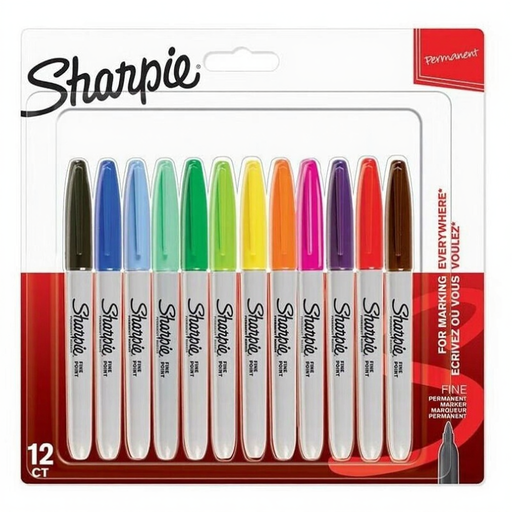
Why this product suits this profile: The set of 12 offers several colours and a fine tip for labelling, creative projects and everyday use.
The product description specifies a fine 0.5 mm tip and quick-drying, water-resistant ink. This makes the line width and ink type clearer than with unspecified sets.
12 shades, a fine metal tip and suitability for paper, plastic, metal and wood according to the product details.
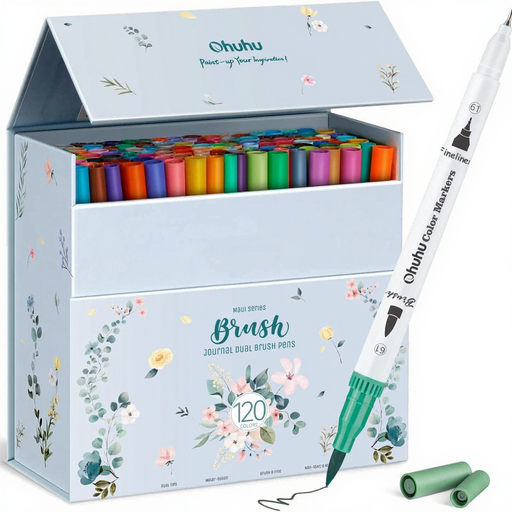
Why this product suits this profile: For drawing, colouring, hand lettering and illustrations, you get 120 numbered colours with two types of tip.
The tips are clearly specified as 0.4 mm for details and 1 to 6 mm for brush strokes. The water-based ink should be used on suitable, heavier paper.
Two tips per pen, 120 shades, a storage case and replacement tips according to the product description.
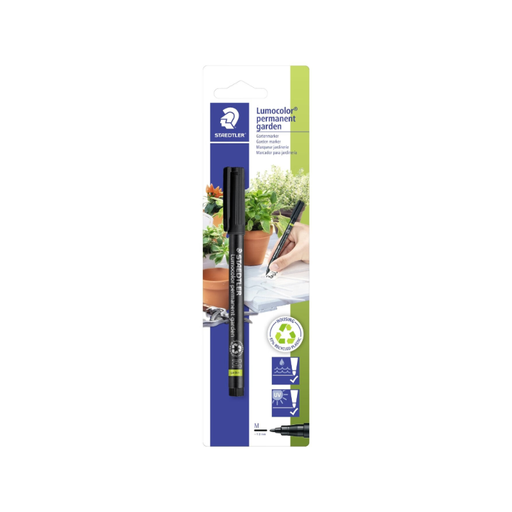
Why this product suits this profile: For gardeners and DIY enthusiasts, this marker is designed for permanent outdoor labelling, for example on plant labels, wood, metal, glass or stone.
The product details explicitly state that it contains weather- and light-resistant black ink and has a 1.0 mm tip. This sets it apart from standard water-soluble markers.
Weather- and light-resistant ink, a medium round tip and suitability for various outdoor materials according to the product description.
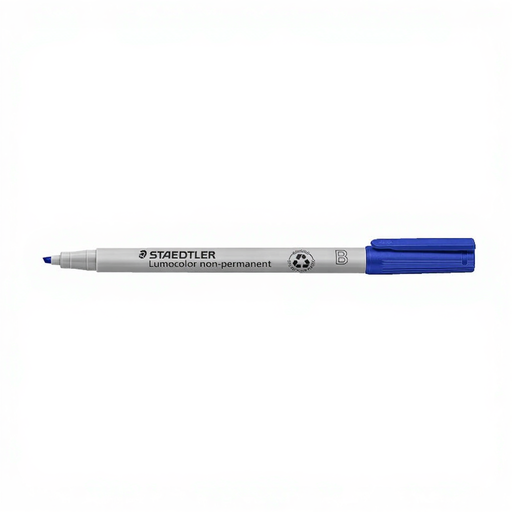
Why this product suits this profile: The 1.0 to 2.5 mm chisel tip supports variable lines for overhead transparencies, glass, plastic and presentation surfaces.
The water-soluble ink is intended for smooth surfaces and can be removed there with a damp cloth. On paper or other absorbent materials, however, it may remain permanently visible.
Variable line width, quick-drying ink and the option to refill it with the STAEDTLER refill station according to the product details.
We have put together a complete, regularly updated list of products that fully meet these strict selection criteria and the safety regulations applicable in the EU.
Depending on your intended use, waterproof markers or non-permanent markers may be suitable for plastic. For permanent labelling, choose a permanent marker. If you want to remove the lettering later, a water-soluble marker for smooth surfaces is a better option. As plastics have different coatings, a quick test is recommended.
Their lifespan depends on the amount of ink, frequency of use, storage conditions and how securely the cap is closed. Refillable models can be used for longer, provided suitable refill ink is available. With brush pens and fineliners, the pressure applied to the tip also affects how long they last.
A fineliner usually has a very narrow tip for precise lines and details. A marker often contains more ink and is available in broader line widths. Dual-tip markers combine both functions, while brush pens also allow variable brush strokes for colouring and lettering.