
Lieferung heute & morgen

Qualitätsgarantie

Willkommens-Angebote freischalten: KOSTENLOSE Lieferung | Bis zu 80 % RABATT | Kostenlose 30-Tage-JoyPlus-Testphase
App herunterladen
Choosing a new marker set can quickly become overwhelming. Whether for artistic projects, a bullet journal, school, or the office, the market offers a dizzying array of options. But disappointment often follows a purchase: the ink bleeds through the paper, pens advertised as "washable" leave stubborn stains on children's clothes, or the tips dry out after just a few uses.
As a Joybuy Product Recommendation Officer, I'm here to help you navigate these common purchasing pitfalls. This guide focuses on the crucial technical features that distinguish a great marker set from an unsuitable one, enabling you to make an informed decision.
To avoid the problems mentioned above, you should check three technical aspects before buying. These determine a pen's suitability for your specific application.
The ink's composition is the deciding factor for its colour properties, permanence, and behaviour on paper.
The nib determines what a pen is best suited for—from fine lines to broad colour application.
Here are some recommendations tailored to specific user profiles and their requirements.
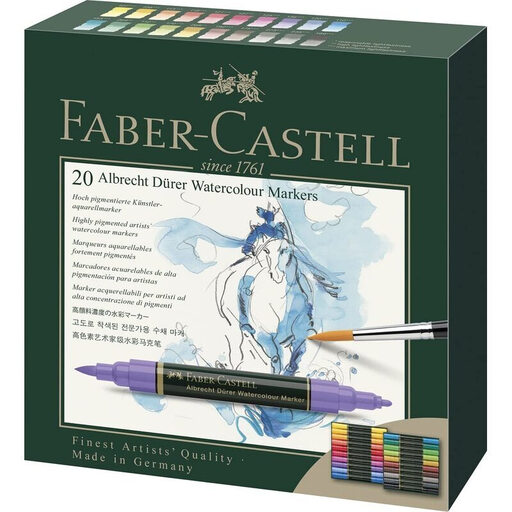
Why This Fits Their Persona: Ideal for sophisticated watercolour painting and drawing where high pigmentation, lightfastness, and versatility are crucial. The pens allow for both spontaneous sketching and finished artworks.
The highly pigmented, water-based ink is optimised for watercolour paper and does not bleed through when used correctly. The Faber-Castell quality ensures durable tips that do not dry out prematurely.
Two tips per pen (brush and fibre tip); ink is fully water-soluble for true watercolour effects and has high lightfastness.
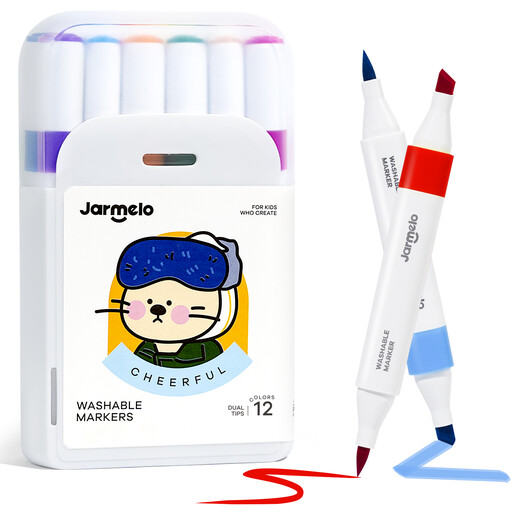
Why This Fits Their Persona: Designed for safe and clean creative time. The pens are robust, ergonomically shaped for small hands, and the ink is non-toxic and odourless according to the manufacturer.
According to the manufacturer, the ink is 90% washable from skin and most fabrics, directly addressing the problem of misleading washability claims. The ventilated caps also reduce the choking hazard.
High washability and child-safe design (ventilated caps, non-toxic ink). The dual tip (brush and chisel) encourages creativity.
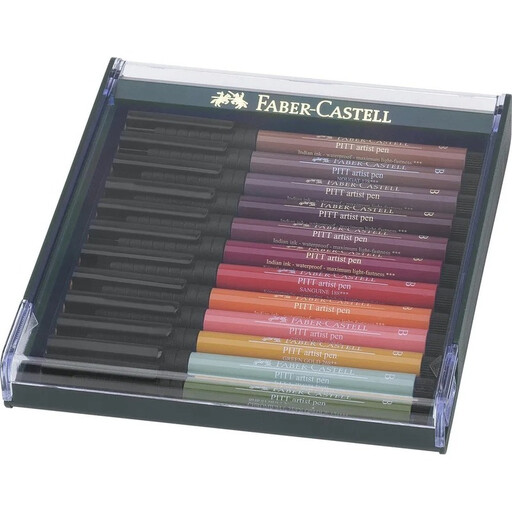
Why This Fits Their Persona: Perfect for precise lettering and decorations in notebooks, as the ink doesn't bleed through and is waterproof once dry. The flexible brush tip is ideal for dynamic lines.
The pigment ink is specially formulated to not bleed through paper—a common frustration when using journals or planners. It is smudge-proof and waterproof after drying.
Waterproof and permanent pigment ink with maximum lightfastness; flexible brush tip (B) for variable line widths, ideal for hand lettering.
We have compiled a complete, up-to-date list of products that fully meet these strict selection criteria and German safety regulations.
Most markers, especially dual-tip ones (brush pens, watercolour markers), should be stored horizontally. This ensures an even distribution of ink to both tips and prevents one side from drying out. Always replace the caps firmly after each use.
Lightfastness indicates how resistant the ink is to fading from exposure to light. For artworks, sketches, or important documents that need to last a long time, high lightfastness (as often found in Faber-Castell pens or Staedtler markers with pigment ink) is essential. For notes or children's drawings, this criterion is less critical.
Theoretically, yes, but for the dynamic lettering typical of modern hand lettering, pens with a flexible brush tip (brush pens) are best. They allow for the characteristic transition between thick downstrokes and thin upstrokes by varying the pressure. A fineliner set can be used as a supplement for outlines or embellishments.