
Lieferung heute & morgen

Qualitätsgarantie

Willkommens-Angebote freischalten: KOSTENLOSE Lieferung | Bis zu 80 % RABATT | Kostenlose 30-Tage-JoyPlus-Testphase
App herunterladen
A marker set can vary considerably depending on what you need it for. For children, washable ink and safe caps are important, while students and office workers look for clean lines, quick-drying ink and suitable nibs. Hobby artists, on the other hand, often need water-soluble colours, flexible brush pens or dual-tip markers.
To avoid buying markers with unsuitable nibs, ink that bleeds through paper or misleading washability claims, it’s worth checking the technical specifications rather than focusing only on the number of colours.
A set with 50 or 120 colours may look impressive, but it might not be practical for your specific needs. For highlighting text, a few easy-to-distinguish colours are usually enough. For drawing and colouring, colour gradations, a nib you can control and suitable ink matter more than the number of pens in the set.
So check:
Washable markers are particularly handy for children, but the term doesn’t necessarily apply to every material or situation. Water-based ink is often easier to remove from skin or many fabrics than permanent ink. Even so, test it on an inconspicuous area first when using it on delicate fabrics, untreated wood or furniture.
With water-soluble watercolour markers, also bear in mind that you can blend the colour with water if you use suitable paper. This is a feature of how the markers are used, not a therapeutic or medical effect.
A fine fibre tip is suitable for lettering and detail work. A broad, rounded tip spreads colour over larger areas. Brush pens create different line widths depending on the pressure and angle you use, but require more control. For highlighters, chisel tips with widths such as 1–5 mm or 1–4 mm are useful for underlining and broad highlighting.
Also look for a cap that stays firmly in place, a break-resistant nib and an ergonomic shape. Wide, lightweight, angular pens may be easier for small children to grip than slim artist’s pens.
Water-based ink is common in many felt-tip pens, highlighters and fibre-tip pens. It can dry more quickly and, depending on the formulation, may be partly removable with water. For watercolour effects, use watercolour paper or heavier mixed-media paper. Thin printer paper may show ink through or buckle, even when the ink is suitable.
For the office and studying, also consider:
A dual-tip marker combines two nibs and can replace several individual pens. For artist’s markers, brush and fibre tips are useful for colouring areas, outlining and fine drawing. Fine markers around 0.4 or 0.6 mm are suitable for detail, while the line width of a chisel tip can be changed by adjusting the angle.
“Flexible” doesn’t automatically mean better control. For younger children, sturdy, recessed and rounded tips are often more practical.
For children’s pens, check the recommended age and safety information. Small caps can be swallowed. Ventilated safety caps are a design feature that helps improve safety, but they don’t replace adult supervision. The sets listed are not suitable for children under three because they contain small parts or pointed components.
A folder, pencil case or sturdy box protects the tips and makes it easier to choose colours. Close water-soluble artist’s markers firmly after use and, where possible, store them horizontally to help keep the ink evenly distributed.
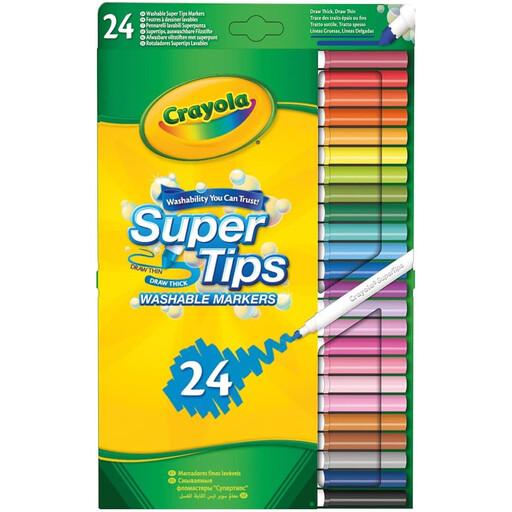
Why this product suits this profile: This 24-piece set is suitable for drawing, writing and school projects. According to the product information, the recommended age starts at 3 or 4, depending on the listing.
The washable ink reduces the risk of permanent stains on skin and many fabrics. You can vary the line width by changing the angle of the tip.
24 colours, washable ink and a versatile fibre tip for lines and larger areas.
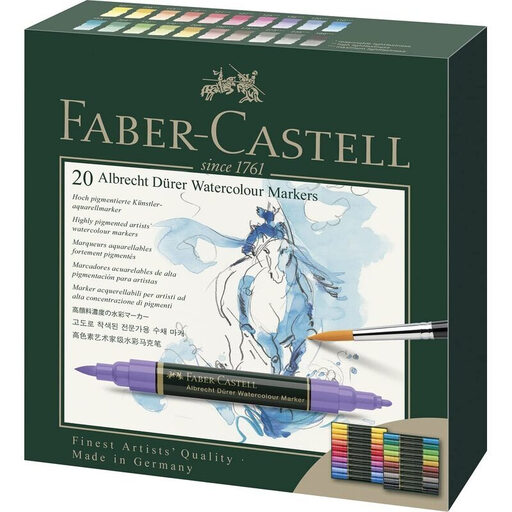
Why this product suits this profile: Each of the 20 watercolour markers has a soft brush tip and a sturdy fibre tip. This lets you combine watercolour techniques with outlines and expressive areas of colour.
The product information specifies water-based, water-soluble ink, high lightfastness and watercolour effects on watercolour paper. This clearly sets them apart from standard fibre-tip pens.
Two tips per pen, a compact 20-piece wallet and, according to the product description, high lightfastness.
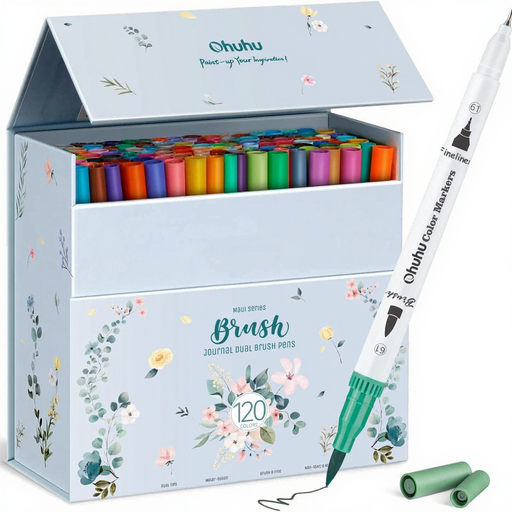
Why this product suits this profile: This set is for anyone who needs a wide range of colours, fine details and flexible brush strokes for illustration, hand lettering or bullet journalling.
The 0.4 mm fine tip and 1–6 mm brush tip are clearly differentiated. A colour chart and replacement tips make it easier to stay organised when using the set frequently.
120 numbered colours, two types of tip, eight replacement tips and a storage case.
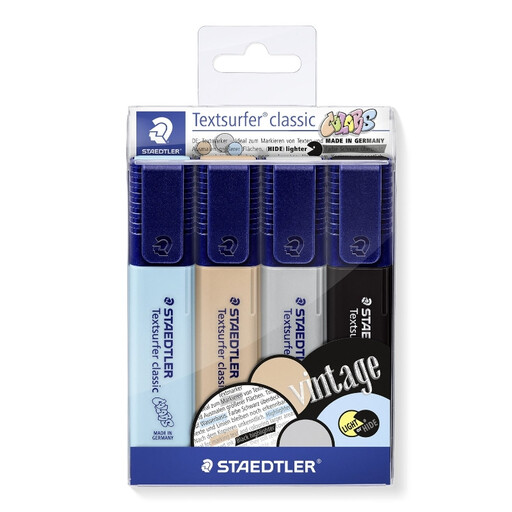
Why this product suits this profile: This set of four is designed for underlining and highlighting larger areas of paper. The soft chisel tip offers a line width of around 1–5 mm.
The fast-drying, water-based ink is designed for paper, fax paper and photocopy paper. The large ink reservoir and pressure-resistant tip are made for regular use.
Four colours, a 1–5 mm chisel tip and a large ink supply for highlighting text and larger areas.
We’ve put together a complete, regularly updated list of products that meet these strict selection criteria and fully comply with the safety regulations in force in the EU.
Whether you’re buying children’s pens, drawing pens or art supplies, put the cap back on each pen as soon as you’ve finished using it. Don’t leave brush pens and watercolour markers with their tips exposed for long periods. Many water-based markers are best stored horizontally, but always follow the manufacturer’s specific instructions.
Keep them out of direct sunlight and away from large temperature fluctuations. Highlighters with replaceable or refillable ink may last longer. However, check that the refill station and ink type are suitable for the model.
For children aged 3 or 4 and over, depending on the product, consider sets with washable ink, sturdy tips and ventilated safety caps. Small parts and caps can pose a choking risk. Always follow the age recommendations and supervise younger children.
This depends largely on the paper’s thickness, the amount of ink and how you use the marker. Claims such as “no bleed-through” should always be considered in the context of the intended use. For watercolour markers and dual-tip markers, heavier watercolour or mixed-media paper is usually more suitable than thin printer paper.
There’s no single answer. It depends on how often you use the markers, how much pressure you apply, how they’re stored, the size of the ink reservoir and whether you replace the caps. Large reservoirs, replacement tips or refill options can be practical advantages for frequent users.