
Lieferung heute & morgen

Qualitätsgarantie

Willkommens-Angebote freischalten: KOSTENLOSE Lieferung | Bis zu 80 % RABATT | Kostenlose 30-Tage-JoyPlus-Testphase
App herunterladen
A marker set can meet very different needs, whether you’re buying for children, students, journaling enthusiasts, illustrators or professional artists. But the number of colours alone tells you very little about how suitable a set really is. A set of 120 pens isn’t automatically a better choice than a felt-tip pen set with 24 colours.
Three common marketing claims often lead to disappointing purchases:
Fine nibs between around 0.05 and 1.0 mm are useful for precise notes, technical sketches and outlines. A fineliner set will usually offer several line widths.
Brush pens have a flexible brush tip. Vary the pressure to create lines ranging from fine to broad. They’re well suited to hand lettering, sketching and expressive hatching. For children and beginners, a sturdy fibre tip may be easier to control.
Dual-tip markers combine two nibs in one pen, such as a fine tip and a brush tip. This saves space and lets you try several techniques. Before buying, check that both tips suit your drawing style.
Water-based markers are often suitable for school, journaling and light watercolour effects. On suitable watercolour or mixed-media paper, you can blend the colours with water. Thin copier paper, on the other hand, may buckle or let ink show through on the reverse.
Alcohol-based markers usually dry quickly and can be layered or blended. However, they may bleed through paper more readily and should be used in well-ventilated rooms. Testing the paper before starting your project can help avoid surprises.
With waterproof markers, it’s also important to check whether the ink is permanent, water-resistant or simply smudge-resistant once dry. These terms don’t mean the same thing. For archival work, look for additional details such as lightfastness and acid-free materials.
A good set should suit the way you plan to use it:
Also look for a secure cap, clear age guidance and a way to store the pens. Caps and replacement tips can be small parts, so keep them out of the reach of children under three.
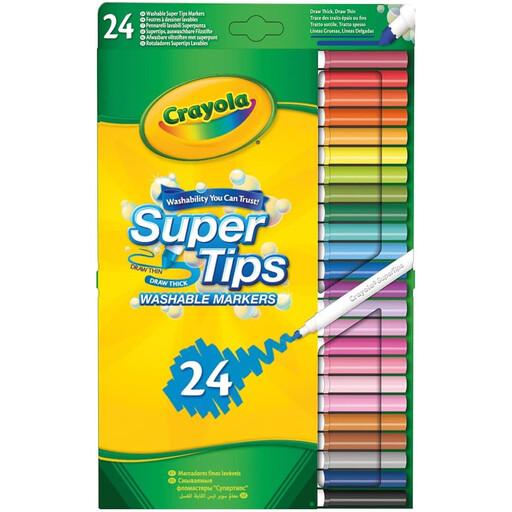
Why this product suits this user: This 24-piece set covers everyday drawing, writing and colouring tasks. According to the product description, it’s intended for children aged three or four and over.
The tip can be used at different angles to create lines of varying thickness. According to the product description, the washable ink is practical for creative projects at home with the family.
24 multicoloured markers, a tip for fine and broader lines, washable ink according to the product description.
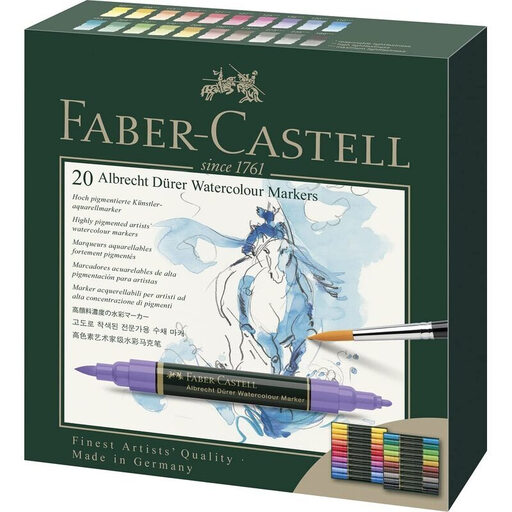
Why this product suits this user: This set is aimed at illustrators, keen hobby artists and anyone who wants to combine drawing with water-soluble watercolour techniques.
The product description lists two tips per marker and water-soluble, highly pigmented ink. This means the set isn’t limited to just one type of line.
20 colours, brush and fibre writing tips, water-based and water-soluble ink according to the product description.
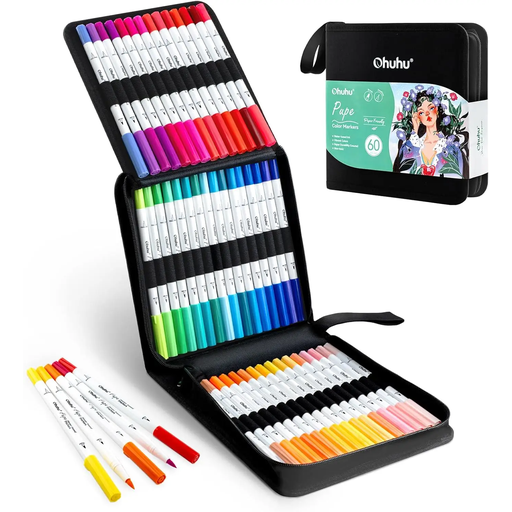
Why this product suits this user: The combination of a 0.4 mm fineliner and flexible brush tip makes these pens suitable for journaling, calligraphy, illustration and larger colour projects.
The two tips mean you don’t need to buy several specialist pens. According to the product description, the water-based ink is designed for blending and watercolour effects on suitable paper.
59 colours plus a colourless blender, two tips per pen and a storage case according to the product description.
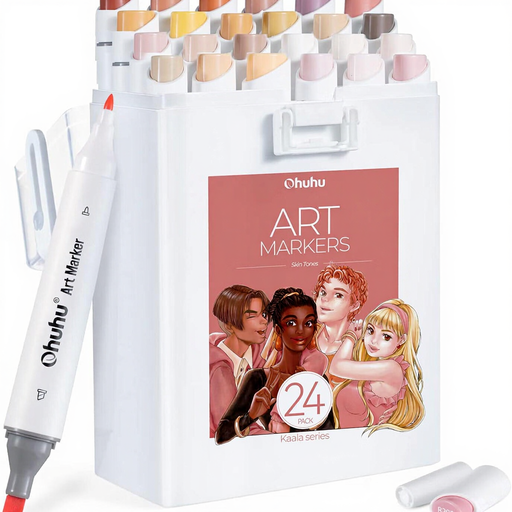
Why this product suits this user: The coordinated range of skin tones is designed for portraits, fashion drawings and illustrations that call for subtle colour variations.
The palette focuses on skin tones and related shades rather than an arbitrary mix of colours. According to the product description, the alcohol-based ink can be layered and blended.
24 skin tones, fine and chisel tips, quick-drying alcohol-based ink according to the product description.
We’ve put together a complete, regularly updated list of products that meet these strict selection criteria and fully comply with the safety regulations in force in the EU.
How long a marker lasts depends largely on how you use it. Replace the caps fully after every use. Brush pens and water-based markers in particular shouldn’t be left uncapped. Storing markers horizontally can help many sets distribute their ink more evenly; always follow the instructions from the manufacturer.
For watercolour markers, good-quality paper is an important part of the overall cost. Very thin paper can mean repeated attempts and wasted ink. When using alcohol markers, remember to place a protective sheet beneath your drawing to prevent ink from bleeding through. Replacement tips, blenders and refill options are also worth considering if you use a set regularly.
For beginners, a manageable colour palette, sturdy tips and easy-to-read colour coding are useful. A set of 24 to 40 colours is enough for many drawing and colouring projects. If you’re planning to try hand lettering, look for a flexible brush tip too.
Yes, as long as the paper absorbs the ink without allowing it to bleed through too much. Fine tips and dual-tip markers with both fineliner and brush functions are well suited to journaling. Test new colours in an inconspicuous spot or on a separate strip of paper first.
There’s no reliable way to give a fixed lifespan. It depends on the area you cover, the pressure you apply, how the pens are stored and sealed, and how much ink they contain. Keeping the caps firmly closed, storing the pens correctly and using suitable paper can help them last longer.