
Lieferung heute & morgen

Qualitätsgarantie

Willkommens-Angebote freischalten: KOSTENLOSE Lieferung | Bis zu 80 % RABATT | Kostenlose 30-Tage-JoyPlus-Testphase
App herunterladen
Whether you need them for taking notes, presentations, bullet journals or labelling items outdoors, markers and highlighters vary considerably in terms of nib, ink, surface compatibility and durability. An inexpensive set can therefore become impractical if the nib is too broad, the colour bleeds through the paper or the ink is unsuitable for the intended surface.
The Joybuy Product Recommendation Officer’s selection focuses on clear product features and typical purchasing risks. This makes it easier to decide whether felt-tip pens, a highlighter set, permanent markers or specialist markers for children and creative applications are the right choice.
A fine nib is suitable for labelling and details, while a chisel tip covers larger areas and headings. Double-ended markers can combine two line widths in a single pen. However, if you regularly highlight very small writing, pay attention to the exact measurement in millimetres rather than relying on terms such as “fine” or “broad”.
Water-soluble markers can, depending on the surface, be removed with a damp cloth or are designed for use on paper and textiles. Permanent markers, on the other hand, adhere permanently to many smooth and porous materials. This is useful for labels, plastic or wood, but can leave difficult-to-remove marks on clothing, furniture and unsealed paper.
With washable felt-tip pens, check the manufacturer’s information for the specific intended use. Skin and many textiles can often be cleaned with soap and water; absorbent fabrics, carpets and untreated wood may nevertheless absorb the colour. For children’s markers, the recommended age, small parts and supervision guidance are also important.
For making your choice, measurements in millimetres are more useful than general marketing claims:
When writing for longer periods, the shape of the barrel can also make a difference. A triangular marker can help prevent it from rolling off your desk, while a contoured barrel can give smaller hands a more secure grip.
For school exercise books and office documents, quick-drying, water-based highlighters are often a good choice. With thin paper, also check whether the ink shows through. For flipcharts, markers with water-based ink are preferred, while a whiteboard marker should wipe off when dry.
A permanent marker is a different product category: The SHARPIE Permanent Marker in this selection features quick-drying, water- and light-resistant ink according to the product description, and is designed for paper, plastic, metal and wood. For garden labels, a specialist garden marker is a sensible choice when weather and light resistance are explicitly stated.
A securely closing cap helps protect the nib from drying out. Some models feature an anti-roll design or are refillable according to the manufacturer. Children’s markers should only be used by the stated age group. Products containing small parts are not suitable for children under 36 months. Permanent or alcohol-based inks should be used in well-ventilated areas and not applied to the skin.
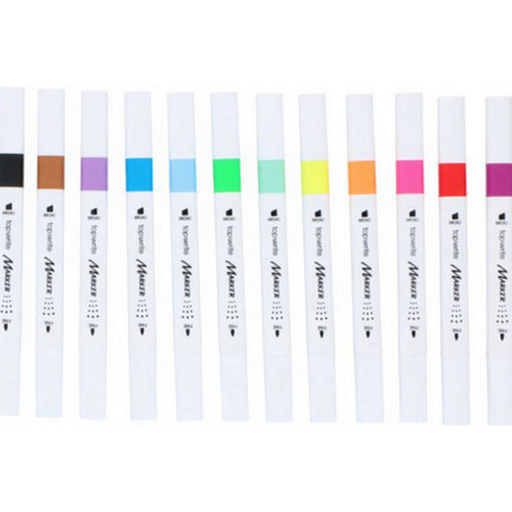
Why this product suits this profile: The 12-piece set combines two nib widths per marker, covering notes, headings, mind maps and simple drawings.
The specific measurements of 3.5 mm and 5.8 mm make the line widths clear. The caps close securely to help reduce drying out.
Two nibs in one pen; 12 colours for colour-coding, journalling and school projects.
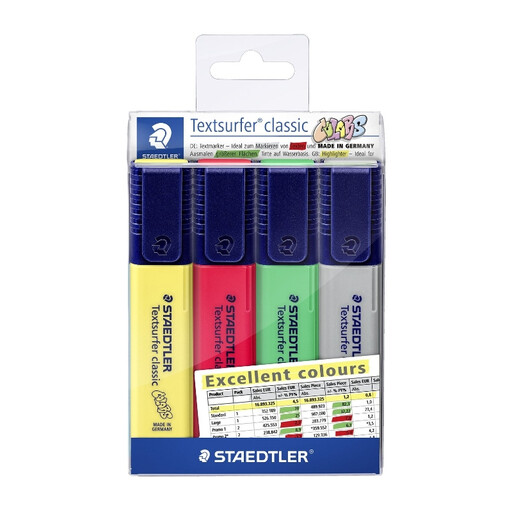
Why this product suits this profile: For university, office and classroom use, a large ink reservoir, a 1–5 mm chisel tip and water-based ink are clear, practical selection criteria.
The variable chisel tip is designed for underlining and larger areas. The product description mentions quick drying and a pressure-resistant, securely fixed nib section.
Large ink reservoir; four colours; twist cap for one-handed opening.
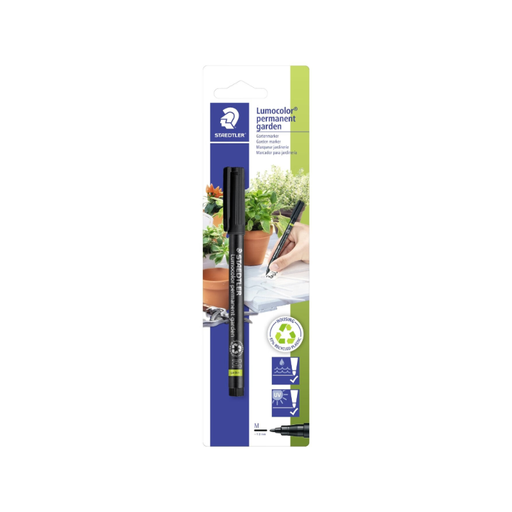
Why this product suits this profile: This marker is aimed at gardeners and DIY enthusiasts who want to label plant signs, wooden sticks, pots, metal or glass permanently.
The product data specifies weather and light resistance together with a 1.0 mm round nib. This makes its intended use clearer than that of a general felt-tip pen.
Designed for various outdoor materials; quick-drying black ink with stated weather and light resistance.
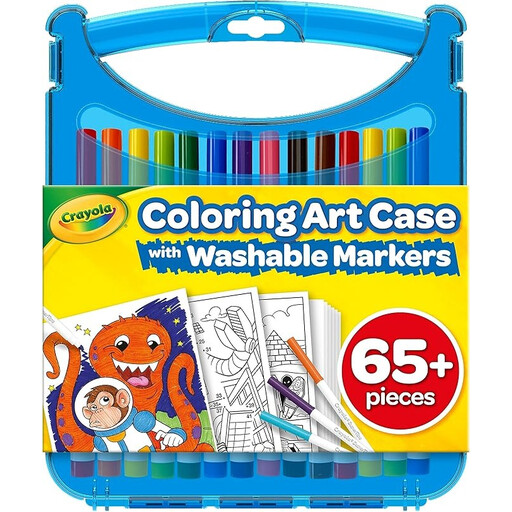
Why this product suits this profile: According to the product information, the set combines 25 markers, colouring and blank sheets, and a carry case, and is designed for children aged 4 and over.
The age recommendation, click fastening and stated washability give parents clear guidance. Small parts nevertheless require supervision.
Washable ink according to the product description; set with markers, 40 sheets and a plastic case with carry handle.
We have put together a complete, regularly updated list of products that fully meet these strict selection criteria and the safety regulations applicable in the EU.
Markers usually dry out if the cap is not replaced immediately after writing. With double-ended markers, both ends should remain capped. Highlighters with a large reservoir can be suitable for regular underlining; for occasional use, however, a smaller set may be sufficient. Refillable models such as certain Lumocolor variants can reduce pen consumption, provided suitable refill stations are available.
Permanent markers should be stored separately from standard felt-tip pens so that they are not accidentally used on paper, clothing or whiteboards. When using alcohol-based artists’ markers, a well-ventilated environment and a surface that can withstand bleed-through are recommended.
For books, notes and study materials, highlighters with a 1–5 mm chisel tip, water-based ink and a securely closing cap are an obvious choice. Double-ended markers can provide additional line widths for mind maps and colourful headings.
Their lifespan depends on the ink reservoir, frequency of use and how well the cap is closed. A large reservoir may last longer with regular highlighting. The key is to replace the cap immediately after use and store the markers according to the manufacturer’s instructions.
Felt-tip pens are generally designed for paper, drawing or crafts and may contain water-soluble or washable ink, depending on the model. Permanent markers use ink designed to adhere for longer on materials such as plastic, metal, wood or glass. Before use, always check whether the marking will need to be removed later.