
Lieferung heute & morgen

Qualitätsgarantie

Willkommens-Angebote freischalten: KOSTENLOSE Lieferung | Bis zu 80 % RABATT | Kostenlose 30-Tage-JoyPlus-Testphase
App herunterladen
If you’re looking to buy markers and highlighters, you’ll quickly find a wide choice of colours, nibs and ink types. But eye-catching colour names or claims such as ‘for all surfaces’ don’t tell you much about how well a marker will perform in everyday use. What matters is whether it’s suited to the task, the paper and the line width you need.
Neon colours stand out on white paper, but they can distract from the content when copied or scanned, or when used on longer passages of text. Pale, translucent highlighters are often more practical for study materials. For flipcharts and presentations, bold ink that’s easy to see from a distance is more important.
Water-based markers are often low-odour and suitable for paper. Even so, depending on the paper quality, they may show through or smudge ink underneath. Features such as INKJET SAFE, quick-drying ink or suitability for fax and carbonless paper tell you more than the general term ‘water-based’.
According to the manufacturer, a dry-safe marker can be left uncapped for a certain length of time and still be used. That doesn’t automatically mean it can be refilled. If you regularly present, correct or draw, check separately for refillability, available refill ink and a cap that closes securely.
The nib determines how flexibly you can use a marker:
A ‘1–5 mm’ measurement describes the range of line widths you can create, not necessarily a constant width. For precise marking in text, a slim marker is more suitable than a broad flipchart marker.
Water-based markers and highlighters are often designed for paper and extended writing sessions. If you’re highlighting inkjet printouts, check that the marker is explicitly labelled as suitable, for example with ‘INKJET SAFE’. Alcohol-based inks usually dry quickly and are suitable for many creative uses, but they can bleed through paper more readily and need good ventilation.
Permanent markers are designed for lasting marks. Don’t use them on skin, food packaging or unsuitable surfaces. For specialist markers, check which surfaces they’re specifically approved for, such as glass, coated surfaces or CDs.
If you use a marker frequently, its grip, barrel shape and cap mechanism can all affect comfort. A triangular barrel can stop it rolling away and provide a defined grip position. A cap that closes securely helps prevent the ink from drying out. For frequent users, refillable markers can reduce ongoing costs, provided refill ink is actually available.
You should also follow the safety information: markers with small parts should be kept out of the hands of children under three. Ink can stain surfaces and textiles. Good ventilation is recommended when using alcohol-based products.
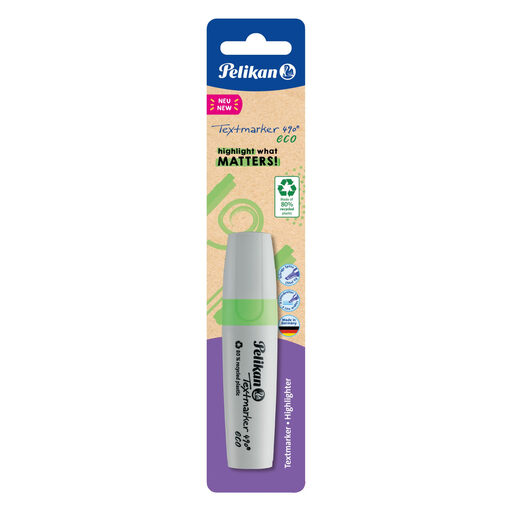
Why it suits this profile: This highlighter has water-based neon ink, three line widths of 1, 2 and 5 mm, and an ergonomically indented grip. According to the product details, the barrel is made from 80% recycled materials.
The versatile tip means you don’t need a different highlighter for fine underlining and broad highlighting. Its stated dry-safe time of up to 8 hours allows for short breaks while you work.
Water-based ink, three line widths and a barrel made from 80% recycled materials, according to the product details.
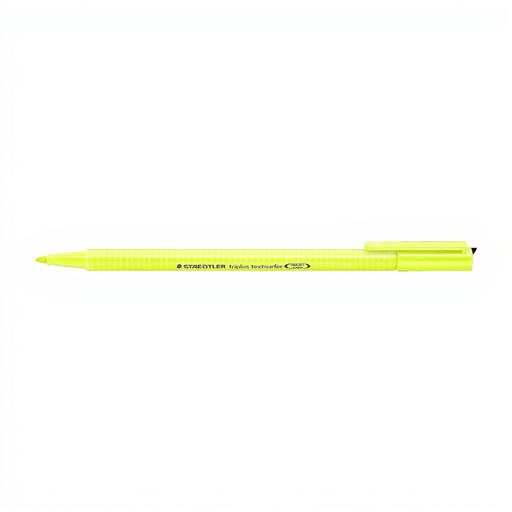
Why it suits this profile: Its triangular shape, water-based fluorescent ink and soft tip, with a line width of around 1–4 mm, make it a good choice for students, teachers and office workers who highlight regularly.
The versatile tip means you’re less likely to switch between fine underlining and broad highlighting. The ‘INKJET SAFE’ product claim addresses the risk of smudging on suitable inkjet printouts.
Triangular barrel, soft bullet tip, water-based ink and a stated line width of around 1–4 mm.
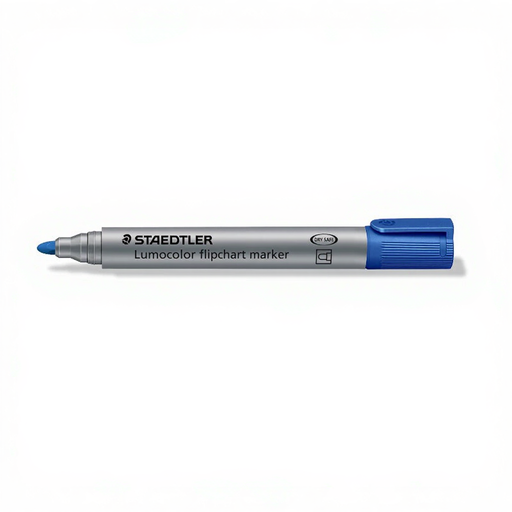
Why it suits this profile: According to the product description, this flipchart marker has a 2 mm bullet tip, low-odour water-based ink and a refillable design. It’s suited to meetings, lessons and paper-based presentations.
The ink is designed for paper, which makes its intended use clear. Refillability and a stated cap-off time of several days reduce the risk of having to replace the marker after short interruptions.
2 mm bullet tip, low-odour water-based ink and refillability, according to the product details.
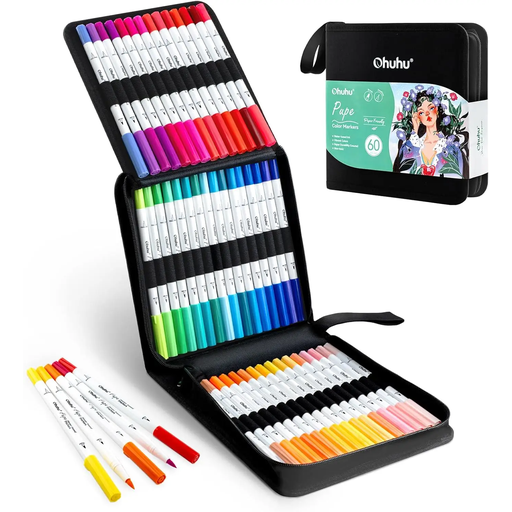
Why it suits this profile: This set combines 59 colours and a colourless blender with a 0.4 mm fineliner tip and a flexible 1–5 mm brush tip. It’s designed for lettering, drawing and journalling.
The two distinct tips avoid having to compromise between fine details and filling larger areas. According to the product details, the water-based ink is designed for paper; choosing the right paper is still important to limit bleed-through.
60-piece set, dual-tip design, water-based ink and a storage case included.
We’ve put together a complete, regularly updated list of products that meet these strict selection criteria and fully comply with the safety regulations in force in the EU.
For school and the office, water-based highlighters with a clear line width are usually all you need. If you’re highlighting printouts, check that the marker is stated as suitable for inkjet prints. Special flipchart markers are a good choice for presentations, as their ink is designed for paper and clearly visible lines.
How long they last depends on how much you write, the tip, how they’re stored and how securely they’re capped. Closing the cap firmly and storing markers horizontally can help maintain ink flow. Dry-safe features extend the cap-off time according to the manufacturer, but you should still replace the cap after use.
It depends on the purchase price, whether refill ink is available and how much you use. With regular use, refillable markers can reduce the need to replace individual pens. Before buying, check whether refill stations and compatible ink are likely to remain available.