
Lieferung heute & morgen

Qualitätsgarantie

Willkommens-Angebote freischalten: KOSTENLOSE Lieferung | Bis zu 80 % RABATT | Kostenlose 30-Tage-JoyPlus-Testphase
App herunterladen
Whether you are making notes, preparing presentations, labelling plants or creating illustrations, markers and highlighters differ considerably in terms of ink, nib, surface compatibility and durability. A wide range of colours alone says little about whether a pen is practical for everyday use. If you buy based solely on set size or eye-catching colour names, you may quickly end up with a product that bleeds through paper, does not adhere to the intended surface or dries out after a short time.
This selection guide explains which features matter before you buy and which markers suit different usage profiles.
These terms describe different properties:
A marker for plant labels is therefore not automatically suitable for school exercise books or whiteboards.
A chisel tip is suitable for broad highlighting and finer underlining when you change the angle. A round fibre tip generally produces more even lines. Fineliners are designed for details and small labels, while brush pens use a flexible brush tip to create variable line widths.
The specified line width is key. A highlighter measuring around 1–5 mm covers large areas of text, while a fineliner with a width of 0.05–1.0 mm supports precise outlines and notes.
A highlighter set or marker set with lots of colours may initially seem versatile. However, if many of the colours are rarely used, costs and storage requirements increase. So check the following:
For children, additional features such as a case or a connecting system can be useful. In the office, compact storage and easily recognisable standard colours are often more important.
Water-based ink is commonly used for paper, notes and many creative applications. It can dry more quickly and, depending on the product, may be easier to remove. Solvent-based permanent markers, on the other hand, often adhere to smooth, non-absorbent materials. Always base your choice on the product description and the intended surface.
For waterproof markers designed for outdoor use, resistance to light and weather is also important. For garden markers, clean and dry the labelling surface beforehand. On porous materials, permanent ink may remain visible indefinitely.
Look for specific details rather than general terms such as “precise” or “extra wide”:
For children, sturdy nibs and a securely closing cap are particularly important. Small parts such as caps should be kept away from children under three years of age.
A non-slip or ribbed grip can make writing for longer periods more comfortable. Triangular barrels also prevent a pen from rolling off the table. Regardless of the shape, replace the cap firmly immediately after use and store the pens according to the manufacturer’s instructions. For some markers, horizontal storage is recommended to keep the ink evenly distributed.
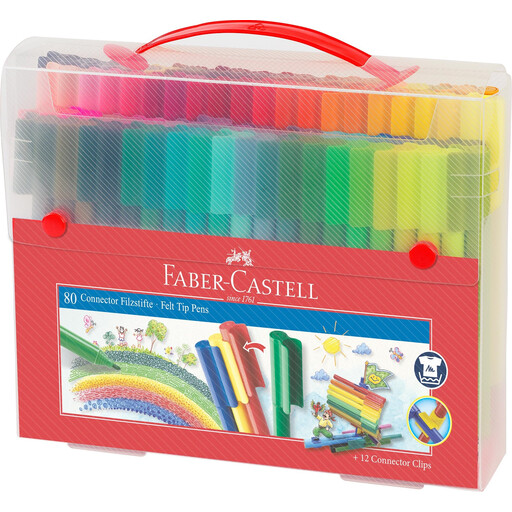
Why this product suits this profile: This extensive set is aimed at children, families and beginners looking for a wide range of colours for drawing, writing and creative projects. The included case makes storage easier.
The 80 pens come in a case. The ink is described as washable; nevertheless, work surfaces should be protected and stains treated promptly.
80 coloured felt-tip pens, a ribbed grip and a Connector linking system for storage and creative constructions.
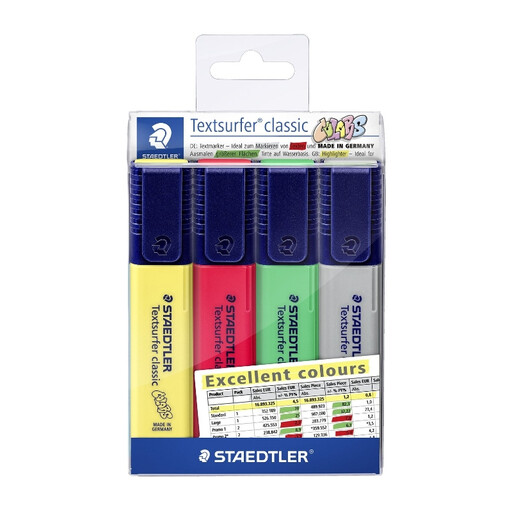
Why this product suits this profile: Pupils, students and office workers get four colours for structured highlighting on paper, faxes and photocopies.
The chisel tip is specified precisely as approximately 1–5 mm. According to the product description, the water-based ink dries quickly; nevertheless, the paper should be tested before intensive use.
Large ink reservoir, soft chisel tip and rotating cap for highlighting broad areas and adding fine underlines.
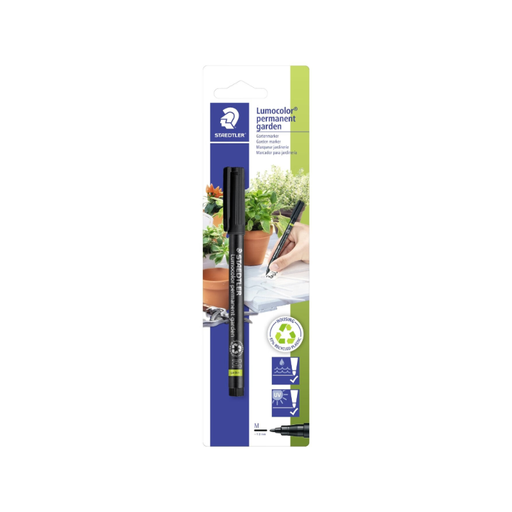
Why this product suits this profile: This black garden marker is designed for gardeners and hobby users who want to label plant tags, wooden stakes, pots or other materials outdoors.
The product information specifies waterproof, lightfast and weather-resistant ink. This helps distinguish it from washable markers designed for paper.
Medium round tip with an approximate line width of 1.0 mm, designed for use on plastic, wood, metal, glass, stone and ceramic.
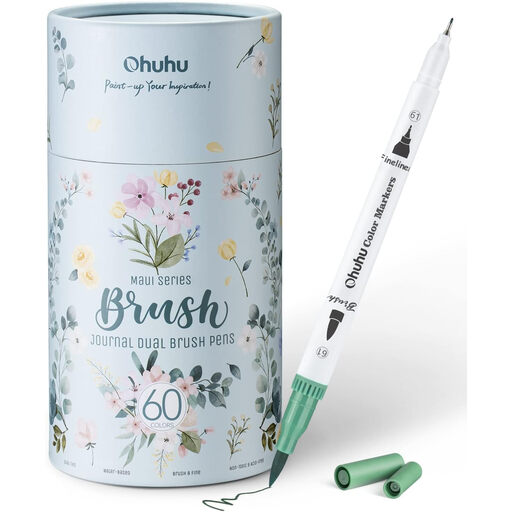
Why this product suits this profile: Bullet journal fans, hobby artists and calligraphy users get one fineliner tip and one flexible brush pen tip in each pen.
The two tips are specified as approximately 0.4 mm and 1–6 mm. This makes it easier to choose the right tip for detailed work or broad strokes.
60 numbered colours, two tips per pen and a colour chart for organising and testing the shades.
We have put together a complete, regularly updated list of products that fully meet these strict selection criteria and the safety regulations applicable in the EU.
For exercise books and worksheets, water-based highlighters, felt-tip pens and fineliners with a clearly specified line width are suitable. A chisel tip supports both broad highlighting and fine underlining. For children, age recommendations and warnings should be observed.
Their lifespan depends on usage, ink reservoir, nib and cap. Large ink reservoirs can be practical for regular highlighting. The key is to close the cap fully immediately after use and avoid leaving the pens open unnecessarily.
A permanent marker is generally designed for long-lasting labelling on multiple surfaces. A garden marker also takes requirements such as lightfastness and weather resistance into account. For outdoor plant labels, the relevant details should be stated explicitly in the product description.