
Lieferung heute & morgen

Qualitätsgarantie

Willkommens-Angebote freischalten: KOSTENLOSE Lieferung | Bis zu 80 % RABATT | Kostenlose 30-Tage-JoyPlus-Testphase
App herunterladen
Whether you are preparing study notes, presentations, bullet journals or illustrations, markers and highlighters vary considerably in terms of nib, ink, line width and intended use. A striking colour alone says little about whether a pen is practical for everyday use. If you buy based only on set size or colour names, you may end up with markers that dry out quickly, bleed through the paper or write too broadly for the intended application.
This buying guide from the Joybuy Product Recommendation Officer explains which details matter before you buy and which products suit different user profiles.
A large highlighter set can look appealing when it contains lots of colours. However, what really matters is whether the ink is water-based, permanent or water-soluble. Water-based markers are often suitable for paper, but depending on the paper weight, they may show through or run when exposed to moisture. Permanent markers, on the other hand, are intended for glass, plastic or metal and are not automatically suitable for school exercise books or books.
Before buying, you should therefore be clear about the following:
Terms such as highlighter, felt-tip pen or marker say little about the actual line produced. A chisel tip of around 1–5 mm can create both fine underlining and broad highlights. A 2 mm round tip, by contrast, produces a more even line and is easy to read on flipcharts.
For detailed drawings, fineliners measuring around 0.4 to 0.6 mm are a sensible choice. Brush pens produce lines of varying widths depending on the pressure applied. If you want to write with a pen while also filling in larger areas, look for a dual tip or a suitable chisel tip.
A robust polypropylene (PP) barrel can help a pen withstand everyday use. Even a well-made marker will dry out, however, if the cap is not closed properly. A large ink reservoir extends the usable life of a frequently used marker, but it does not replace suitable storage.
Depending on the model, useful features include:
Water-based markers are suitable for many types of paper and are often used as highlighters, felt-tip pens and flipchart markers. When using thin paper, it is advisable to test the pen in an inconspicuous area first. For watercolour effects, water-soluble brush pens can be used on suitable, heavier paper.
According to the product details, permanent markers adhere to numerous smooth surfaces. They should not be treated as interchangeable with an ordinary highlighter. For creative work, it is also important to check whether the ink is waterproof, lightfast or not water-resistant.
Refillable markers can be practical when used regularly, as you do not need to buy a new pen every time. The STAEDTLER Lumocolor Flipchart Marker is designed to be refillable, according to the product description. Other models do not have refillable ink. You should therefore check the product details before buying.
Pigmented drawing ink often needs to be stored horizontally. Caps should be replaced firmly after every use. For children's products, you should also check the recommended age range and any small-parts warnings.
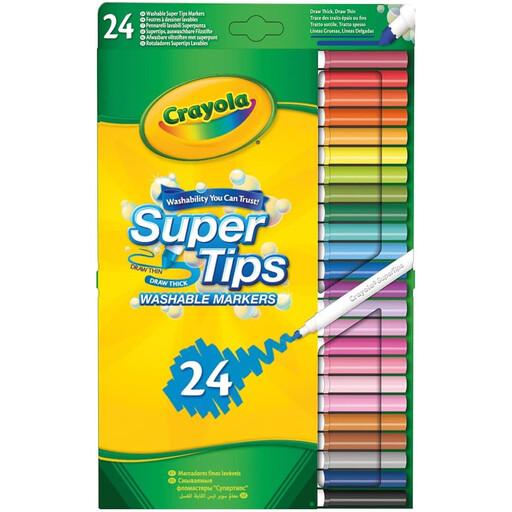
Why this product suits the profile: The 24-piece set offers a range of colours for drawings, schoolwork and creative projects, without requiring specialist artist pens from the outset.
The product description mentions washable ink and a tip for both thin and broad lines. This makes the pen versatile, although the age recommendations and protection against small parts should still be observed.
24 colours, variable lines depending on the angle of the tip and washable ink according to the supplier.
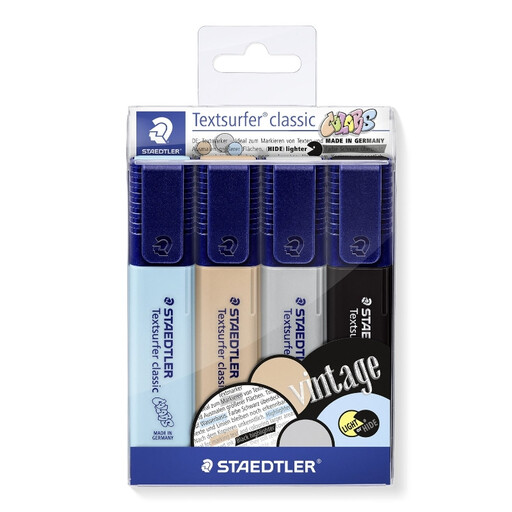
Why this product suits the profile: For school, university and the office, this set offers four vintage colours and a soft chisel tip with a line width of around 1–5 mm.
The water-based ink dries instantly according to the product details. The large reservoir and pressure-resistant tip address common problems when highlighting frequently.
Four colours, 1–5 mm chisel tip, PP barrel and large ink reservoir.
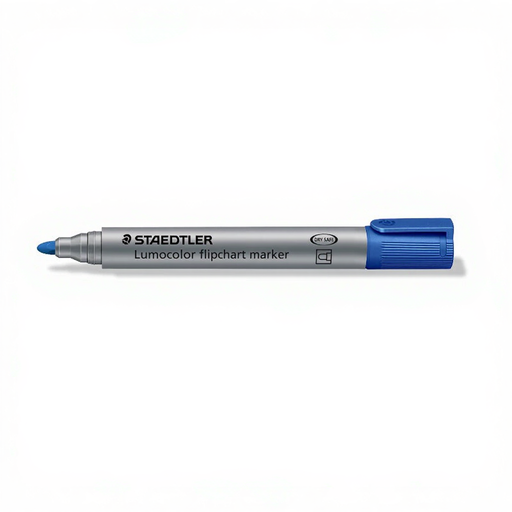
Why this product suits the profile: This marker is aimed at presenters, teachers and office teams who need a clearly visible 2 mm line on flipchart paper.
The product details specify low-odour, water-based ink, a locked tip and refillability. This reduces reliance on disposable pens for regular use.
2 mm round tip, refillable ink, several days without a cap according to the product description and a barrel made from 97% recycled plastic according to the supplier.
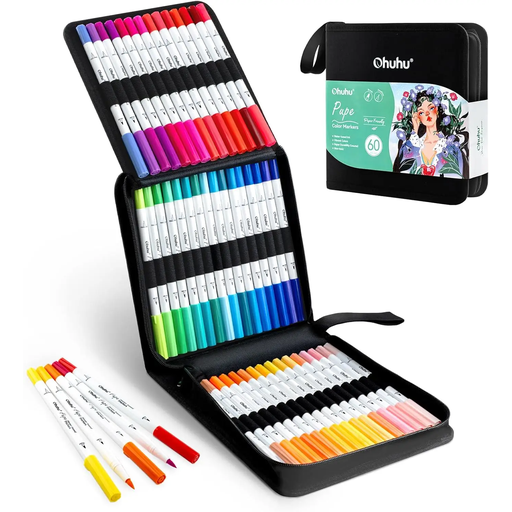
Why this product suits the profile: The set combines a 0.4 mm fineliner with a 1–5 mm brush tip and is designed for hand lettering, bullet journalling and illustration projects.
Specifying both tips prevents you from choosing a large marker set that offers only one way to use it. Heavier paper is recommended for consistent results.
59 colour shades plus a colourless blender, water-based ink, storage case and 60 pens.
We have put together a complete, regularly updated list of products that fully meet these strict selection criteria and the safety regulations applicable in the EU.
For school exercise books and study notes, water-based highlighters with a clearly visible colour and a suitable chisel tip are often a practical choice. A line width of around 1–5 mm allows you to underline text as well as create broader highlights. For children, you should take the recommended age range and safety information into account.
A highlighter is used to emphasise content on paper and usually contains water-based ink. A permanent marker is designed for durable writing on a range of surfaces. Its ink may be waterproof or weather-resistant. A permanent marker is therefore generally not the right choice for books, printouts or school notes.
The cap should be closed firmly immediately after use. Many pens should be stored horizontally so that the ink remains evenly distributed. With frequently used flipchart or permanent markers, a refillable marker can reduce ongoing replacement costs. Before buying, it is worth checking whether refill ink and suitable replacement tips are actually available.