
Lieferung heute & morgen

Qualitätsgarantie

Willkommens-Angebote freischalten: KOSTENLOSE Lieferung | Bis zu 80 % RABATT | Kostenlose 30-Tage-JoyPlus-Testphase
App herunterladen
Markers and highlighters are staples of school, office and artists’ supplies, but they differ significantly in terms of nib, ink and suitable surfaces. If you choose based only on colour or pack size, you may easily end up with a product that bleeds through the paper, smudges on smooth surfaces or is permanently unsuitable for the task you have in mind.
The most common purchasing mistakes arise from three marketing claims:
The nib determines whether a pen is suitable for headings, technical details or larger areas.
A sturdy, pressure-resistant nib is important for daily use. Highlighters for school and the office should not give way under normal pressure.
Water-based markers are often low-odour and suitable for paper. However, they can bleed on absorbent paper or stain textiles. Testing the marker on an inconspicuous area can prevent a disappointing purchase.
Permanent markers generally adhere for longer on porous surfaces. This is useful for wood, metal, stone or plant labels, but it also means that corrections can be difficult. For garden markers, weather, water and light resistance are also crucial.
A non-permanent marker with water-soluble ink is intended for glass, plastic, films or transparent presentation surfaces. The writing can be removed with a damp cloth. This is practical for information that changes regularly, but not for permanently labelled storage boxes or plant labels.
With highlighters, it is important that the ink stays on the front of the page. A large ink reservoir can be useful for frequent underlining, but it is not the only indicator of quality. The paper’s thickness and absorbency also affect the result.
For storage, the following applies to many markers:
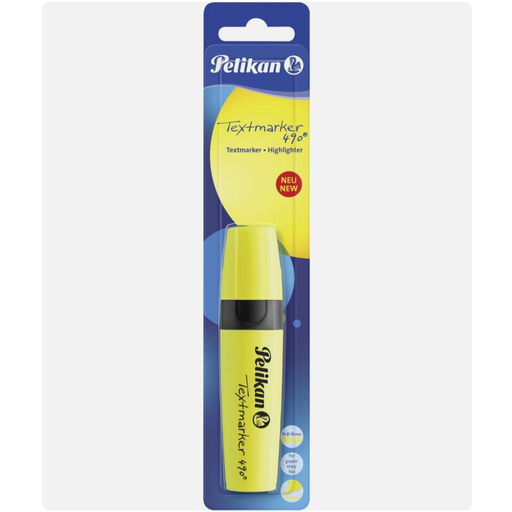
Why this product suits this profile: This single yellow highlighter focuses on the essentials, making it suitable for study materials, printouts and everyday office tasks.
The chisel tip offers three stated line widths of 1, 2 and 5 mm. This means it is not limited to broad areas of colour.
Water-based ink, neon yellow colour and a recessed grip area for controlled highlighting.
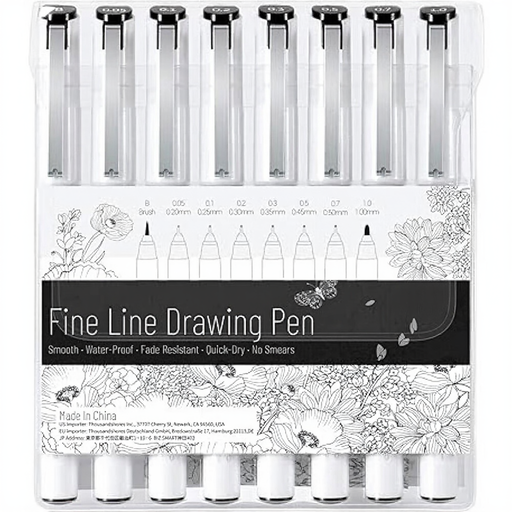
Why this product suits this profile: Students, illustrators and office workers get seven fine tips plus a brush pen for notes, sketches and different levels of detail.
The tips are specified as ranging from 0.05 to 1.0 mm. This selection reduces the risk of using a tip that is too broad for fine drawings.
Fast-drying black ink with water-resistant and lightfast properties according to the product details.
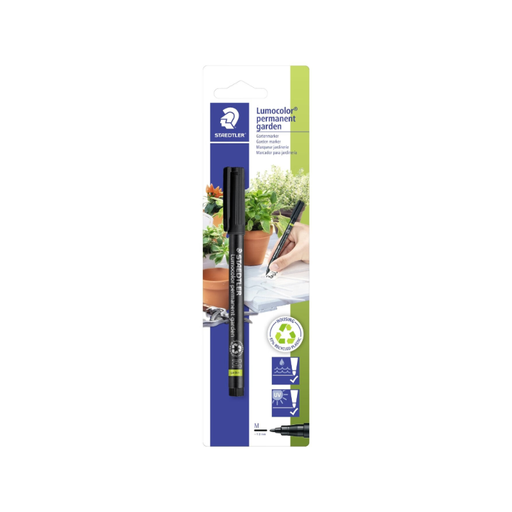
Why this product suits this profile: Garden enthusiasts can label plant markers, wooden sticks, plastic, metal, glass or stone with a black 1.0 mm tip.
The product details state that it is weather-, water- and light-resistant. This makes the pen a more targeted choice for outdoor surfaces than an ordinary permanent marker.
Fast-drying ink, medium round tip and stated suitability for both rough and smooth materials.
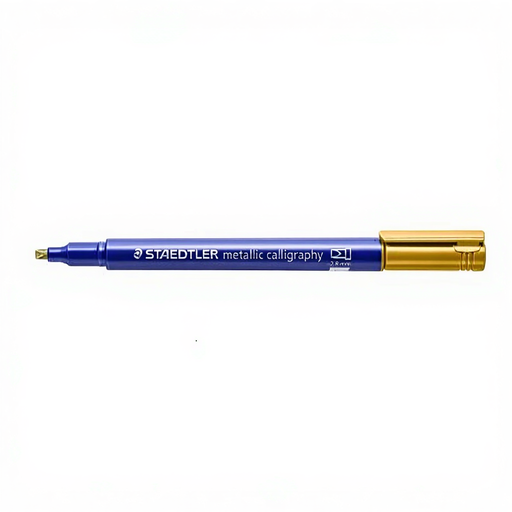
Why this product suits this profile: This marker is designed for scrapbooking, greetings cards, decorative journalling and hand lettering on light or dark paper.
The product details state that it uses water-based metallic ink and offers an approximate line width of 1 to 6 mm, depending on the angle and pressure. On smooth surfaces, it can be removed with a damp cloth.
Calligraphy tip, no shaking or pumping required, and horizontal storage for even pigment distribution.
We have put together a complete, regularly updated list of products that fully meet these strict selection criteria and the safety regulations applicable in the EU.
This depends on the paper’s thickness, absorbency and the amount of ink applied. Water-based highlighters are often designed for paper, but you should still test them on the edge of a page first, especially when using thin notepaper. Brush pens are best used with heavier drawing or mixed-media paper.
It is not possible to give a general fixed lifespan. Frequent use, uncapped pens, direct sunlight and incorrect storage can all shorten a marker’s life. Caps should be closed immediately, and markers should be stored according to the manufacturer’s instructions. Some models may be compatible with refill or replacement nib solutions.
On smooth surfaces, removal may be partly possible, depending on the ink and material. On wood, unsealed paper, textiles or other porous surfaces, the writing may remain permanently. For this reason, always test the marker on an inconspicuous area before using it for the first time.