
Lieferung heute & morgen

Qualitätsgarantie

Willkommens-Angebote freischalten: KOSTENLOSE Lieferung | Bis zu 80 % RABATT | Kostenlose 30-Tage-JoyPlus-Testphase
App herunterladen
Whether you are looking for felt-tip pens for children, fibre-tip pens for school, brush pens for lettering or drawing pens for creative hobbies, there is a huge range of markers and pens for drawing to choose from. Many sets look appealing because they offer a large number of colours, but that does not automatically make them suitable for the intended use.
Parents often focus on washability and age recommendations, while teenagers and hobby artists are more likely to need specific nib shapes, colour gradations and paper compatibility. The following criteria can help you avoid common buying mistakes.
A set with lots of colours is not automatically suitable for every technique. For simple children's drawings, six to 24 shades may be enough. For portraits, bullet journaling or illustrations, graduated shades and a precise nib are more important.
You should also check what the set actually contains. Some sets, for example, include a blender or replacement nibs. This increases the practical range of the set, but not necessarily the number of different shades.
Water-based ink can often be removed from skin or textiles more easily than alcohol-based ink. However, depending on the fabric, contact time and washing temperature, colourants may still remain visible. When using washable pens, we recommend the following:
Dual-tip markers usually combine a fine nib with a brush or chisel nib. This is practical for details and broad areas of colour. However, two nibs can be unnecessarily complicated for young children. Brush nibs also require controlled pressure and suitable paper to prevent them from fraying.
The nib determines which kinds of strokes are possible:
For lettering pens and calligraphy pens, a flexible brush nib is useful. For technical drawings, school notes or colouring pages, an evenly fine nib may be a better choice.
Water-based inks are a practical choice for many craft and school projects. With brush pens, they can be blended with water on suitable, heavier paper. Thin copier paper, on the other hand, may become saturated or allow the colour to show through to the reverse side.
You should therefore check the following:
Safety information such as ‘not suitable for children under 36 months’, warnings about small parts and the recommended age range should be observed regardless of advertising claims. For products with a stated standard or certification, the specific product description should be treated as authoritative.
Markers mainly dry out when their caps are not closed fully. A storage box helps prevent loss and makes it easier to choose colours. For larger drawing pen sets, numbered colours and a colour chart are useful.
For proper care:
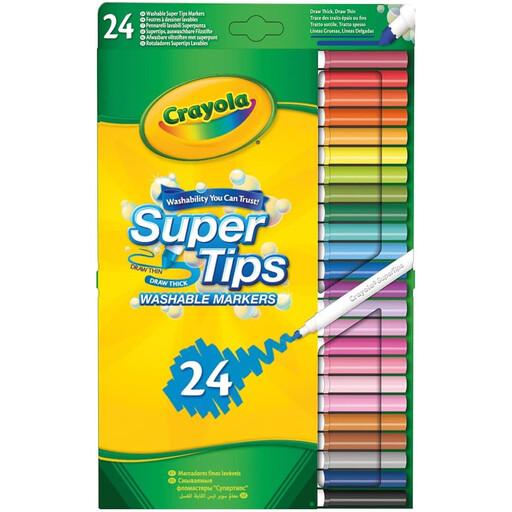
Why this product suits this profile: This 24-piece set offers a manageable range of colours for school, colouring pages and first craft projects. According to the product information, the markers are intended for children aged four and over, and the ink is washable.
The medium-sized set avoids an unnecessarily wide range of colours when basic drawing and writing tasks are the initial priority.
24 colours, a versatile nib and washable ink according to the product description.
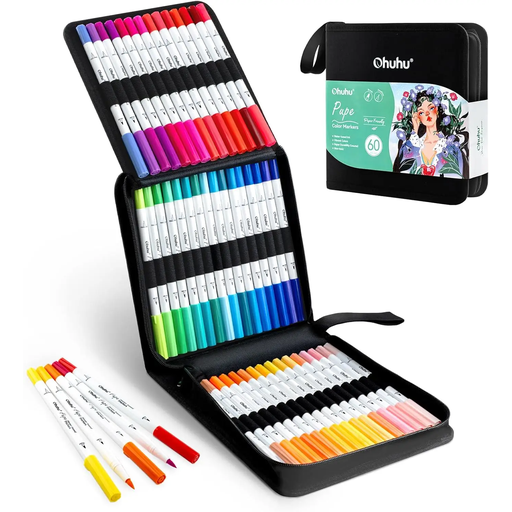
Why this product suits this profile: The combination of a 0.4-mm fineliner and 1–5-mm brush nib is aimed at lettering, journaling and illustration enthusiasts. According to the product information, the set contains 59 colours and a colourless blender.
The clearly stated nib sizes make it easier to choose a set based not only on the number of colours, but also on the work it can actually handle.
Dual-tip design, colour chart, case and ASTM-D-4236 certification according to the product information.
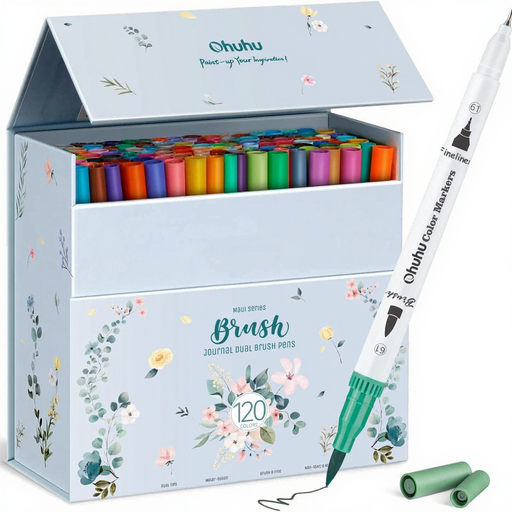
Why this product suits this profile: For extensive illustrations, colour gradients and regular lettering, the set provides 120 numbered colours and replacement nibs.
Replacement nibs and a colour chart address two common weaknesses of large sets: a confusing choice of colours and a lack of spare parts.
0.4-mm fineliner, 1–6-mm brush nib, 120 colours and a storage case according to the product information.
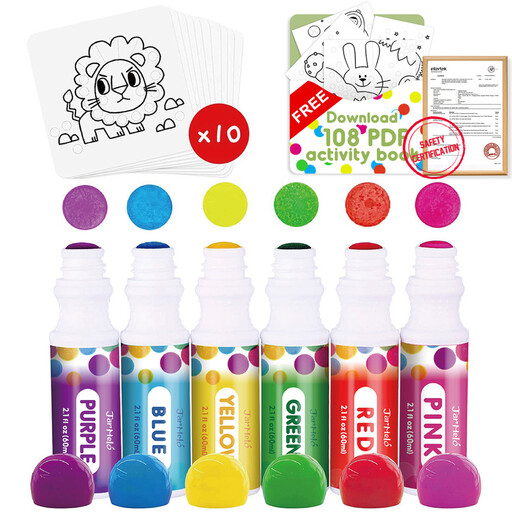
Why this product suits this profile: The jumbo round barrel and integrated sponge pad are designed for small hands and simple dot, line and area motifs.
The six colours and easy-to-grip shape keep the selection manageable for first drawing attempts. According to the product information, the water-based ink is 90% washable from skin and most fabrics.
Jumbo format, integrated sponge pad and activity materials featuring letters, numbers and motifs.
We have put together a complete, regularly updated list of products that fully meet these strict selection criteria and the safety regulations applicable in the EU.
The specific age recommendation, warnings about small parts and an easy-to-grip barrel are all important. Washable felt-tip pens for children with a rounded or broad nib can be suitable for simple pictures. Children should be supervised while drawing, and pen caps should not be put in the mouth.
Caps should be closed fully immediately after use. Many brush pens are best stored horizontally. Direct sunlight, high temperatures and open storage can reduce the lifespan of the ink.
For these applications, dual-tip markers with a fineliner and flexible brush nib are practical. Wherever possible, use paper with a sufficient weight and test the ink on an inconspicuous area first. This allows you to assess bleeding, smudging and uneven colour gradients before starting your actual project.