
Lieferung heute & morgen

Qualitätsgarantie

Willkommens-Angebote freischalten: KOSTENLOSE Lieferung | Bis zu 80 % RABATT | Kostenlose 30-Tage-JoyPlus-Testphase
App herunterladen
Whether you’re making revision notes, preparing presentations, bullet journalling or creating illustrations, markers and highlighters have different jobs to do. A highlighter should make printed information stand out without obscuring the text. Felt-tip pens, on the other hand, are generally used for writing, colouring and drawing. Watercolour, permanent and non-permanent markers each need the right surface and care.
If you buy based only on colour or pack size, you could miss some important differences. Here are three common pitfalls that can lead to the wrong purchase.
Neon colours stand out, but they can obscure small print. For textbooks, contracts or longer revision notes, pastel highlighters are often more practical. What matters is whether the ink is transparent enough and doesn’t bleed too much on the paper you’re using.
Water-soluble markers are best suited to paper or smooth, non-porous surfaces. They can still leave stains on untreated wood, textiles or wallpaper. If you’re buying a non-permanent marker, check that the ink can actually be removed from the intended surface with a damp cloth.
A marker set with lots of colours isn’t automatically better value. Four shades are often enough for highlighting text. Children may benefit from a wider range of colours, while illustrators might prefer dual-tip markers, watercolour markers or a choice of nibs. Spare caps, storage and how often you’ll use the pens also affect the value of a set.
The nib determines how much control you have when using a marker:
Look for specific measurements in the product details, such as 1–4 mm, 2–5 mm or 0.6 mm. These tell you more than general terms such as “versatile”.
Choose an ink type to suit what you’ll be using the marker for:
Heavily saturated ink can show through thin paper. It’s worth testing a marker first if you’re using it in exercise books or books. Watercolour markers typically create blended effects and colour gradients on suitable watercolour paper.
After use, make sure the cap clicks fully into place. According to the manufacturer’s instructions, some products should be stored horizontally to keep the ink evenly distributed. For children’s pens, also check for ventilated safety caps, an age recommendation and any warning about small parts. Washable ink makes cleaning easier, but doesn’t guarantee that marks can be removed from every material.
The recommendations below match products to specific uses and clearly stated product features.
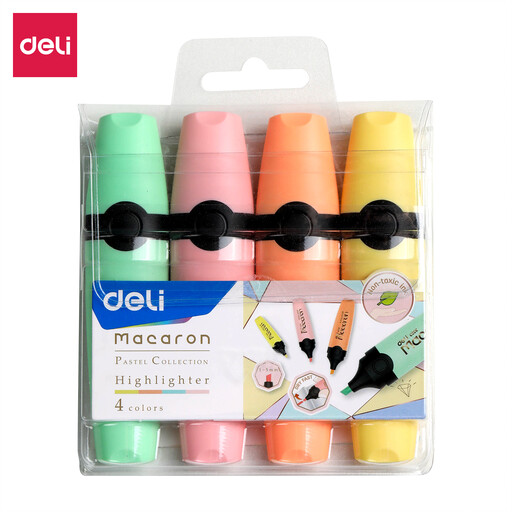
Why it suits this user: This four-pack covers everyday highlighting needs and is ideal for revision materials, planners and notes.
The pastel shades are designed for subtle highlighting. The chisel tip is suitable for both broader marks and fine underlining.
Four colours, a chisel tip and pastel ink for documents, school exercise books and bullet journalling.
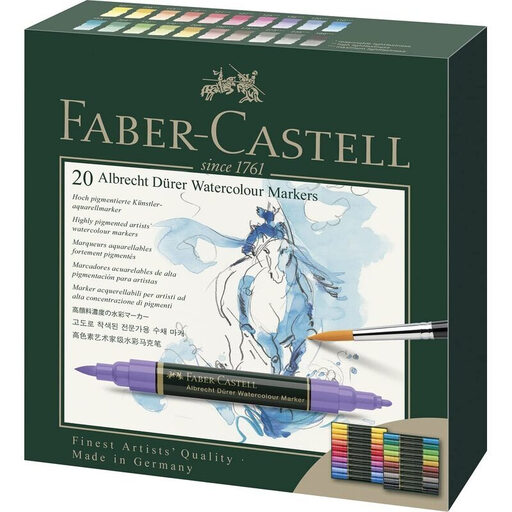
Why it suits this user: This set is aimed at illustrators, artists and creative hobbyists who want to combine markers with watercolour techniques.
You’re not limited to one type of line: according to the product details, each marker has both a brush tip and a fibre tip. The water-soluble ink can be worked with water and a brush.
20 colours, two tips per marker and a compact wallet for carrying and storage.
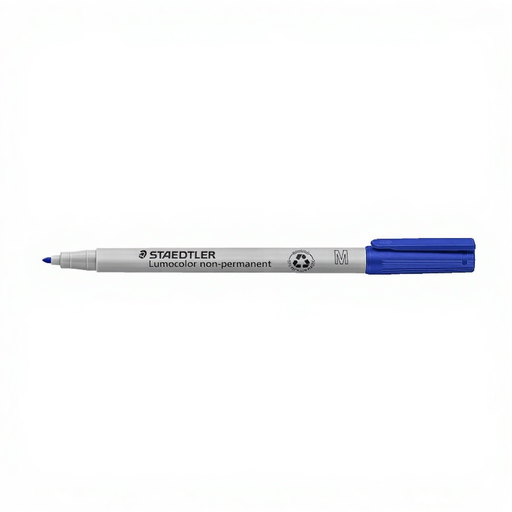
Why it suits this user: In offices, training rooms and presentations involving smooth surfaces, erasable marks are often more practical than permanent ones.
According to the product details, the water-soluble ink can be wiped away with a damp cloth. This reduces the risk of leaving permanent marks on smooth surfaces.
Medium tip with an approx. 1.0 mm line width, suitable for smooth surfaces and refillable using a compatible station.
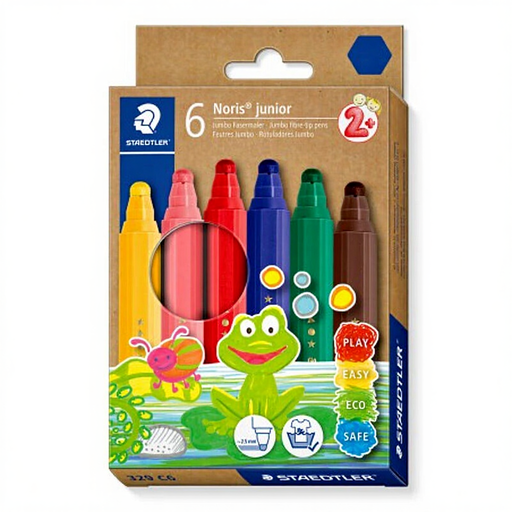
Why it suits this user: Designed for little hands and simple colouring activities at home, nursery or school.
According to the product details, the broad, rounded fibre tip is pressure-resistant. Water-based, washable felt-tip pens make it easier to deal with any accidental marks.
Six colours, a hexagonal barrel, a broad tip and a ventilated safety cap.
We’ve put together a complete, regularly updated list of products that meet these strict selection criteria and the safety regulations in force in the EU.
Water-based highlighters with transparent ink and a chisel tip are practical for books and worksheets. For creative activities, choose felt-tip pens or children’s markers with washable ink. For younger children, check for ventilated caps and follow the age recommendations.
Replace the cap straight after use and make sure it’s fully on. Store the pens as instructed by the manufacturer, often horizontally. Direct sunlight and high temperatures can affect the ink and tip. If you use markers regularly, a refillable option could reduce running costs.
Permanent markers are designed to leave lasting marks and, depending on the ink, can adhere to many smooth and absorbent materials. Non-permanent markers usually use water-soluble ink that can be removed from suitable smooth surfaces with a damp cloth. Always test the marker on an inconspicuous area first to check it’s suitable for the surface.