
Lieferung heute & morgen

Qualitätsgarantie

Willkommens-Angebote freischalten: KOSTENLOSE Lieferung | Bis zu 80 % RABATT | Kostenlose 30-Tage-JoyPlus-Testphase
App herunterladen
Whether you’re looking for children’s felt-tip pens for everyday family use, permanent markers for labelling or brush pens for creative projects, markers and felt-tip pens vary considerably in their ink, nib, surface compatibility and durability. If you choose based only on the number of colours or a low price, you could end up with a set that isn’t right for the job.
This guide explains what parents, school pupils, students, teachers, crafters, artists, gardeners and office workers should look out for.
A marker set with lots of colours can look appealing. What matters, though, is whether the ink is suitable for the job. Water-based children’s felt-tip pens are mainly designed for paper, and their ink may wipe off smooth surfaces. For plastic, glass, metal or wood, you’ll often need a permanent marker or a specialist marker.
When choosing colouring pencils and felt-tip pens for children, it’s also important to check the age recommendation. Small parts such as caps may pose a risk to children under three. Always follow the manufacturer’s information on the packaging.
Once dry, waterproof markers are more resistant to moisture. However, this doesn’t mean they’ll adhere equally well to every surface or stand up indefinitely to rubbing, cleaning products and UV light. Permanent inks can also be difficult to remove from absorbent wood or textiles.
For outdoor use, look for additional claims such as weather-resistant or lightfast. An ordinary permanent marker isn’t automatically suitable for garden use.
A fine nib is ideal for small labels and outlines, while a chisel nib can cover larger areas and create lines of different widths. A bullet nib usually produces a consistent line width. Dual-tip markers and brush pens combine two nibs to handle different tasks with a single pen.
If you mainly write on flipchart paper, you’ll need different features from someone adding fine details to a scrapbook. Check the stated line width before placing your order.
Washable felt-tip pens and water-based inks are practical for paper, colouring sheets and creative activities with children. CRAYOLA products are described as having washable ink that can be removed from skin and clothing. Even so, use the ink only on suitable surfaces and avoid contact with the eyes.
Permanent markers, on the other hand, are designed for labels and marks that shouldn’t come off easily with water. Depending on the model, they may be suitable for paper, glass, plastic, metal or wood. It’s a good idea to test the marker on an inconspicuous area first, especially on coated or porous materials.
For technical labels, small stickers and fine notes, fineliners with a line width of around 0.4 to 0.6 mm are a good choice. A medium nib of around 1.0 mm is a versatile option for labels, sketches and markings. Chisel nibs such as 1.0/2.5 mm or 2–5 mm can create both narrow and broad lines.
Brush pens often combine a flexible brush tip for shading and calligraphy with a fineliner tip. The line width can vary depending on the pressure and angle you use. A little practice is needed to achieve consistent lettering.
When choosing markers for paper, glass, plastic or wood, always check the manufacturer’s guidance on surface compatibility. A marker may adhere well to smooth plastic but smudge on a damp or greasy surface. Before writing, make sure the surface is dry, clean and as grease-free as possible.
For garden labels, features such as water resistance, weather resistance and lightfastness are important. For presentations, water-based flipchart markers are a better choice if, according to the product description, they won’t bleed through the paper. Refillable markers can help reduce ongoing costs if you use them regularly. Make sure the correct refill station is specified.
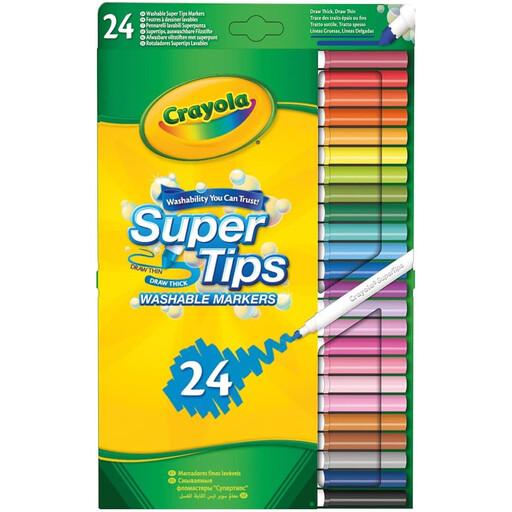
Why it suits this user: This 24-colour set is designed for colouring, writing and drawing, with a tip that can produce both fine and broad lines. The product description states that the ink is washable and that the pens are suitable for children aged three or four and over.
Compared with permanent markers, washable ink reduces the risk of lasting stains. You should still follow the age guidance and warnings.
24 colours, variable line widths and water-soluble, washable ink, according to the product information.
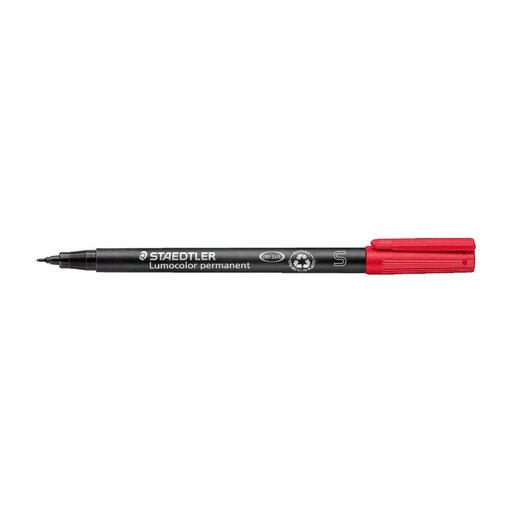
Why it suits this user: According to the product description, this fineliner has a synthetic 0.4 mm tip, permanently drying ink and can be refilled using station 487 17.
The clearly defined line width helps keep fine lettering legible, without a tip that’s too broad. Use permanent ink only on suitable materials.
0.4 mm tip, quick-drying ink and refillable design, according to the product information.
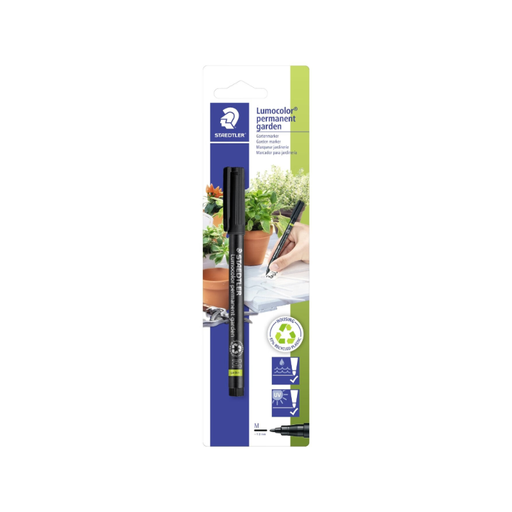
Why it suits this user: According to the product description, this garden marker is designed for outdoor materials such as plastic, wood, glass, metal, stone and ceramic. It produces a black line around 1.0 mm wide.
Its specific claims for weather and light resistance set it apart from basic permanent markers with no stated suitability for outdoor use.
Waterproof, lightfast and weather-resistant, according to the product description; suitable for garden labels.
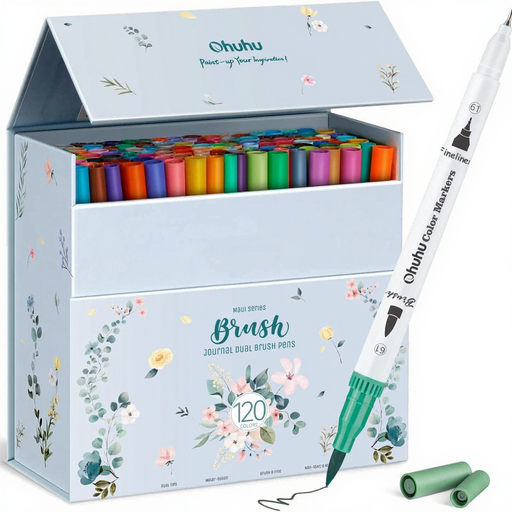
Why it suits this user: The set includes 120 colours, a 0.4 mm fineliner tip and a flexible 1–6 mm brush tip, according to the product description. It’s aimed at illustrators, students, scrapbookers and hobbyists.
The two clearly specified tips mean you don’t need to buy separate pens for outlines and broad brush strokes. For a clean result, it’s best to use suitable, heavier paper.
120 numbered colours, two tip types and eight replacement tips, according to the product information.
We’ve put together a complete, regularly updated list of products that meet these strict selection criteria and fully comply with the safety regulations in force in the EU.
Permanent markers or specialist markers may be suitable for glass and plastic. Look for an explicit statement that they’re suitable for smooth surfaces, as well as information on water resistance and drying time. Metallic marker ink may show up on glass and, depending on the product, may be removable with a damp cloth. Check the product description before use.
Their lifespan depends on the amount of ink, how often they’re used, how they’re stored and whether the cap is put back on properly. Refillable markers can last longer with regular use, provided a compatible refill station is available. Take particular care to replace the caps on brush pens and children’s felt-tip pens.
Washable ink is designed to be easier to remove, but whether it comes out completely can depend on the fabric, how long the stain has been there and the washing temperature. Treat fresh stains according to the garment’s care instructions. Permanent markers are generally suitable for textiles only if you intend to make a lasting mark.