What should you look for when buying?
First check the field of view from the spot you can shoot from, then the telephoto reach you need, and finally the controls and stabilisation for handheld shots.
| What you need |
What to check before buying |
Who is it important for? |
| Capturing the square and its architecture |
Compare the full-frame equivalent at the wide end with the view you need from the spot available to you. A high telephoto figure won’t give you a wider field of view at the wide end. |
If I want to capture as much of the surroundings as possible from the edge of a confined square, the wide-angle view is key. Around 31% of consumers put the field of view for capturing the square first. |
| Taking photos in low light |
Check the stabilisation and exposure controls on the specific model. Treat still façades and moving people as different subjects; shutter speed matters too when photographing people. |
If I’m taking handheld photos as the light fades, I want to limit camera shake and control the exposure. Around 25% of consumers prioritise photography in low light. |
| Getting closer to distant details |
Compare the telephoto end of the optical zoom in full-frame equivalent terms; digital zoom doesn’t provide extra optical reach. Sony and Panasonic list different telephoto ranges for their models. |
If I want to get closer to gables, signs or towers from the same spot, I need the right optical zoom. Around 19% of consumers focus on distant details. |
| Carrying and operating the camera on the go |
Check the weight and dimensions, as well as the viewfinder, screen and grip on the specific model. Canon lists the PowerShot V1 as weighing 426 g; that alone doesn’t tell you how comfortable it will be to carry. |
If I’m taking photos while walking, I want the camera to feel comfortable to hold and make it easy to check the composition. Around 25% of consumers pay particular attention to carrying and operating comfort. |
Compact and pocket cameras at Joybuy
The following Joybuy products include compact cameras and pocket cameras. For traditional architectural photography, pay particular attention to each model’s field of view, zoom type and controls.
 No image available
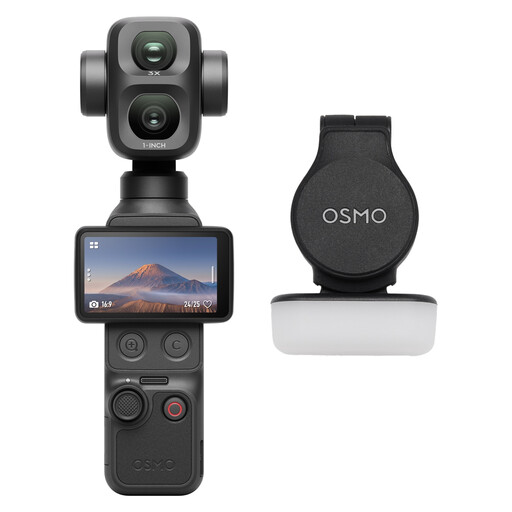
Osmo Pocket 4P Standard Combo, Black
The listing describes a 20 mm f/2.0 wide-angle lens for compact photography on the go.
According to the description, it features a 1-inch CMOS sensor and 4K slow-motion video at 240 fps.
View at Joybuy
 No image available
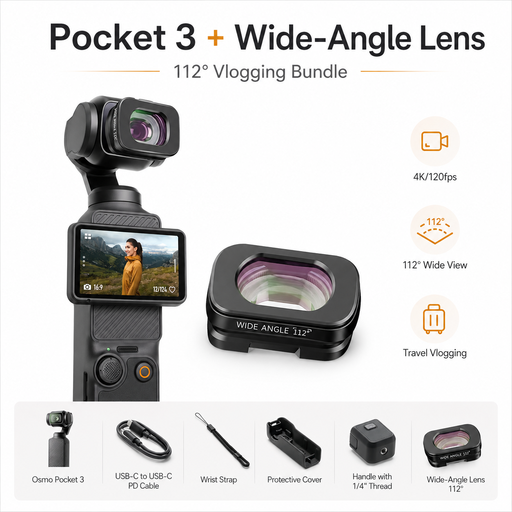
DJI Osmo Pocket 3 Standard Combo with ULANZI F35 112° wide-angle lens
The bundle includes a 112° wide-angle lens for architecture and a mechanical 3-axis gimbal for handheld shots.
According to the description, the product includes a 1-inch CMOS sensor and 4K video at 120 fps.
View at Joybuy
 No image available
DJI Osmo Pocket 4 Standard Combo
The listed 2× lossless zoom offers limited scope to adjust the frame; check whether it’s enough for the architectural details you want to capture.
The title lists a 1-inch CMOS sensor, 3-axis stabilisation, 107 GB of built-in storage and a rotating 2-inch screen.
View at Joybuy
 No image available
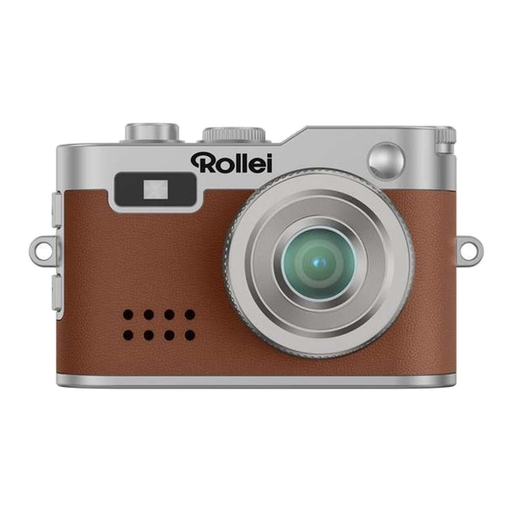
Rollei Mini Digital Camera, Brown
Its mini size and listed weight of 18 g make it a particularly lightweight setup; check whether the photo resolution meets your needs.
The listed photo resolution is 1920 × 1080 pixels (2 MP). It also has a built-in LED light.
View at Joybuy
 No image available
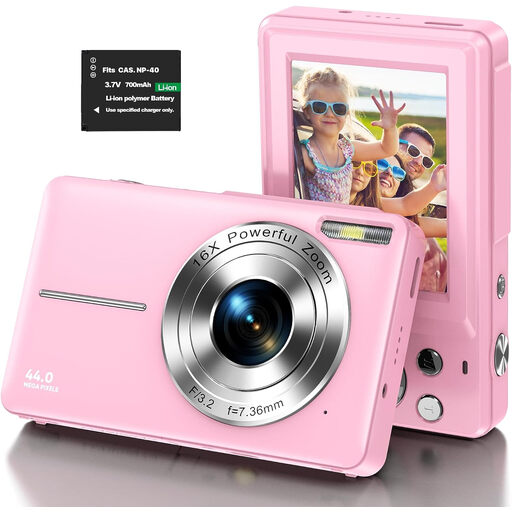
Songdian Pocket Camera 4K 44MP, Pink
The listing specifies autofocus and 16× digital zoom. Digital zoom isn’t a substitute for optical zoom when you want to get closer to details from the same spot.
The description lists Full HD video and a webcam function.
View at Joybuy
Frequently asked questions
Does image stabilisation help with buildings just as much as with people walking past?
No. Image stabilisation helps counter unintended camera movement, not the movement of people. Moving subjects also need an appropriate shutter speed; the right setting depends on the movement and the light.
Do I need to change lenses on the compact cameras mentioned?
The prime lenses or zoom lenses described are built into the models mentioned. Before heading out, check your battery, make sure you have a suitable memory card and set your preferred exposure and stabilisation options.
Can I photograph and publish exterior views of historic buildings in a public market square?
Under certain conditions, § 59 UrhG allows works permanently situated on public paths, streets or squares to be photographed and made publicly available; for buildings, this applies only to their exterior appearance. This does not amount to blanket permission for interiors, temporary installations or identifiable people.
Can I post identifiable market visitors online without further ado?
No, not as a general rule. Under § 22 KunstUrhG, consent is generally required to distribute or publicly display images of people; § 23 sets out limited exceptions, such as people appearing merely as incidental features of a location, subject to legitimate interests. The Rhineland-Palatinate data protection authority also points out that taking photos of identifiable people may itself require a separate legal basis. The purpose of taking and publishing the photos is therefore crucial.
What are my rights if the camera is faulty, and can I cancel an online camera purchase?
Your statutory consumer rights in the event of a fault are against the seller and are separate from any voluntary guarantee. According to the Verbraucherzentrale, consumers who buy online generally have a 14-day right to cancel; exceptions and the details of the specific contract should be taken into account.


