
Lieferung heute & morgen

Qualitätsgarantie

Willkommens-Angebote freischalten: KOSTENLOSE Lieferung | Bis zu 80 % RABATT | Kostenlose 30-Tage-JoyPlus-Testphase
App herunterladen
By Joybuy Product Recommendation Officer, Joybuy
Every artist and illustrator who digitizes their work knows the problem: a meticulously crafted drawing with deep shadows is ruined by a scan or photograph. The reason is the typical graphite sheen, which creates bright reflections on dark surfaces under certain lighting conditions. The result is distorted contrast and a loss of detail that diminishes the original impact of the work.
The Staedtler Mars Lumograph Black was developed to address this exact challenge. Thanks to a special high-carbon formula, this pencil produces a deep, matte black that absorbs light rather than reflecting it. This article serves as a practical guide to understanding the properties of this pencil series and helping you choose the right hardness grade for your artistic needs.
Choosing the right tool depends on the intended application. For a specialized pencil like the Mars Lumograph Black, three factors are particularly relevant.
Unlike conventional graphite pencils, the hardness grade of the Mars Lumograph Black has a direct impact on the intensity of the matte black. The high-carbon formula means:
The key advantage of this series is its glare-free pencil quality. When you scan or photograph your artwork for online presentation, portfolio use, or print preparation, avoiding glare is crucial.
The texture of an artist's charcoal pencil differs from that of a pure graphite pencil. Due to its carbon content, the Mars Lumograph Black feels slightly more "grippy" or rough on paper, in contrast to the silky glide of graphite.
For optimal results, using paper with a light to medium tooth (e.g., papers with a vellum or cold-press surface) is recommended. This texture helps the carbon laydown adhere, allowing for a rich, even application, which is particularly beneficial when working with artist's drawing charcoal.
Here are three selected grades from the series that cater to different artistic needs.
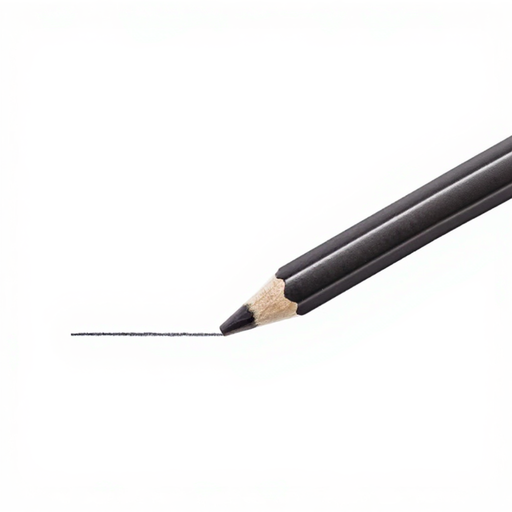
Why It Stands Out: The 4B grade offers a well-balanced mix of rich blackness and good handling. It is dark enough for intense shadows but offers more control than the extremely soft 8B pencil.
Benefits:
Who It's For: Artists and illustrators who want to create dramatic shadows and contrasts in portraits or still lifes and then digitize their work without distracting glare.

Why It Stands Out: The HB grade is unique in this series. It delivers the matte darkness of charcoal but with the precision and cleanliness of a harder lead.
Benefits:
Who It's For: Illustrators, designers, and artists who need defined, dark, and matte lines for their work. It is also excellent for mixed-media techniques to add dark accents over standard graphite.
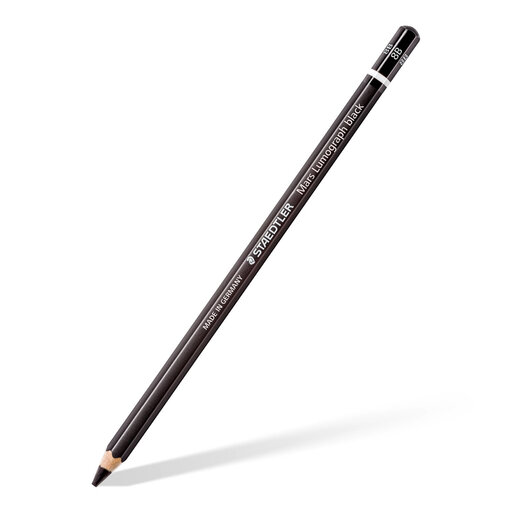
Why It Stands Out: As the Mars Lumograph Black 8B, this pencil represents the maximum blackness and expressiveness of the series. It is the top choice for extremely dark, opaque surfaces.
Benefits:
Who It's For: Artists looking for a pencil for portraits to draw the darkest areas like pupils or deep shadows. Also suitable for anyone aiming for maximum, uncompromising matte darkness in their work.
The Staedtler Mars Lumograph Black is a specialized choice for a specific artistic goal. If you want to expand your toolkit or discover other types of drawing pencils for different techniques, you can find a broader selection in our category.
Discover our entire range of Black Pencils here
The standard Mars Lumograph is a traditional, high-quality graphite pencil known for its wide range of hardness grades and reliability. Its laydown has the typical, slightly metallic sheen of graphite. The Mars Lumograph Black, on the other hand, contains a high proportion of carbon, resulting in a deep, matte, and non-reflective black. It is specifically designed for artists who want to avoid this glare.
Yes, the Mars Lumograph Black can be erased, but it requires more effort than standard graphite. The carbon particles penetrate deeper into the paper fibers. A kneaded eraser is often more effective for lifting the pigment, while a plastic eraser can damage the paper if too much pressure is applied. Caution is advised for precise corrections.
The choice depends on the area being drawn. A combination is often ideal: