If you’re eating the mashed potato that same evening, you don’t need an extra freezer just for that meal. What matters is cooling it quickly and safely. If you want to freeze it for later, first check whether your existing four-star freezer compartment has enough room. A separate appliance is more worth considering if you regularly freeze other food too. In that case, look at usable capacity, freezing capacity, the space it will take up and its annual energy consumption.
Who is this relevant to?
Occasional batch cooks
If you want to keep mashed potato for a meal together at a later date, first check whether your existing freezer compartment is suitable and has enough space. For guidance, see advice from the consumer advice centre and the Federal Centre for Nutrition.
Households that regularly freeze food
If you often freeze other dishes as well as mashed potato, consider storage space and the capacity to freeze newly added food separately. The consumer advice centre covers these factors in its buying guide.
Households short on space
If you need extra freezer space but have little room, compare an appliance’s external dimensions with the space available and the amount of food you need to store. Be sure to check the energy consumption figures for the specific model too.
What should you look for when buying?
Existing four-star freezer compartment
A good fit if: you want to freeze portions for another day and have enough space for the new containers.
The trade-off: You won’t need another appliance running all the time, but you’ll be relying on the spare space and freezing capacity of your existing compartment.
Compact freezer
A good fit if: you regularly want to freeze extra portions but have very little floor space available.
The trade-off: Even a small extra appliance uses electricity all the time; a compact design doesn’t automatically mean lower annual energy consumption.
Larger upright freezer
A good fit if: you want to store other food regularly as well as individual portions, and prefer an appliance with drawers.
The trade-off: More storage takes up more floor space; an appliance that’s much bigger than you need could use electricity unnecessarily.
Chest freezer
A good fit if: you regularly have larger quantities to store and have room for an appliance that opens from the top.
The trade-off: The consumer advice centre says chest freezers use less energy than upright freezers. However, an extra-large appliance isn’t automatically worthwhile for a few small portions.
| What matters? |
What to check when buying |
Who is it most relevant to? |
| Is my existing compartment big enough? |
Look for a four-star rating for freezing fresh food; check the available space and freezing capacity for new portions separately. |
If I want to freeze food for another day, I first need to know whether my existing compartment can fit the portions. Around 33% of consumers say making use of their existing appliance is their main priority. |
| Can it accommodate my portions and freeze the amount I need? |
Compare the usual number of portions and container dimensions with the usable capacity and the model’s freezing capacity in kg/24 h. |
If you regularly need to fit several containers and other food, you’ll need suitable storage space and sufficient freezing capacity. Around 27% of consumers prioritise this. |
| Will the appliance fit in the space available? |
Measure the external dimensions and access route; check the door hinge and compartment layout of the specific model. |
If there’s little room at the installation site, you’ll need to make sure the extra appliance, including its door and compartments, can be accessed easily. Around 20% of consumers prioritise available space. |
| How much electricity will it use? |
For appliances with suitable usable capacity, compare the annual energy consumption in kWh on the EU energy label. |
If you’d be running an extra appliance all the time, you’ll want to consider its stated annual energy consumption before choosing. Around 20% of consumers put this first. |
Common buying and usage assumptions
-
Buying an extra appliance for just one meal together
A separate freezer is worth considering if you regularly need extra freezer space, not automatically for a single meal.
First, work out when you’ll be eating the mashed potato and whether a suitable compartment in your existing appliance has enough room for portions you want to keep for later.
An extra appliance takes up space and uses electricity even between meals.
-
Confusing usable capacity with freezing capacity
Usable capacity tells you how much storage space an appliance has; the figure in kg/24 h refers to how much newly added food it can freeze. The two figures answer different questions.
Check your container dimensions and available interior space separately from the model’s kg/24 h figure.
-
Assuming a mini appliance will automatically use less electricity
A small design alone doesn’t guarantee lower annual energy consumption. The consumer advice centre warns against judging appliances on size alone.
For models that meet your space requirements, compare the annual energy consumption in kWh on the energy label.
-
Thinking freezing can replace cooling food quickly
Cooked mashed potato needs to be cooled properly before it’s stored in the freezer for longer. Freezing doesn’t replace this step.
The German Federal Institute for Risk Assessment recommends cooling hot food quickly to below 7 °C and reheating it to at least 70 °C throughout for two minutes.
Brands to consider
Exquisit
The GB05-040E is an example of a compact extra freezer. Exquisit lists 33 l of usable capacity and a freezing capacity of up to 2.4 kg in 24 hours for this model.
- The stated dimensions of 44 × 51 × 47,5 cm make it easier to check whether it will fit in a tight space.
- Check whether the usable capacity and freezing capacity are enough for the number of portions you prepare at once; these figures apply to this model.
Bosch
Bosch lists 225 l of freezer capacity, No Frost and a freezing capacity of 19,0 kg/24 h for the GSN33VWEP upright freezer. The manufacturer’s specifications for this model also include 229 kWh/year and dimensions of 176 × 60 × 65 cm.
- The stated capacity and drawers may be useful if you regularly store frozen food.
- Its larger size may be unnecessary for occasional small portions; manufacturer specifications aren’t an independent performance test.
Liebherr
Liebherr lists a total capacity of 277 l and external dimensions of 185,5 × 59,7 × 67,5 cm for the FNd 522i Plus NoFrost upright freezer. The model is described as having NoFrost and larger compartments.
- The compartments and stated capacity may be worth considering if you regularly store food in the freezer.
- Check that the space available and your actual storage needs suit this model; this doesn’t mean the same applies to every appliance from the brand.
Beko
The RFNE312E43WN is an example of a larger freestanding freezer; Beko says its door hinge can be changed over.
- A reversible door hinge may be useful when checking whether an appliance will suit your chosen location.
- Beko lists both 275 l and 282 l for this model. Check the product specification sheet for the correct capacity before comparing sizes.
Freezers at Joybuy
The following Joybuy options include compact freezers and chest freezers for extra portions or food supplies. If you’re freezing freshly prepared food, check that the specific appliance is suitable for this.
 No image available
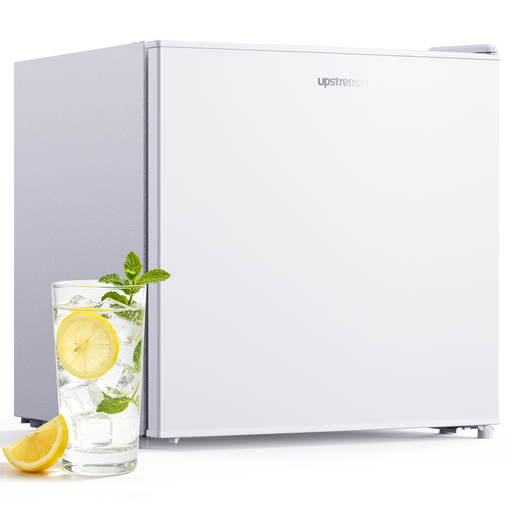
Upstreman UF35, mini freezer, 35 l, white
A compact option if you want to freeze extra portions and have limited space.
35 l; four-star freezer; reversible door hinge.
View at Joybuy
 No image available
AUCMA chest freezer, 95 l, convertible
A chest freezer for extra storage, provided the specific model is rated for freezing fresh food.
95 l; energy efficiency class E; switches between cooling and freezing modes; removable basket and defrost drain.
View at Joybuy
 No image available
Gorenje FH15E6W5, chest freezer, 141 l
A larger chest freezer for extra food supplies; before buying, check that the specific appliance is suitable for freezing fresh food.
141 l; FastFreeze; FreezeProtect down to −15 °C; flexible baskets.
Check the stated installation conditions, particularly if you plan to keep it in a garage or cellar.
View at Joybuy
 No image available
COMFEE' RCU40WH2(E), mini freezer, 31 l, white
A compact option for extra portions when space is limited.
31 l; four-star freezer; 147 kWh/year; energy efficiency class E; reversible door hinge and adjustable feet.
View at Joybuy
 No image available
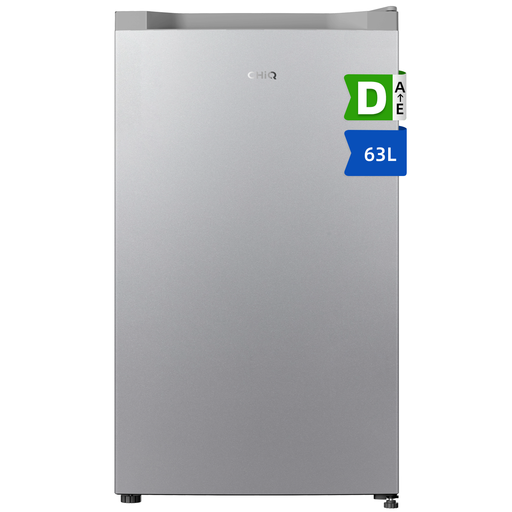
CHiQ JR63DSD, freezer, 63 l, silver
A drawer-style option for extra organised freezer space if width is limited where you plan to put it.
63 l; four-star freezer; 47 cm wide; reversible door hinge; energy efficiency class D.
The appliance needs to be defrosted manually.
View at Joybuy
Frequently asked questions
Does mashed potato need to be frozen if I’m eating it this evening?
No. Freezing isn’t necessary if you’re eating it that same evening. Cool cooked food quickly if you’re keeping it for later, and store perishable food in the fridge. The guidance from the German Federal Institute for Risk Assessment doesn’t replace an assessment of how the specific batch of mashed potato has been handled.
Can I freeze cooked mashed potato?
The consumer advice centre generally considers cooked food suitable for freezing, but notes that dairy products may change in consistency. Divide the mashed potato into suitable portions and use freezer-safe containers; this doesn’t guarantee that its consistency will be unchanged after thawing.
Is my existing freezer compartment suitable for freezing fresh food?
Check whether the compartment has a four-star rating and enough room for the new portions. According to the Federal Centre for Nutrition, a four-star compartment is designed for freezing food; storage capacity alone doesn’t tell you how much newly added food the appliance can freeze.
How can I tell whether a freezer is big enough for my portions?
Compare your container dimensions and the storage space you need with the stated usable capacity. If you’re freezing several portions at once, also check the freezing capacity in kg/24 h. These figures describe different features of the appliance.
How should I cool and reheat mashed potato safely?
The German Federal Institute for Risk Assessment recommends cooling hot food quickly to below 7 °C; you can divide larger quantities between several shallow containers to help. When reheating, the BfR recommends reaching at least 70 °C throughout for two minutes.


