
Lieferung heute & morgen

Qualitätsgarantie

Willkommens-Angebote freischalten: KOSTENLOSE Lieferung | Bis zu 80 % RABATT | Kostenlose 30-Tage-JoyPlus-Testphase
App herunterladen
A mass gainer can make it easier to increase your daily energy intake. However, for adults involved in strength training, bodybuilding or endurance training, or those with high calorie requirements, a weight gainer is not automatically the right solution. Portion size, the balance of protein and carbohydrates, and how well it fits into your everyday routine are all crucial factors.
A claim such as “over 1,250 kcal” may initially sound clear. However, for some products, this refers to a portion of more than 330 grams. This means a tub containing only a few portions may run out sooner than expected. Always compare:
With a mass gainer containing 334 to 340 grams of powder, preparation alone can already result in a large drink. For beginners, half a portion is often more practical, provided the manufacturer allows for this.
A calorie surplus supports weight gain, but does not automatically result exclusively in muscle mass. A sensible combination of progressive strength training, sufficient protein, sleep and an overall balanced diet remains essential.
A weight gainer is therefore primarily a concentrated food supplement for athletes. It does not replace a varied diet and should not be used as the sole basis of your daily meal plan.
Many products contain milk ingredients, soya, egg or cereals containing gluten. Recipes can also differ between similar flavours. Check the current information on the packaging before buying, particularly for:
The information on the product packaging is authoritative, as recipes and nutritional values may vary depending on the batch or variant.
For hard gainers and people with high energy expenditure, calorie density is a key criterion. Depending on the variant, Optimum Nutrition Serious Mass is listed as providing approximately 1,250 to 1,268 kcal per portion, around 50 grams of protein and more than 250 grams of carbohydrates. The recommended portion is approximately 334 to 340 grams.
Depending on the flavour and calculation method, Mammut Nutrition Crash Weight Gainer provides approximately 365 to 388 kcal per 100 grams. A portion of 70 to 90 grams is often prepared with milk. This results in approximately 430 to 518 kcal, depending on the milk and portion size. The carbohydrate content is around 76 to 83 per cent, while the protein content is approximately 11 to 13 grams per 100 grams, depending on the variant.
These differences are important when choosing a product. If you want to consume as many calories as possible in a shake, focus on the nutritional values per portion. If you want to manage your protein intake more precisely, compare the protein content per 100 grams and per portion with your own daily requirements.
Some of the products listed contain creatine monohydrate. Optimum Nutrition Serious Mass is listed as providing approximately 3 grams of creatine per large portion. For Mammut Nutrition Crash Weight Gainer, the figures are approximately 0.7 to 1 gram of creatine monohydrate per portion, depending on the variant.
Creatine is therefore one of the product’s ingredients, but it is not a reason to exceed the recommended serving size. If you already use a separate creatine supplement, take your total intake into account and follow the manufacturer’s instructions.
A large pack is not automatically more economical if you do not enjoy the flavour over the long term or if the portions are too large for your personal needs. For a first purchase, a 1.4 or 2.73-kilogram format may be a sensible choice. Frequent users can consider a 4.5- or 5.45-kilogram pack.
Calculate the cost per portion using this simple formula:
Purchase price ÷ stated number of portions = price per portion
Also consider whether the powder is prepared with water or milk. Milk increases the calorie and protein content, but it also affects digestibility and ongoing costs.
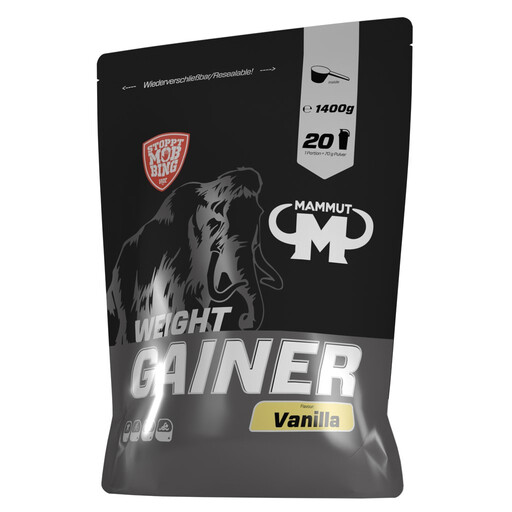
Why this product suits this profile: The smaller pack size and 70 g portion make it possible to introduce weight gain in a controlled way without buying a large pack straight away.
Nutritional values are provided per 100 g and per portion. This makes it easier to compare the actual calorie and carbohydrate content with your personal requirements.
Approximately 382 kcal per 100 g, around 78 g of carbohydrates and 13 g of protein per 100 g; also contains creatine monohydrate.
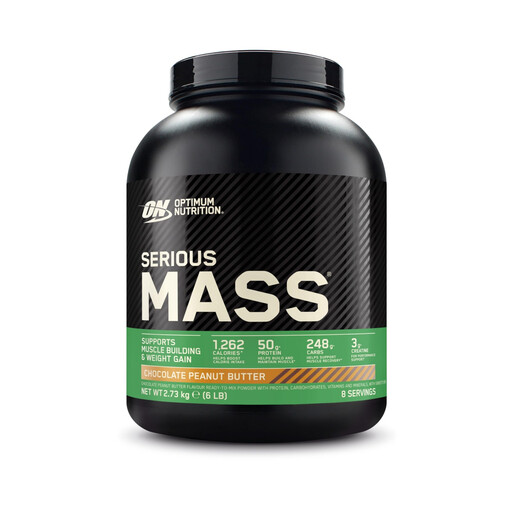
Why this product suits this profile: A clearly stated large portion containing 50 g of protein, over 250 g of carbohydrates and 3 g of creatine is aimed at adults with high calorie requirements during intensive training phases.
The portion size, protein, carbohydrate, fat and creatine figures can be compared directly. “No added sugar” does not replace checking the stated sugar content.
Approximately 1,250 kcal per portion, 50 g of protein, more than 250 g of carbohydrates and less than 5 g of fat according to the product information.

Why this product suits this profile: The large pack is suitable for regular use, while its high carbohydrate content may be particularly useful for endurance and performance sports with increased energy requirements.
Portion information is provided together with the amount of milk used. This makes it possible to distinguish which calories come from the powder and which come from preparation.
Approximately 366 kcal per 100 g, around 76 g of carbohydrates and 11 g of protein per 100 g; 4.5 kg pack for regular use.
We have put together a complete, regularly updated list of products that fully meet these strict selection criteria and the safety regulations applicable in the EU.
Start with a small portion and observe how the shake fits into your diet. A large portion straight after training is not comfortable for everyone. Depending on your daily routine, you can use a weight gainer between meals, after training or as an additional snack.
The following approach can be practical:
If you have an existing medical condition, take medication, have allergies or are unsure about using the product, seek medical advice beforehand. Food supplements are not intended for people under 18 or during pregnancy or breastfeeding unless the product information states otherwise.
This depends on your individual calorie requirements, the rest of your diet and the manufacturer’s instructions. For large portions, start with half a portion if this is предусмотрed for in the instructions. A mass gainer should be used purposefully to supplement a calorie surplus, not to replace several meals without due consideration.
No. It is possible to build muscle using ordinary foods. However, a gainer can be practical if you find it difficult to consume enough calories, protein and carbohydrates through regular meals. Your training and overall diet remain the key factors.
Follow the best-before date and the manufacturer’s storage instructions. Depending on the product, Mammut Nutrition recommends consuming the contents within a specified period after opening. The powder should be kept dry, and any prepared shake should be consumed promptly.