
Lieferung heute & morgen

Qualitätsgarantie

Willkommens-Angebote freischalten: KOSTENLOSE Lieferung | Bis zu 80 % RABATT | Kostenlose 30-Tage-JoyPlus-Testphase
App herunterladen
Selecting the right massager involves analysing your individual needs and the technical specifications of the available device types. Whether for muscle relaxation after a long day at work, to support recovery after sports, or for targeted application on areas of tension, the device's operating principle is crucial for achieving the desired benefit. This guide analyses the three primary categories of massagers for home use: percussive devices like the massage gun, kneading devices such as the neck massager, and heat-based devices like the infrared lamp.
The decision to purchase a massager should be based on objective parameters. The following technical aspects are relevant for making an informed choice.
Modern devices often offer advanced features that expand their range of applications. These include integrated heating or cooling functions, various attachments for different body regions, and control via an app. The quality of the materials, especially for the massage heads and housing, as well as an ergonomic design, are indicators of the product's durability and safety.
Based on an analysis of technical specifications and practical utility, we present three devices with different functional focuses.

Why we recommend this product: The Beurer IL 50 is a specialised device for heat therapy. Its design is aimed at the targeted and safe application of infrared heat. The combination of a high 300-watt power output, a large treatment area, and adjustable angles allows for effective application on various parts of the body. Safety features like the integrated timer and overheating protection underscore its focus on controlled home use.
Pros:
Who it's for: Users seeking a non-mechanical solution for pain relief from muscle tension or joint discomfort. It is also an option for supportive treatment of cold symptoms through targeted heat application.
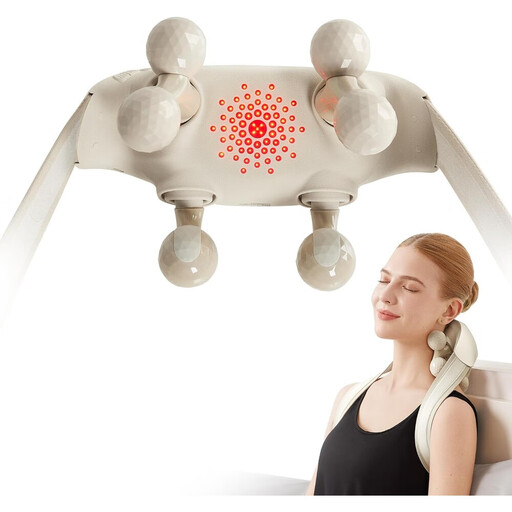
Why we recommend this product: The SKG H7 Ultra combines a mechanical kneading massage with a heat function in a hands-free design. The "backpack" style construction allows for use without having to hold the device, which increases its practical utility in daily life. The 6D massage nodes with a special faceted structure and the large-area heating zone with 64 red light beads are designed for comprehensive treatment of the neck and shoulder area.
Pros:
Who it's for: Individuals with chronic tension in the neck and shoulder area, especially office workers. Ideal for users who prefer an intense kneading massage and want to perform other activities during the application.

Why we recommend this product: The RENPHO Power+ Thermacool is a multifunctional fascia gun that combines percussive therapy with an integrated heating and cooling function. This duality makes it a versatile tool for different phases of muscle treatment – from warming up with heat to recovery with cold. Its connection to the Renpho Health app for control and video tutorials, as well as its high 12 mm amplitude for deep tissue massage, make it technically stand out.
Pros:
Who it's for: Athletes and active individuals looking for a device for muscle preparation and recovery. Also suitable for tech-savvy users who appreciate precise control and versatile application options (heat, cold, percussion) in a single device.
While targeted massagers address specific physical complaints, general well-being within your own home is also influenced by other factors. Optimised ambient lighting can contribute to relaxation and create a calming atmosphere that indirectly supports the effect of muscle relaxation. For adjusting the ambiance through lighting design, you can find a selection of solutions in our Downlights category.
1. What is the difference between a massage gun and a neck massager? A massage gun works with rapid, percussive pulses and is designed for the deep treatment of muscle tissue all over the body. A neck massager, on the other hand, uses rotating nodes to simulate a kneading Shiatsu massage and is ergonomically shaped specifically for the neck and shoulder area.
2. How often should a massager be used? The recommended frequency and duration of use depend on the device type and individual constitution. Many manufacturers integrate a timer (e.g., 10–15 minutes) as a safety measure to prevent overstimulation of an area. It is advisable to follow the manufacturer's instructions in the user manual and to consult a doctor before use if you have pre-existing health conditions.
3. Is heat or cold therapy better for muscle pain? Both forms of therapy have different purposes. Heat therapy is typically used to loosen chronic tension and improve circulation before an activity. Cold therapy is often applied after an acute injury or intense training to reduce inflammation and swelling. Devices like the RENPHO Power+ Thermacool offer both options.