
Lieferung heute & morgen

Qualitätsgarantie

Willkommens-Angebote freischalten: KOSTENLOSE Lieferung | Bis zu 80 % RABATT | Kostenlose 30-Tage-JoyPlus-Testphase
App herunterladen
A massage device can come in handy in everyday life, after sitting for long periods or around your sporting activities. There’s plenty of choice, from compact massage guns and cordless handheld devices to neck massagers with a heat function. However, marketing claims don’t always help you make the right choice.
Three common pitfalls can lead to poor decisions:
The key is to decide which areas of your body you want to target regularly and how you plan to use the device day to day.
A massage gun usually works with fast, pulsing movements. Amplitude describes the distance the attachment travels. A higher figure may allow for a more intense massage, but it won’t suit everyone or every area of the body.
The following details are also worth checking:
A deep-tissue massage shouldn’t be forced by applying heavy pressure. Take particular care around bones, joints, the spine, head and front of the neck. Always follow the instructions provided by the manufacturer of your device.
A cordless massage device is convenient to use in different places, such as the living room, office or after a workout. Don’t just compare advertised battery life. Also check:
A lightweight portable massage device is easier to use on your shoulders, arms and legs. Heavier devices can be more tiring to use on your back.
A massage gun is primarily suited to individual muscle groups. A neck massager or shoulder massager with straps, rollers or a U-shaped design, on the other hand, is made for the neck and shoulder area. Models with a heat function should offer clear temperature controls. Take particular care if you have sensitive skin or reduced sensitivity to heat.
Look for durable surfaces that are easy to clean, a non-slip handle and clearly marked controls. For everyday use of an electric massage device, CE marking, safety information in German and details of the responsible economic operator in the EU are also important checks.
The products below vary in design, features and intended use. Details are based on the information provided for each product.
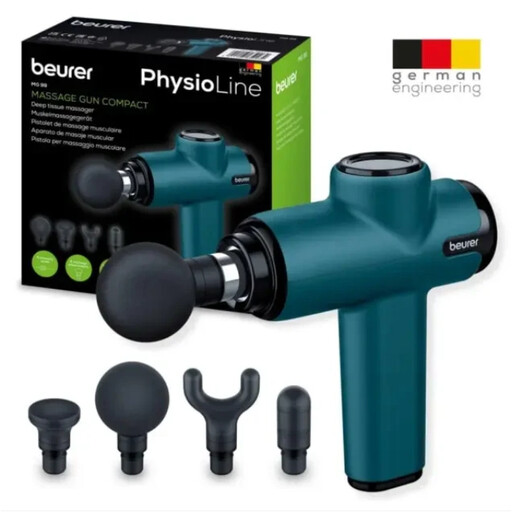
Why it suits this profile: This compact handheld device has five intensity settings and four attachments for different muscle groups. At around 620 g, it’s relatively easy to handle for occasional use.
The key details, including settings, attachments, battery power and automatic shut-off, are clearly stated, rather than relying on claims about a powerful motor.
Five intensity settings, four massage heads, an LED display and an advertised battery life of up to around five hours.
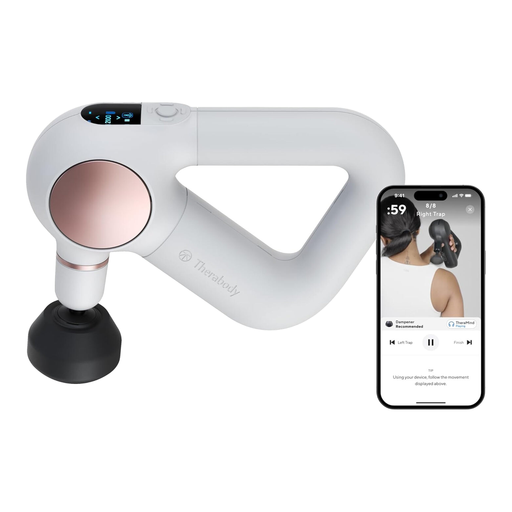
Why it suits this profile: This device combines a triangular handle design with four attachments and app connectivity. It may appeal to buyers who prefer guided routines and extra information on how to use it.
The additional features are clearly listed: app connectivity, guided breathing exercises, a sensor and interchangeable attachments. This makes it easier to decide whether they suit the way you plan to use the device.
Ergonomic triangular handle, four attachments and Bluetooth pairing with the Therabody app, according to the product description.
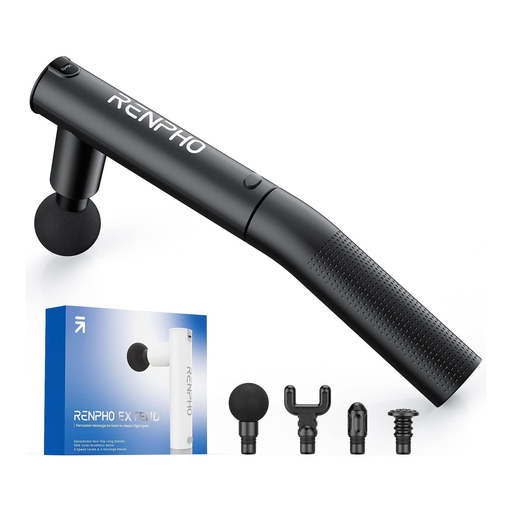
Why it suits this profile: According to the product description, the detachable extension handle makes it easier to reach your back. This makes the device a good option for anyone who wants to massage themselves regularly.
Its design addresses the common challenge of reaching certain areas of the body. It also has four speed settings, four attachments and a ten-minute timer.
8 mm amplitude, Type-C charging, a weight of around 490 g and an advertised battery life of approximately 240 to 300 minutes per charge.
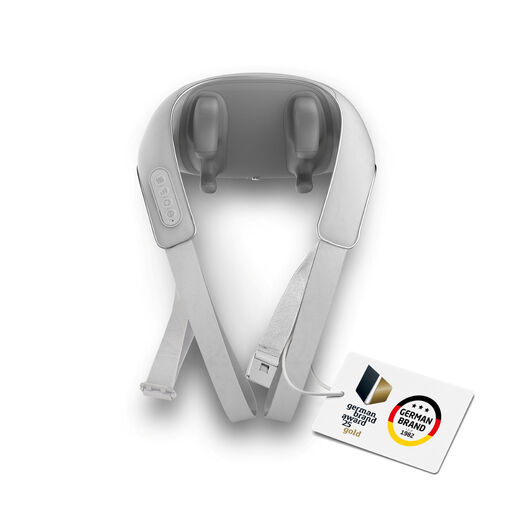
Why it suits this profile: This cordless neck massager is designed for the neck, shoulders, back and legs. Two modes, three speeds and an optional heat function offer plenty of control.
The heat function can be switched off, while the intensity can be adjusted using the modes, speed settings and adjustable straps. This means you’re not limited to one fixed setting for every use.
Four built-in massage heads, a rechargeable battery, a washable neck cover and cordless use.
We’ve put together a complete, regularly updated list of products that meet these strict selection criteria and fully comply with the safety regulations in force in the EU.
When using a new massage device for home, start on the lowest setting. Move the attachment slowly over the muscle and avoid applying heavy pressure. The automatic shut-off on many models is a useful guide, but it doesn’t replace the instructions in the user manual.
Also remember:
A massage device can support your personal relaxation or be part of routines focused on muscle recovery. It isn’t a substitute for medical examination or treatment.
It depends on the model and the area of the body. Manufacturers often specify an automatic shut-off after around ten minutes. Avoid using the device on the same spot for a long time, and follow the instructions in the user manual. With a massage gun, short, controlled movements are usually more practical than applying heavy pressure.
Running costs depend on battery capacity, how often you charge the device and your electricity tariff. USB-C devices generally use a modest amount of energy per charge. For a more precise estimate, you can convert the battery capacity into watt-hours and multiply it by your current electricity rate.
A massage gun must not be used directly on the cervical spine, larynx or front of the neck. A specially designed neck massager may be more suitable for this area. Start on a low intensity setting and follow the safety instructions provided by the manufacturer.