
Lieferung heute & morgen

Qualitätsgarantie

Willkommens-Angebote freischalten: KOSTENLOSE Lieferung | Bis zu 80 % RABATT | Kostenlose 30-Tage-JoyPlus-Testphase
App herunterladen
Whether it's after a workout, a long day at the office, or simply for relaxation, a massage gun promises quick relief from tension and muscle soreness. However, the market is flooded with devices whose marketing claims often create more confusion than clarity. As your Joybuy Product Recommendation Officer, I'll help you identify the crucial features and avoid common purchasing pitfalls, so you can find a device that truly fits your needs.
Many buyers focus on superficial metrics that mean little in practice. Pay attention to these three points to avoid making a bad purchase:
To find the right muscle massage gun, you should focus on the technical specifications that make a real difference.
Amplitude indicates how deeply the massage head penetrates the muscle tissue. This is the most critical factor for an effective deep tissue massage.
No one wants to be disturbed by a loud motor while trying to relax. A quiet massage gun is especially important if you plan to use it on your neck or in a quiet environment like the office or at home in the evening. Look for devices with a noise level below 50 decibels (dB)—roughly equivalent to a quiet conversation.
A compact and ergonomic device is easier to handle, especially on hard-to-reach areas like your back. A heavy device can lead to arm fatigue during prolonged use. Models under 800 grams are generally comfortable to handle.
Instead of presenting an overwhelming list, we have selected products for specific user groups.
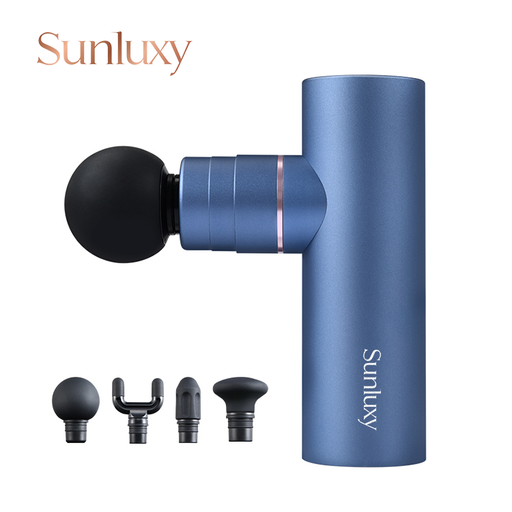
Why it's a good fit: Ideal for anyone seeking a reliable device for everyday tension without spending a fortune. Its compact design and long battery life (according to the manufacturer at a low setting) make it a practical daily companion.
This model focuses on the essentials: it offers four versatile massage heads that cover the most common applications, rather than overwhelming users with a confusing array of accessories.
The combination of a 76W motor and a manufacturer-stated battery life of up to 9 hours provides a solid performance package for the price.
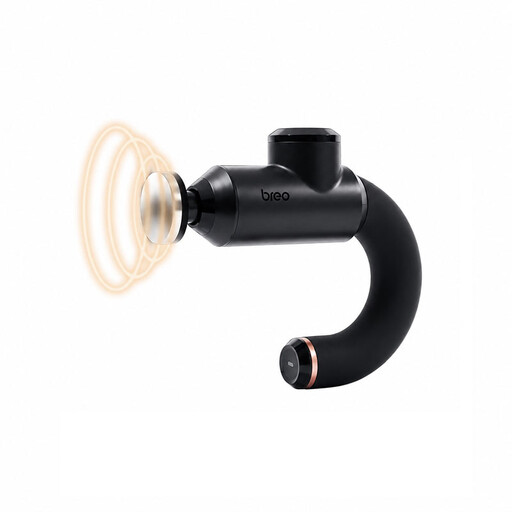
Why it's a good fit: Engineered for the needs of athletes. The high amplitude and stall force allow for effective treatment of dense muscle groups, while the heat function provides additional support for muscle recovery.
Here, high performance isn't an empty marketing promise. The 12 mm amplitude and stall force of up to 19 kg are genuinely relevant for the target audience of athletes, delivering the necessary intensity for a true deep tissue massage.
The integrated heat function, which the manufacturer claims heats up in 5 seconds, sets this device apart from many others and specifically promotes blood circulation.
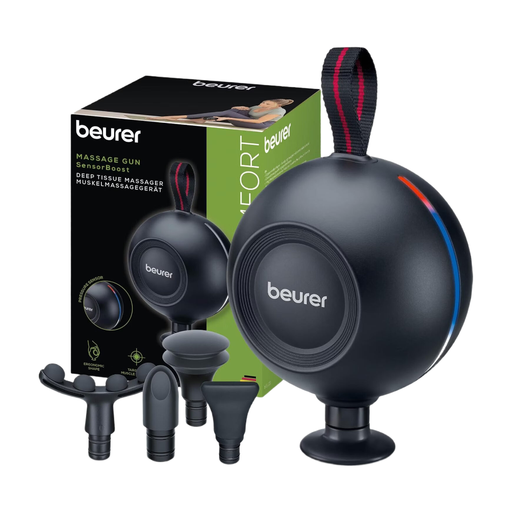
Why it's a good fit: Weighing only 250g and with an operating noise of 38 dB, this device is extremely portable and discreet. It's the ideal choice for travel, the office, or anyone who values a quiet application.
This model relies on smart features instead of raw power. The pressure sensor, which automatically adjusts the intensity, prevents overstimulation and makes the application safer and more effective, especially for beginners.
Extremely compact and ergonomic as well as very quiet in operation. The intelligent pressure sensor offers real added value for a personalized massage.
We've compiled a complete, up-to-date list of products that fully meet these strict selection criteria and safety regulations.
1. How long should you use a massage gun per muscle group? For most muscle groups, an application time of 30 to 60 seconds is recommended. A longer treatment on the same spot generally provides no additional benefit and, in the worst case, can lead to irritation or bruising. Many devices have an automatic shut-off feature after 10-15 minutes to prevent overuse.
2. Can I use a massage gun for neck pain? Yes, but with caution. A neck massager should only be applied to the muscle strands on the sides of the spine (trapezius muscle). Absolutely avoid direct contact with the cervical spine, the front of the neck, and bony structures. Start with the lowest intensity level and a soft attachment.
3. What is the difference between a massage gun and a fascia gun? The terms massage gun and fascia gun are often used interchangeably and generally refer to the same device. The name "fascia gun" emphasizes its use for loosening the fascia—the connective tissue that envelops the muscles. Technically, there is no fundamental difference between the devices.