
Lieferung heute & morgen

Qualitätsgarantie

Willkommens-Angebote freischalten: KOSTENLOSE Lieferung | Bis zu 80 % RABATT | Kostenlose 30-Tage-JoyPlus-Testphase
App herunterladen
A massage gun can be a handy addition to your daily routine, whether you're an athlete, a fitness or yoga enthusiast, or simply someone with tight muscles. However, it is not a substitute for medical examination or treatment. Before you buy, it's worth taking a close look at the technical specifications, handling and safety information – because some marketing claims don't tell you much about how suitable the device actually is.
Figures like 3,200 revolutions per minute or a high "massage force" sound impressive at first. But for everyday muscle relaxation, it's also crucial that you can adjust the intensity finely. A very powerful setting can be uncomfortable and isn't suitable for every part of the body.
More important than a single top value are therefore multiple speed levels, controlled application and a housing that sits securely in your hand.
A massage gun with different attachments can be practical for various muscle groups. However, the shape should suit the intended use. A round attachment, for example, is often good for larger muscle areas, while a flat or U-shaped head can be used more precisely.
What matters isn't the number of accessories, but whether the attachments are easy to change, securely fastened and simple to clean.
A cordless massage gun offers flexibility whether you're at home or on the go. But a small battery may need frequent recharging. A heavy device, on the other hand, can quickly become tiring when you're massaging your own back, shoulders or legs.
So check battery capacity, charging port, total weight and handle design. A USB-C or Type-C port can make charging easier with existing power adapters, provided they are technically compatible.
The speed describes how fast the motor works. The amplitude indicates how far the attachment moves into the tissue with each stroke. It is not the same as pressure force. A model with around 8 to 10 millimetres of amplitude can feel quite different for muscle massage compared to a more compact device with a shorter stroke.
For beginners, several low levels are useful. Always start with the lowest setting and move the device slowly over the muscle. Do not use it directly on bones, joints, the spine, the head or sensitive areas.
Typical attachments differ in shape and contact surface. For deep tissue massage, you shouldn't automatically use as much pressure as possible. The application should feel comfortable and controlled. For legs, shoulders or arms, a larger attachment can be more practical; smaller shapes allow for more targeted use.
A foam roller, by contrast, works with your own body weight and a larger contact surface. It can complement a massage gun, but it is also not a medical instrument. Models made from PVC or PE should be cleaned dry after use and protected from strong heat.
Look for clear safety instructions, a secure charging port and an automatic shut-off. The devices presented here mention a shut-off after about 10 minutes or a maximum usage time per muscle group. This feature can help you avoid using it for too long.
If you are pregnant, have a pacemaker, implants, thrombosis, osteoporosis, open wounds, severe swelling or other health conditions, you should seek medical advice before use. These devices are not intended for self-treatment of pain or illness. If you experience sharp pain, numbness or persistent discomfort, stop using the device immediately.
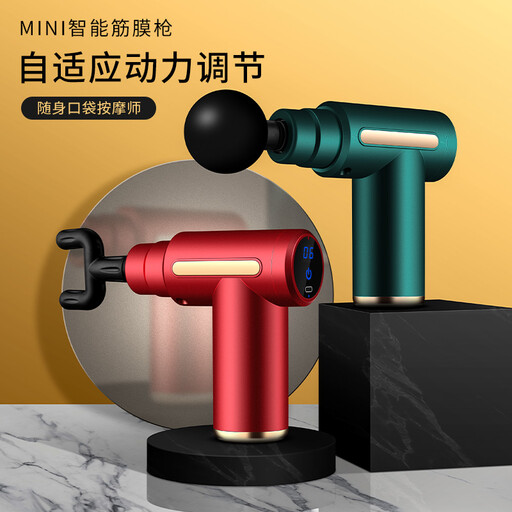
Why this product fits the profile: This compact massager offers six speed levels between 1,800 and 3,200 revolutions per minute, plus four massage heads. With its Type-C port, it's ideal for users who want a simple, mobile solution for home or on the go.
The six levels allow you to use a lower setting rather than only operating at maximum speed. The stated battery capacity is 1,200 mAh.
Compact design, four attachments, six speed levels and Type-C charging.
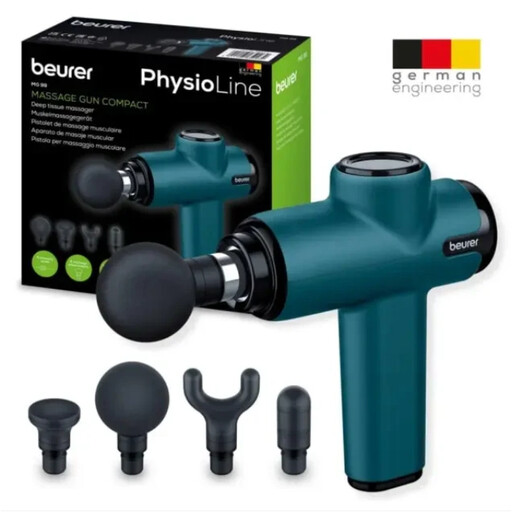
Why this product fits the profile: According to the product information, this device features five intensity levels, four attachments, LED displays and a rechargeable lithium-ion battery. At around 620 grammes without attachments, the feature set remains manageable for regular use.
The intensity can be adjusted across five levels. An automatic shut-off after about 10 minutes limits continuous use.
Five intensity levels, four attachments, LED display, up to around five hours of battery life according to the product description, and automatic shut-off.
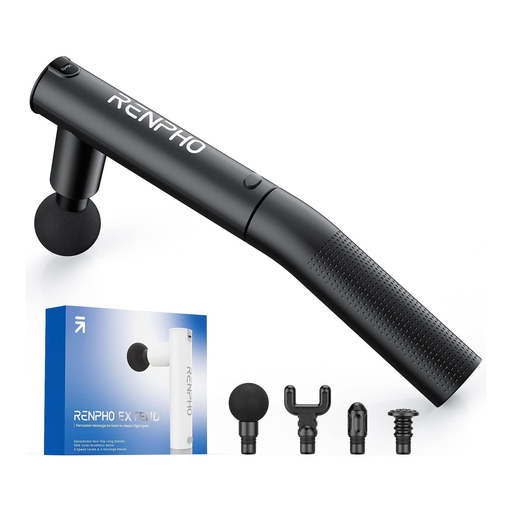
Why this product fits the profile: According to the product description, the detachable extension handle makes it easier to reach your back. With a 2,000 mAh battery, four attachments and four speed levels, this device is designed for regular use.
The handle addresses the typical limitation of hard-to-reach areas. The four levels prevent you from only having a choice between off and maximum power.
Detachable extension handle, 8 millimetre amplitude, up to 2,600 revolutions per minute and a stated runtime of 240 to 300 minutes.
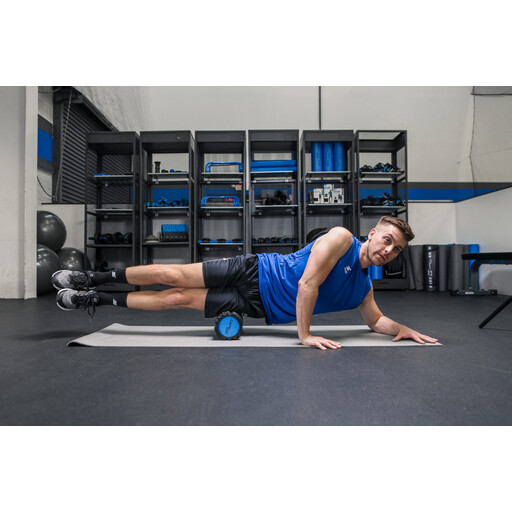
Why this product fits the profile: This 30-centimetre foam roller made from PVC and PE is suitable for exercises in fitness, yoga and Pilates. It doesn't need a battery and can be used before or after training.
Use is not dependent on battery level or motor power. The compact length and included carry bag make storage and transport easy.
30 centimetres long, 12 inches, PVC and PE material, plus a carry bag for use at home, in the studio or on the go.
We've put together a complete, regularly updated list of products that fully meet these strict selection criteria and the safety regulations in force in the EU.
For individual muscle groups, around 10 to 15 minutes is often given as an upper limit. Start with shorter sessions and low intensity. Always follow the instructions in the user manual. Pain, numbness or unusual discomfort are signals to stop immediately.
The runtime depends on battery capacity, speed level and usage duration. According to the product information, the models mentioned range from a compact 1,200 mAh solution up to around 240 to 300 minutes for the RENPHO model. With regular use, you should check the charge level and charging accessories before training.
Both products follow different application concepts. An electric massage gun provides motorised, locally targeted vibration; a foam roller works with pressure from your own body weight and is suitable for larger areas. The right choice depends on the body part, your training routine, transport needs and personal handling preferences.