
Lieferung heute & morgen

Qualitätsgarantie

Willkommens-Angebote freischalten: KOSTENLOSE Lieferung | Bis zu 80 % RABATT | Kostenlose 30-Tage-JoyPlus-Testphase
App herunterladen
A mass gainer can help adults involved in strength training, bodybuilding, endurance and performance sports add extra calories and carbohydrates to their daily plan. However, the powder is no substitute for a balanced diet or an individual training programme. The key question is whether the ingredients genuinely suit your calorie needs, serving size and everyday routine.
Buying a weight gainer can often lead to unnecessary expense. Large containers, eye-catching calorie figures and terms such as “hardgainer” or “high-calorie gainer” alone reveal little about how suitable a product is in practice.
Depending on the product, one serving can contain anywhere from around 70 to 340 grams of powder. Some products are calculated with water, while others are based on milk. This can make the calorie figures appear different at first glance.
For a fair comparison, check:
A mass gainer with 1,250 kcal per serving is not automatically the right choice if the serving contains more than 330 grams of powder and is difficult to tolerate or impractical in everyday life.
Many weight gainers are primarily a protein and carbohydrate mix. In the products considered here, the carbohydrates come partly from maltodextrin and dextrose. These ingredients can increase energy density, but they should be considered as part of your overall diet.
You should therefore also look at:
A product containing 80 per cent carbohydrates may be interesting for people with high energy requirements, but it is not necessarily the right choice for every dietary approach.
Some products contain creatine monohydrate. The amount can vary considerably: Optimum Nutrition Serious Mass lists around 3 grams per large serving, depending on the variant, while Mammut Nutrition Crash Weight Gainer states approximately 1 gram of creatine monohydrate per 100 grams of powder.
Creatine must therefore be included when calculating your total daily intake. If you already use a separate creatine product, consider both amounts together and do not exceed the recommended intake.
Weight gain fundamentally requires a positive energy balance. A gainer can help you consume additional energy if large meals are difficult or your training routine increases your requirements. However, the right amount depends on your body weight, activity level, diet and training goal.
In practice, it is sensible to start with half a serving and monitor changes in your body weight and how well you tolerate it. This is particularly important with very high-calorie products.
A muscle-building supplement should not be judged on calories alone. Compare protein and carbohydrates separately:
The figures refer to the respective product information. The information on the current packaging is always decisive, as recipes or nutritional values may vary.
The products mentioned contain, among other ingredients, milk, soya, egg and gluten-containing cereals. Cookies-and-cream variants may also contain wheat ingredients. Read the ingredients list carefully before buying.
The preparation quantity is also relevant. Depending on the variant, Mammut Nutrition Crash Weight Gainer is recommended with 70 or 90 grams of powder and milk. Optimum Nutrition Serious Mass is prepared with approximately 334 to 340 grams of powder and around 700 to 710 millilitres of liquid. This affects the taste, consistency, calorie intake and how quickly you use the product.
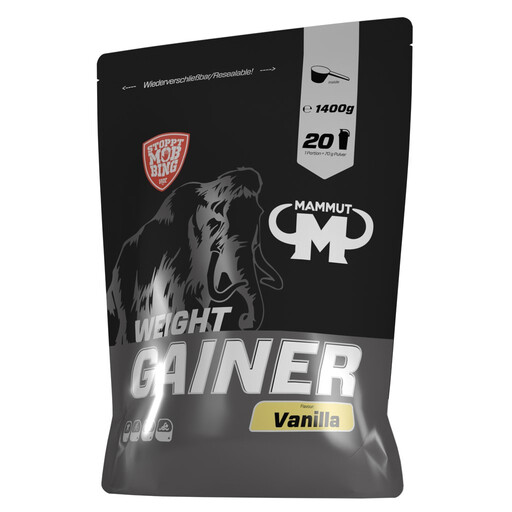
Why this product suits this profile: The smaller pack makes it easier to try weight-gainer powder without buying a large supply straight away. According to the product information, a 70-gram serving prepared with milk provides around 430 kcal and 18 grams of protein.
The serving size is significantly smaller than that of many very high-calorie gainer recipes. This makes it easier to gradually adjust the additional energy to your personal calorie surplus.
1.4 kg pack, chocolate flavour, approximately 78 per cent carbohydrates and creatine monohydrate as an ingredient.
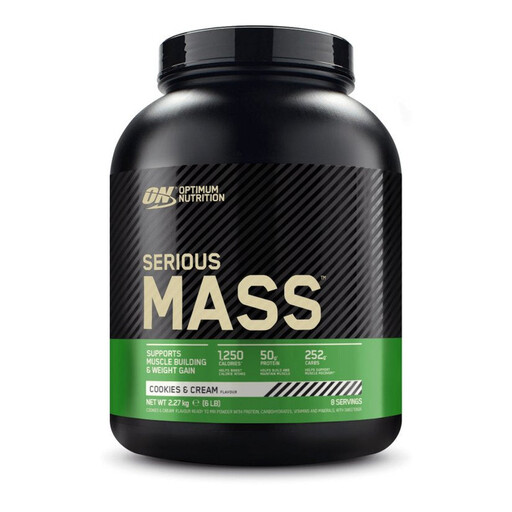
Why this product suits this profile: The recipe combines whey protein, calcium caseinate and egg protein. According to the product information, a 334-gram serving provides approximately 1,256 kcal, 50.1 grams of protein and 250.5 grams of carbohydrates.
The nutritional values are provided both per 100 grams and per serving. This makes it easier to assess the very large serving size and the creatine content of 3 grams per serving.
2.73 kg pack, around 50 grams of protein per serving, creatine monohydrate and a stated vitamin and mineral blend.
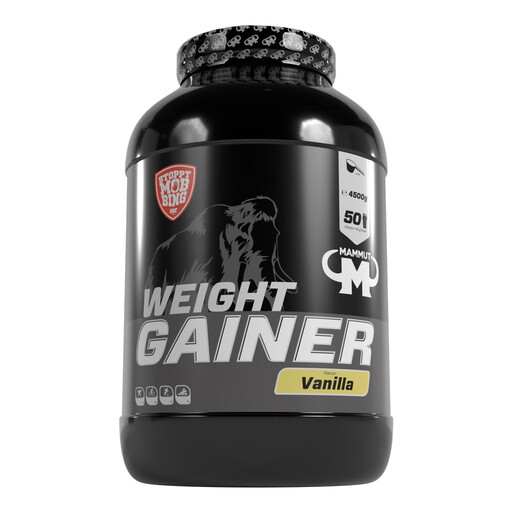
Why this product suits this profile: The large pack is designed for regular use. According to the product information, the powder contains 83 grams of carbohydrates and 12 grams of protein per 100 grams, as well as 1,000 milligrams of creatine monohydrate.
The per-100-gram labelling prevents you from looking only at the calories in a serving prepared with milk. This allows frequent users to factor the amount of powder into their daily planning more accurately.
4.5 kg pack, vanilla flavour, an 80-per-cent carbohydrate profile according to the product description and several protein sources.
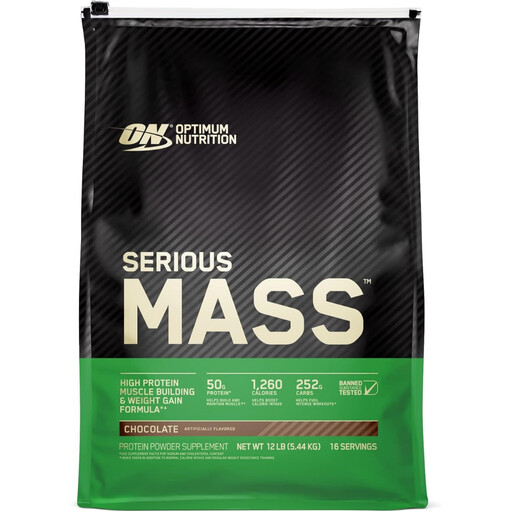
Why this product suits this profile: According to the product information, the large pack contains around 16 servings. A 334-gram serving provides approximately 1,263 kcal, 50 grams of protein, 251 grams of carbohydrates and 3 grams of creatine monohydrate.
The recommended serving size, liquid requirement and number of servings per pack are clearly stated. This makes it possible to calculate ongoing usage before buying.
High calorie density, 50 grams of protein per serving, more than 250 grams of carbohydrates and 25 stated vitamins and minerals.
We have put together a complete, regularly updated list of products that fully meet these strict selection criteria and the safety regulations applicable in the EU.
Before ordering, consider how much liquid you need for a shake and whether a shaker will be sufficient. For servings weighing more than 300 grams, a blender may be more practical. Prepare the shake as fresh as possible and store opened packs tightly closed, in a dry place and away from direct light.
These points are also relevant when making your choice:
This depends on your individual calorie requirements and the serving size of the product. With very high-calorie recipes, start with a smaller serving and increase it only if you tolerate it well. Do not exceed the maximum recommended amount stated on the packaging.
A mass gainer can be practical for people who struggle to gain weight if obtaining additional calories from regular meals is difficult. However, it is no substitute for a varied diet. Your weight development should be monitored regularly.
This depends on the serving size and how much you use each day. A 2.73 kg pack with servings of approximately 334 grams will provide roughly eight servings mathematically. A 5.45 kg pack with around 16 servings will last correspondingly longer. For every calculation, the information on the relevant packaging is decisive.