
Lieferung heute & morgen

Qualitätsgarantie

Willkommens-Angebote freischalten: KOSTENLOSE Lieferung | Bis zu 80 % RABATT | Kostenlose 30-Tage-JoyPlus-Testphase
App herunterladen
Matcha biscuits combine a crisp, crunchy texture with the bitter, slightly grassy aroma of green tea. Depending on the recipe, they may also include vanilla, milk cream, chocolate, fig or nuts. This means products vary significantly: some are thin, crunchy biscuits perfect for a tea break, while others resemble filled sandwich cookies or chocolate-coated wafer biscuits.
If you're looking to buy matcha snacks online, don't be swayed solely by packaging design, Japanese characters or the word "matcha". The following points will help you realistically assess flavour, pack size and ingredients.
A noticeable green tea flavour can come from flavourings, sugar or a cream filling. The actual proportion of matcha or green tea powder is therefore an important detail. For example, the Glico Pocky Biscuits Matcha Flavor state 10% matcha powder. The Garden Small Cookies Matcha Milk Flavor declare a matcha content of 1.9%.
A higher percentage doesn't automatically mean a product tastes better. However, it can help you distinguish biscuits with a more pronounced green tea profile from predominantly sweet biscuits that merely have a green tea flavouring.
Matcha biscuits and Japanese cookies are often sold in packs weighing between 45g and 100g. This is convenient for on-the-go snacking or trying something new, but if you're sharing with several people, it only provides a few portions. Individual servings or inner bags can also make it harder to gauge the actual quantity.
Before buying, it's worth checking:
Thin biscuits, wafer biscuits and filled varieties can be high in energy despite their small individual size. Nutritional information usually refers to 100g, not a single biscuit. For the reference products, the stated values range between 486 and 516 kcal per 100g. This isn't a judgement of quality, but a guide for portion planning.
If you're looking for a distinct green tea flavour, check the ingredients list for matcha powder, green tea powder or matcha extract. It's also worth noting the order of ingredients, as they are typically listed by weight.
Different product types suit different preferences:
Many Asian biscuits contain wheat, milk, soya or barley. Some products also include almonds, cashews or eggs. The allergen information on the product page and packaging is therefore more important than general terms like "plant-based" or "light".
For example, the Glico Pocky Biscuits Matcha Flavor contain wheat, milk, barley and soya according to the product information. In contrast, the I'm Bruno Crispy Brownie Cookies Matcha Flavor are described as using coconut powder and tapioca starch and are labelled as a gluten-free recipe; at the same time, eggs, cashews, almonds and milk are listed as allergens. If you have allergies or intolerances, always check the current packaging label.
Matcha flavours are sensitive to moisture, heat and direct sunlight. For most products, the rule is: store in a cool, dry place away from light. Once opened, biscuits should be eaten as soon as possible or stored in an airtight container.
With chocolate-coated products, the surface can change after exposure to heat and subsequent cooling. For Glico Pocky, for instance, it's noted that the fat may turn white or become harder. According to the product information, this is a physical change and doesn't automatically indicate a safety issue. However, for a specific assessment, always refer to the packaging, best-before date and storage instructions.
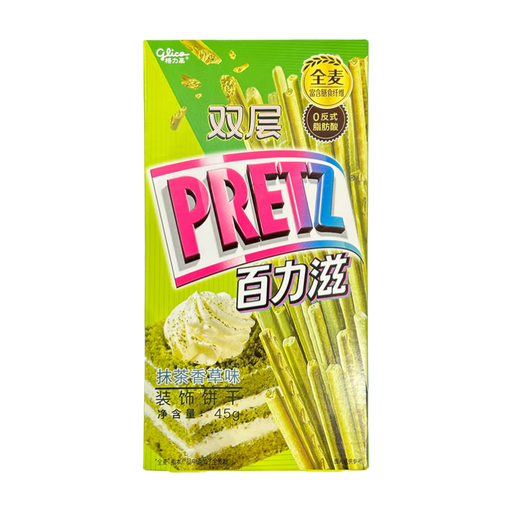
Why this product suits the profile: The 45g pack is ideal for trying something new or for a single snack. Matcha, vanilla and cocoa combine with crunchy biscuit sticks.
The net weight is clearly stated. The ingredients list includes matcha powder as well as cocoa and wholemeal flour.
Compact 45g pack; crunchy sticks; matcha-vanilla combination.
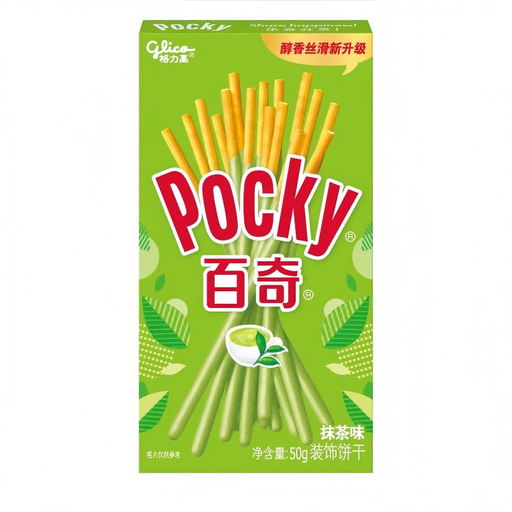
Why this product suits the profile: The product information states a matcha content of 10%. This allows you to make a more targeted choice for a distinct green tea profile.
The declared matcha content helps distinguish pure flavour marketing from a concrete ingredient specification.
50g pack; 10% matcha powder according to product information; classic Pocky stick format.
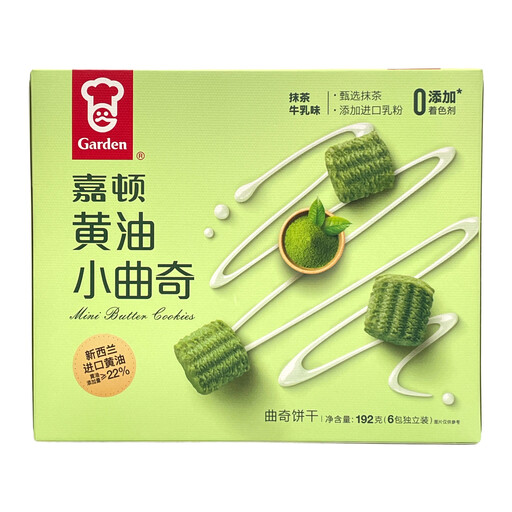
Why this product suits the profile: With 192g and separate inner packs, this option is designed for longer snacking, stocking up or sharing.
The inner packs reduce the risk of the whole large pack losing its crunchiness quickly after opening.
192g total weight; individual inner packs; matcha milk flavour.
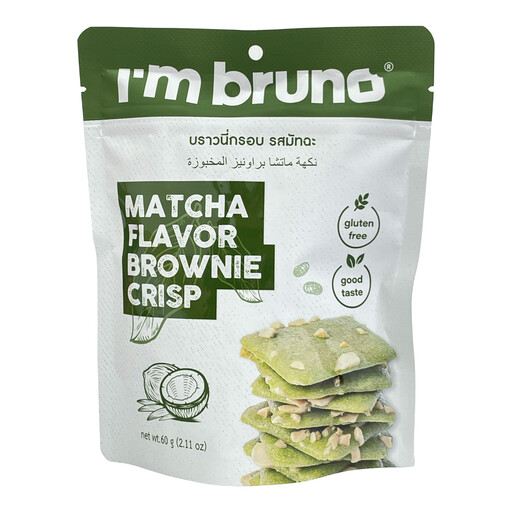
Why this product suits the profile: According to the product information, the recipe is based on coconut powder and tapioca starch and is described as a gluten-free option. At the same time, nuts, egg and milk need to be noted.
This choice makes it clear that "gluten-free" does not mean "free from all allergens".
60g pack; crunchy brownie-cookie texture; coconut and matcha ingredients according to the product description.
That depends on the matcha content, the recipe and the combination with sugar, milk or cocoa. Products with a declared matcha quantity offer a better guide. The Glico Pocky Biscuits Matcha Flavor, for example, state 10% matcha powder. For a milder profile, matcha milk biscuits or varieties with a vanilla filling are worth considering.
They should be kept dry, cool and away from direct sunlight. Try to open inner packs only just before eating. An airtight tin can help maintain crunchiness, provided the contents are completely cool and dry.
This can only be assessed based on the current ingredient and allergen labelling. Asian biscuits often contain wheat, milk and soya; depending on the recipe, barley, eggs or nuts may also be present. If you have an allergy, you should check the packaging of each individual pack, even if you're already familiar with a similar product.