Who is this relevant to?

Businesses with changing material handovers

Where routes and manual tasks come together at several workstations, a limited pilot can show whether a humanoid system can handle the process. BMW describes a deployment of AEON in Leipzig; this does not mean the results will apply to other sites.

Production lines with repetitive component handling

For repetitive handovers and tasks carried out at line speed, businesses should compare a humanoid approach with a stationary cobot. KUKA lists machine tending and pick-and-place among the applications for the LBR iisy.

Businesses with materials transport within their premises

If transport between areas is the main requirement, it’s worth comparing an AMR. Mobile Industrial Robots describes the MiR250 as a transport robot; picking up or inserting parts is not automatically covered.

What should you consider when choosing?

Humanoid robot

Consider it if: Transport and manipulation are required at changing workstations.

Things to weigh up: Routes, grippers, handovers, charging arrangements and the safety plan need to be trialled as part of your own process.

Cobot or stationary industrial robot

Consider it if: Handling, positioning or machine tending takes place mainly at a fixed workstation.

Things to weigh up: A fixed installation won’t automatically handle transport between areas. The entire workspace must also be assessed when using a cobot.

Autonomous mobile robot

Consider it if: The main task is moving containers or materials between designated areas.

Things to weigh up: Additional equipment may be needed to pick up or insert components; routes and handovers need to be planned for each site.

Requirement What to check before buying Who is this especially important to?
Suitability for routes and workpieces Test with representative parts and handover points; assess transport and manipulation separately. If routes and manual tasks come together at changing workstations, I want to know whether the same system can handle both tasks with my workpieces. Around 31% of consumers focus on suitability for routes, picking and specific workpieces.
Safety in the workspace Clarify the workplace risk assessment and the protective measures needed for the robot, tools and moving objects. If employees and robots share the same workspace, I want handovers and potential collisions to be assessed in advance. Around 25% of consumers prioritise safety in shared workspaces.
Integration with the line and site Check corridors, charging location, handover control and required interfaces during an on-site trial. If a system needs to work with existing routes, handovers and data structures, I want to clarify the actual interfaces beforehand. Around 25% of consumers pay particular attention to integration with the line, routes and IT.
Cycle time and operating effort Compare handovers, charging times and integration work for a humanoid, cobot and AMR under the same conditions. If cycle time and the effort involved in the overall solution matter to me, I want to compare the alternatives in the same process trial. Around 19% of consumers base their choice primarily on cycle time, operating requirements and the effort involved compared with specialist solutions.

Avoiding purchasing and planning pitfalls

  • Assuming an industrial pilot approves the system for your own production line

    A pilot at one site does not prove that the same configuration will work with different workpieces, routes and handovers. Nor do manufacturers’ stated figures show what cycle time can be achieved in your process.

    Trial the proposed configuration with your own parts and handovers in a limited test before finalising the process.

    Additional trials and the integration of suitable grippers and interfaces may need to be factored into your plans.

  • Assuming ‘collaborative’ means hazard-free

    Risk depends on more than the robot alone: tools, moving objects and the specific interaction with employees must also be assessed. The Federal Institute for Occupational Safety and Health requires a risk assessment for every workplace; the German Social Accident Insurance (DGUV) highlights the potential for collisions with tools and moving objects.

    Assess the intended workplace and safety plan rather than assuming the checks are covered by a product label.

    Protective measures and an assessment of the entire workspace must be included in deployment planning.

  • Assuming you need humanoid gripping capabilities for a transport-only task

    An AMR is designed for transporting materials within a site, while picking up and inserting parts can involve additional requirements. A manipulation function you don’t need can increase the scope of integration.

    Specify transport and parts handling separately, then compare the most suitable solution for each.

Key brands to consider

Hexagon Robotics

AEON is designed for industrial manipulation and mobile tasks. BMW describes a pilot using the system in Leipzig.

  • Hexagon states that AEON has a payload capacity of 8 kg for continuous carrying and 15 kg for short periods; these are manufacturer specifications.
  • The pilot and stated specifications do not prove independent performance or suitability for a different production process.

Agile Robots

Agile Robots lists materials transport, pick-and-place and machine tending among the intended tasks for Agile ONE.

  • The provider describes AgileCore as a platform for connected systems.
  • The manufacturer’s application descriptions do not prove site-specific performance, IT compatibility or safety approval.

NEURA Robotics

NEURA Robotics describes 4NE1 as suitable for industrial workflows and offers several variants, including a wheeled version for factory floors.

  • The available model variant is an important consideration when choosing.
  • The description of the variants is not approval for a specific production task; you’ll need to check the exact configuration on offer.

KUKA

KUKA offers the LBR iisy and other handling robots as options for predominantly stationary handling and machine tending.

  • KUKA lists different payload capacities across the LBR iisy family.
  • Family specifications don’t automatically apply to every variant. Collaborative operation must be assessed for the specific workplace.

Mobile Industrial Robots

The MiR250 is an AMR option for transporting materials within a site, not for carrying out humanoid tasks independently.

  • The manufacturer publishes technical specifications for payload, corridor width and operating time.
  • Specifications depend on the configuration and site conditions. Additional equipment would be required to pick up or insert parts.

Humanoid robots at Joybuy

The Joybuy products below include humanoid models with different specifications. These specifications do not replace an assessment of whether a particular configuration is suitable for materials handling, the intended workplace and production use.
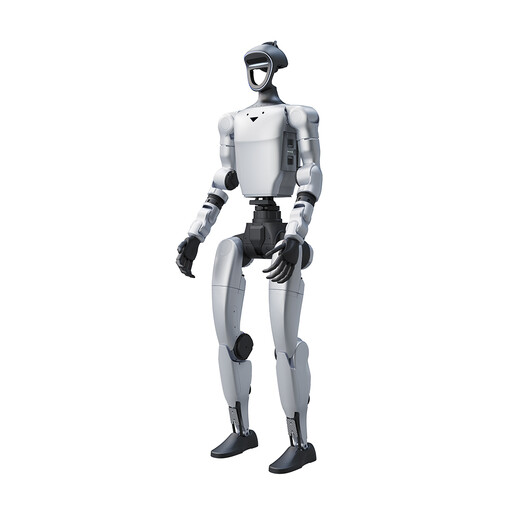
Unitree G1 Pro humanoid robot

Unitree G1 Pro

Best viewed as a humanoid model for technical trials. The product title mentions hands for object manipulation, but this does not prove performance with specific production parts.

According to the product information, an SDK/API is not available for this version.

Joybuy
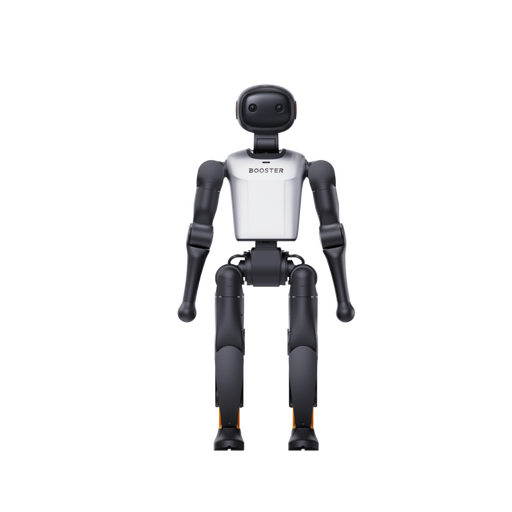
Booster Robotics K1 Geek humanoid robot

Booster Robotics K1 Geek

Described as a development platform for technical trials; this does not confirm that it is suitable for a production process.

The product title lists 48 TOPS and 22 DoF.

Joybuy
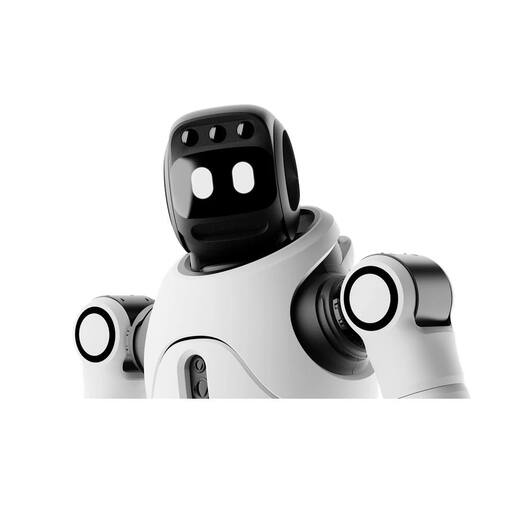
AGIBOT X2 Ultra humanoid robot

AGIBOT X2 Ultra

Worth considering when assessing movement between work areas; the product description mentions autonomous navigation and obstacle avoidance, both of which need to be tested at the specific site.

The stated payload is up to 3 kg in certain body positions and up to 1 kg throughout the full range of movement.

Joybuy

AGIBOT X2 humanoid robot

AGIBOT X2

Best viewed as a humanoid model for technical trials. The product information alone does not confirm suitability for a specific task or production cycle time.

Joybuy
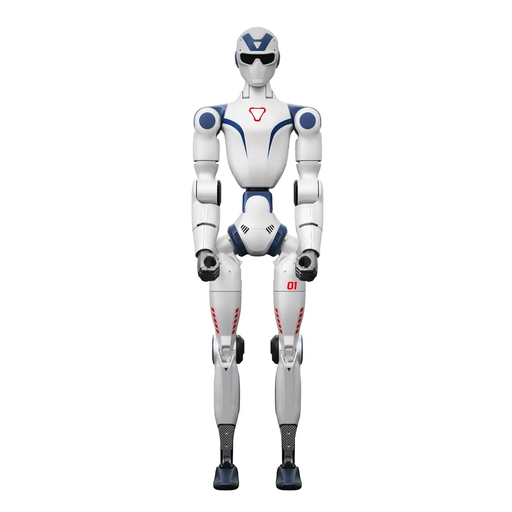
Unitree R1 Air humanoid robot

Unitree R1 Air

Best viewed as a humanoid model for technical trials. The product title mentions a monocular camera and 20 degrees of freedom, but does not confirm approval for materials handling in production.

Joybuy

Frequently asked questions

What needs to be assessed before employees and robots share a workspace?

The employer must carry out a risk assessment for the workplace. For collaborative robots, the DGUV also includes the end effector, moving objects and potential collisions in its risk assessment; a product name is no substitute for these checks.

Which machinery regulations apply at the planned procurement date?

For machinery first placed on the EU market on or before 19 January 2027, the Machinery Directive 2006/42/EC applies, according to the Federal Institute for Occupational Safety and Health. From 20 January 2027, the Machinery Regulation (EU) 2023/1230 applies. The requirements for a specific system and its integration need to be clarified on a case-by-case basis.

Which documents should I be able to match to a specific quotation?

For the configuration on offer, clarify which conformity assessment, marking, declaration and operating instructions apply to the completed machine. The European Union explains that a declaration of conformity must identify the product by model or type; CE marking on individual components does not automatically prove that a completed installation as a whole complies.

What should I plan for when installing and operating a transport AMR?

Plan routes, handover equipment, charging and maintenance around the configuration actually on offer. Mobile Industrial Robots lists different corridor widths for the MiR250 depending on the settings and refers to commissioning and accessories in its documentation; these specifications cannot be applied to other robots without checking.

When can integrating with an existing installation lead to additional conformity obligations?

According to the Federal Institute for Occupational Safety and Health, a new conformity assessment procedure is required if a machine installation considered as a whole undergoes a substantial modification. You cannot determine in general terms whether a particular integration constitutes a substantial modification; each case needs to be assessed individually.