If you already work at a computer and can look at the monitor while you write, a graphics tablet without a display is a straightforward choice. If you want to see your writing directly beneath the pen tip, consider a pen display. To write without a connected computer, you’ll need a standalone tablet with a compatible pen and suitable app. Space, posture, software and connections all matter: the German Federal Institute for Occupational Safety and Health notes that standing may be less suitable for fine motor tasks.
Which option is right for you?
Writing formulae with limited desk space
You work on your existing computer and need to fit your input device, keyboard and notes on an adjustable-height desk. Make sure the active writing area is large enough for your formulae, and that your workstation lets you alternate between sitting and standing.
Writing directly on the screen
If you’re working through or correcting longer formulae, it may be important to see your writing directly beneath the pen tip. You’ll need space for a connected display, its cables and, if required, an additional power supply.
Writing without a computer
You want to write equations directly on a standalone device. Before buying, check that the app you want to use is compatible with the exact version of the pen.
What should you look for when buying?
Graphics tablet without a display
Best if: You work on your existing computer and can look at the monitor while you write.
Consider: Your hand and your writing appear in different places. Check the usable area, as well as compatibility with your computer, driver and writing software.
Pen display connected to a computer
Best if: You want to write directly on the visible formula and have room for the display and its connections.
Consider: It isn’t a standalone computer. The XPPen Artist 12 (2nd Generation) may need an additional power supply according to its manual; a USB-C cable may also be sold separately.
Standalone tablet with a pen
Best if: You want to write without a connected computer or move between workspaces.
Consider: The app and compatible pen need to suit the way you want to work; a desktop application won’t automatically be replaced.
At a standing desk, consider the device’s overall dimensions separately from its active writing area, and allow space for your keyboard, notes and a place to rest your hand. The German Federal Institute for Occupational Safety and Health recommends changing posture; standing isn’t automatically the right position for extended periods of fine motor writing.
| What matters when buying |
What to check |
Who will find this especially important? |
| Writing area and posture |
Check the overall dimensions and active area separately. Plan where the device will sit alongside your keyboard and notes, and consider both sitting and standing positions. |
If I have limited desk space, the active area needs to be large enough for my formulae without getting in the way of my keyboard and notes. Around 33% of consumers prioritise space and posture. |
| Seeing your writing directly |
Consider whether you’re comfortable coordinating your hand with the monitor on your existing computer, or whether you have room for an extra display and its connections. |
When I’m working through or correcting a formula, I want to see it directly beneath the pen tip and can make room for that on my desk. Around 27% of consumers prioritise seeing their writing directly. |
| Editing handwriting later |
Check in the app you plan to use and on the relevant operating system whether handwriting can be saved or converted into mathematical notation. Microsoft describes “Ink to Math” for Word, PowerPoint, Excel and OneNote on Windows. |
If I want to edit a formula later, what matters to me is whether my specific software actually converts handwriting into mathematical notation. Around 20% of consumers prioritise this software workflow. |
| Writing without a computer |
Check the standalone device, exact pen version, app and preferred way of editing your work later as a complete setup. |
If I don’t want to connect a computer while I’m writing, I need a suitable app and compatible pen on the device itself. Around 20% of consumers prioritise using their device without a connected computer. |
Common misconceptions
-
Assuming pressure sensitivity means formula recognition
The pen technology alone doesn’t tell you whether your maths app will convert handwritten characters into typeset formulae. That depends on the software workflow.
First, check that the specific app and operating system you plan to use support the feature you want. Then compare the device specifications.
-
Thinking a pen display is a standalone computer
A connected pen display shows your writing directly on its screen, but it doesn’t automatically replace the computer it’s connected to.
Think of a pen display and a standalone tablet as different ways of working. Check the connection instructions for the specific display you’re considering.
The XPPen Artist 12 (2nd Generation) manual notes that it may need an additional power supply. Depending on what’s included, a compatible USB-C cable may need to be bought separately.
-
Focusing only on screen size or active area
At a standing desk, you’ll also need space for your keyboard, notes, a place to rest your hand and, if required, a stand for the display. The German Federal Institute for Occupational Safety and Health notes that standing may be less suitable for fine motor tasks.
Try arranging your workspace using the device’s overall dimensions, and make sure you can alternate between sitting and standing.
Key brands and product ranges
Wacom
The One by Wacom Small is aimed at people who want to write or annotate on a computer they already own. The Intuos Pro Medium is an option if you’ll make real use of its ExpressKeys and USB or Bluetooth connection.
- Wacom says the One by Wacom Small can be used via USB with a Chromebook, while Mac or PC requires driver installation.
- Bluetooth connectivity is documented for the Intuos Pro Medium, not the One by Wacom Small. The Intuos Pro’s features aren’t automatically necessary for writing simple formulae.
Huion
The Inspiroy 2 M is a graphics tablet for a computer-based workflow that makes use of programmable keys and a scroll wheel.
- Huion lists a battery-free PW110 pen, keys and a scroll wheel for this model.
- The improved writing feel is a manufacturer claim, not independent evidence of its performance when writing mathematical formulae.
XPPen
The Deco 01 V2 is a graphics tablet with a large active area; the Artist 12 (2nd Generation) is a connected pen display that lets you see your writing directly.
- XPPen lists an active area of 10 × 6.25 inches for the Deco 01 V2.
- This active area takes up desk space. The Artist 12 (2nd Generation) manual notes that it may need additional power and that a USB-C cable may be sold separately. These connection details don’t apply to all XPPen models.
ugee
The M908 is a graphics tablet without a display, designed for a computer-based workflow with a large writing area and shortcut keys.
- ugee lists an active area of 10 × 6.25 inches, a scroll wheel and eight keys. The manual describes the USB connection and driver installation.
- The manufacturer’s claims about particularly smooth writing don’t demonstrate an independent advantage when writing mathematical formulae.
Apple
The iPad (A16) is a standalone option if you want to write without a connected computer.
- Apple lists Apple Pencil (USB-C) and Apple Pencil (1st generation) as compatible pens, and promotes “Maths Notes” for use on iPad.
- The listed iPad package doesn’t include a Pencil. Check the cost of a pen and how you’ll transfer work to and from desktop files. Apple’s feature description isn’t an independent assessment of formula recognition.
Joybuy products
This selection features standalone tablets with a pen for handwritten notes without a connected computer. Before buying, check that the maths app you want to use and the pen supplied with each device suit the way you work.
 No image available
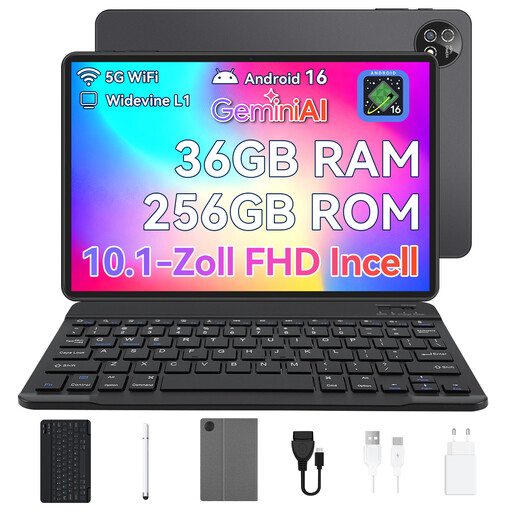
10.1″ touchscreen tablet, Android 16, 36 GB RAM (6+30), 256 GB storage, octa-core, keyboard set and stylus, black
As a standalone tablet with a stylus, this model could suit handwritten notes without a connected computer.
The product title lists a 10.1-inch touchscreen, Android 16, 36 GB RAM (6+30), 256 GB storage, an octa-core processor, a keyboard set and a stylus.
View at Joybuy
 No image available
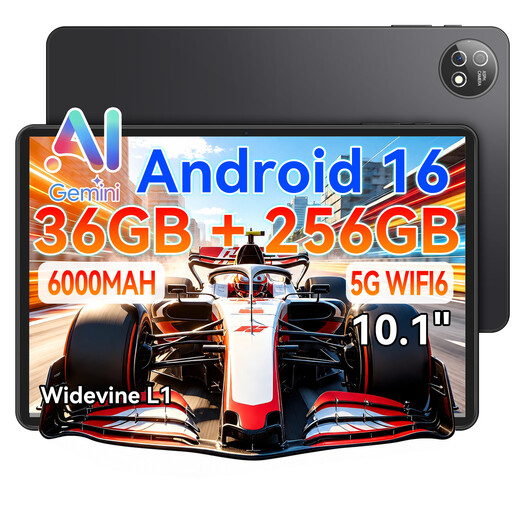
10.1″ tablet, Android 16, quad-core Unisoc T310, 36 GB RAM, 256 GB ROM, keyboard and stylus
This standalone tablet with a stylus is an option if you want to write formulae without a connected computer.
The product title lists Android 16, a quad-core Unisoc T310, 36 GB RAM, 256 GB ROM, storage expandable by up to 1 TB, a 6000-mAh battery, Wi-Fi 6, a keyboard and a stylus.
View at Joybuy
 No image available
Teclast ArtPad Pro 2025, 13.4″ 2K display, T-Pen, 4096 levels of pressure sensitivity
This standalone tablet with a T-Pen could suit handwritten notes without a connected computer. Check app compatibility for your formula workflow.
The product title lists a 13.4-inch 2K display and 4096 levels of pressure sensitivity. It also lists a Helio G99, 20 GB RAM (8+12 Virtual), 256 GB, Dual SIM 4G LTE, a 10000-mAh battery and Android 15.
View at Joybuy
Frequently asked questions
Does every graphics tablet automatically convert handwritten equations into typeset formulae?
No. It depends on the software you use and isn’t a feature guaranteed by the input device alone. Microsoft describes “Ink to Math” for certain Office apps and OneNote on Windows. Check that the feature works in the app and operating system you actually plan to use.
What should I check before connecting a pen display?
For the exact model, check the video signal, data connection, power supply and what’s included in the box. The XPPen Artist 12 (2nd Generation) manual notes that it may need additional power and that a USB-C cable may be sold separately.
Should I stand at my standing desk for as long as possible when writing formulae?
No. The German Federal Institute for Occupational Safety and Health recommends alternating between standing and sitting, and notes that standing may be less suitable for fine motor tasks. Set up your workspace so you can change posture.
Which pen works with a standalone tablet?
It depends on the specific device. Check which pen versions are explicitly supported, along with the app you want to use. For the iPad (A16), Apple lists Apple Pencil (USB-C) and Apple Pencil (1st generation) as compatible. A Pencil isn’t included in the listed package.


