
Lieferung heute & morgen

Qualitätsgarantie
App herunterladen
Kategorien
Choosing the right material is a critical factor in the quality and aesthetics of 3D-printed objects. While glossy PLA filament is common, matte PLA filament is increasingly popular among users seeking a high-end, low-reflection finish. This special matte 3D printing material minimises the visibility of layer lines and gives models a professional, almost organic appearance. The following guide analyses its technical properties and offers guidance on selecting the right material.
When you buy matte PLA filament, technical specifications should be your priority. The surface finish is the result of specific additives in the raw material, which can also affect printing properties.
Matte PLA typically contains particles or polymer modifiers that scatter light, reducing the typical shine of standard PLA. This results in a non-glossy filament. The quality of these additives determines the uniformity of the matte texture and whether the mechanical properties of the PLA, such as tensile strength, are maintained. A high-quality composition ensures a consistent surface without blemishes or unwanted texture variations.
For most FDM (Fused Deposition Modeling) printers, 1.75mm matte PLA filament is the established standard. Dimensional accuracy—the diameter tolerance—is crucial. A low deviation (e.g., ±0.02 mm) is fundamental for trouble-free extrusion. Fluctuations in diameter can lead to under- or over-extrusion, which significantly impairs print quality and increases the risk of nozzle clogging.
Although matte PLA is generally considered an easy-to-print PLA and is therefore suitable for beginners, its optimal print settings may differ from those of standard PLA.
Based on an analysis of technical specifications and material properties, here is a selection of filaments to consider for projects with high aesthetic standards.
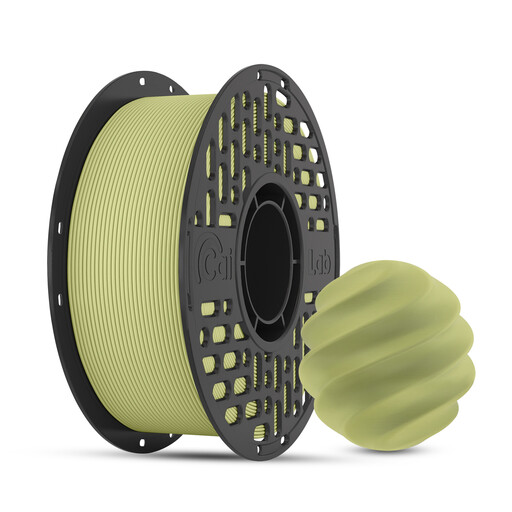
Why We Recommend This Product The matte version of CAILAB Filament was developed with a new formula specifically designed for an artistic, matte finish. According to the manufacturer, the composition reduces layer lines and provides a tactile quality that feels less like plastic. Its precise manufacturing ensures a stable filament diameter, which increases process reliability and minimises the risk of clogging. The material is based on corn extract, is biodegradable, and is free from recycled waste materials. The colourway, like the featured Matcha Green PLA Filament, is part of a series aimed at aesthetically demanding applications.
Pros
Who It's For This filament is aimed at 3D printing enthusiasts, designers, and makers who place a high value on surface aesthetics. Thanks to its straightforward printing process, it is an excellent choice for both experienced users and beginners who want to achieve professional-looking results.
For users looking for special visual effects beyond a matte finish, the following alternatives are available:
| Product | Image | Description | | :--- | :---: | :--- | | CAILAB PLA Silk Dual Color - Blue&Silver | 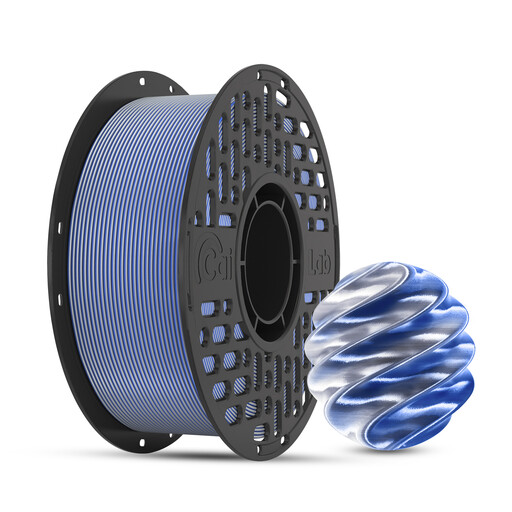 | This silk filament combines two colours in a single strand. Depending on the viewing angle of the printed object, one of the two colours will dominate, creating dynamic, iridescent surfaces. | | CAILAB PLA Rainbow Gradient - Sunflower |
 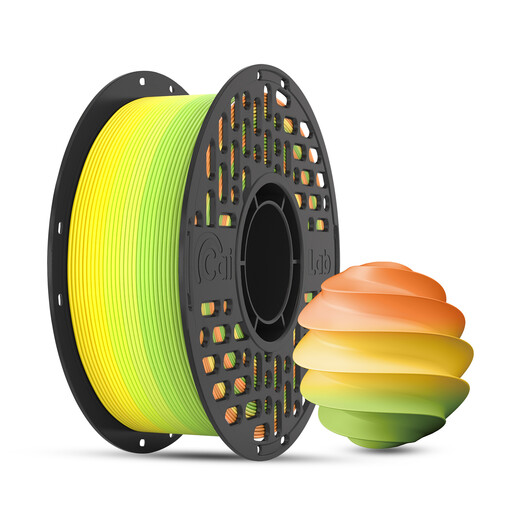 | This filament features a smooth colour gradient across the entire spool. It is ideal for large objects like vases or sculptures, where the rainbow effect can be fully appreciated. |
The world of 3D printing materials is diverse. Besides matte PLA, there are filaments with wood, metal, or carbon fibre particles, flexible materials like TPU, and high-strength plastics such as PETG and ABS. You can find a wide selection of filaments and related accessories in our Printers and Computers category.
1. What is the technical difference between matte PLA and standard PLA? The main difference lies in the inclusion of additives. Matte PLA contains microscopic particles that roughen the surface and scatter incoming light. This prevents the glossy reflection typical of standard PLA. These additives can slightly alter the viscosity of the molten material, which may require an adjustment of the print parameters.
2. Does matte PLA filament require special print settings? In most cases, the print settings are very similar to those for standard PLA. However, it is recommended to start with a calibration object, such as a temperature tower, to determine the optimal nozzle temperature for the best layer adhesion and surface quality. A slightly higher temperature can sometimes improve adhesion, while a temperature that is too high can reduce the matte effect.
3. How do I properly store matte PLA filament? Like all PLA filaments, the matte version is hygroscopic, meaning it absorbs moisture from the air. Moisture in the filament leads to poor print quality (e.g., bubbling, brittle prints). Therefore, always store the filament in an airtight bag or box, ideally with a desiccant (silica gel).