
Lieferung heute & morgen

Qualitätsgarantie

Willkommens-Angebote freischalten: KOSTENLOSE Lieferung | Bis zu 80 % RABATT | Kostenlose 30-Tage-JoyPlus-Testphase
App herunterladen
A measuring cup is part of the basic equipment in many households. Whether you are baking, cooking, blending or portioning drinks, it makes it easier to measure liquids and certain dry ingredients. However, models vary considerably in terms of capacity, material, measurement markings and cleaning requirements.
If you focus only on the price or an attractive product photo, you can easily overlook important details. An illegible scale, impractical spout or insufficient capacity can quickly make a measuring cup inconvenient for everyday use.
The description “measuring cup with scale” initially tells you little about how practical it really is. Check whether the markings are given in millilitres and whether the intervals between units suit your intended use. Smaller graduations can be helpful for baking recipes, while 100- or 250-millilitre increments are often sufficient for cooking.
With transparent materials, the contents can be difficult to see depending on the light and fill level. A high-contrast, durable or well-positioned scale makes measuring easier.
A 500 ml measuring cup is suitable for typical kitchen quantities such as milk, water, oil or smaller amounts of batter. A 1000 ml measuring cup offers more capacity, but requires more storage space. For larger households or preparing several portions, a two-litre measuring cup may be a sensible choice.
Important: do not confuse the maximum capacity with the ideal working capacity. When measuring or stirring liquids, it is best to leave some space below the maximum mark.
Plastic measuring cups are usually lightweight and resistant to knocks. However, depending on the material, they can develop scratches and discolouration, or their markings may fade. Check details such as whether the product is BPA-free or dishwasher-safe directly in the product description.
A glass measuring cup is transparent and can be easy to read for many kitchen tasks. Borosilicate glass is often used because of its thermal properties. Nevertheless, you should follow the specific instructions for use, particularly when exposing the cup to significant temperature changes.
Use the quantities you measure regularly as a guide:
A measuring cup set with several sizes can be more practical than a single large model if you often need to measure different quantities.
Look out for:
A measuring cup primarily measures volume. For example, 500 ml of flour does not weigh the same as 500 ml of water.
A wide handle makes the cup easier to hold securely, particularly when measuring warm liquids. A shaped spout can help reduce drips, but it does not replace careful handling. A stable base is useful when filling the measuring cup on the worktop.
For measuring cups for baking and cooking, the maximum temperature, suitability for microwave or hob use, and care instructions are also relevant. A measuring cup must not be placed on a hob unless this is expressly permitted.
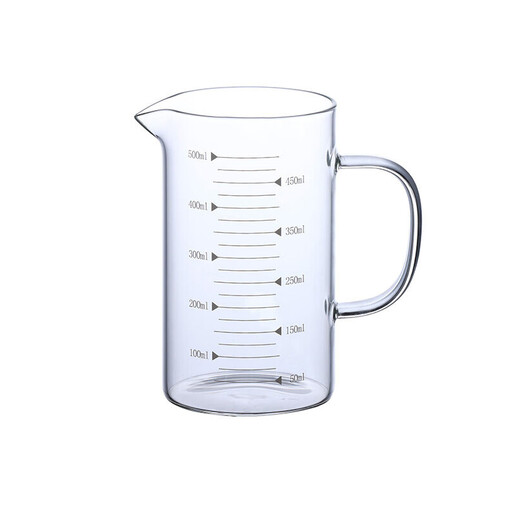
Why this product suits this profile: The 500 ml capacity covers many everyday uses. The glass lets you see the contents directly.
The clearly stated capacity avoids uncertainty when choosing a size. Before buying, check the scale shown and the care instructions.
The stated product features are borosilicate glass and a 500 ml capacity.
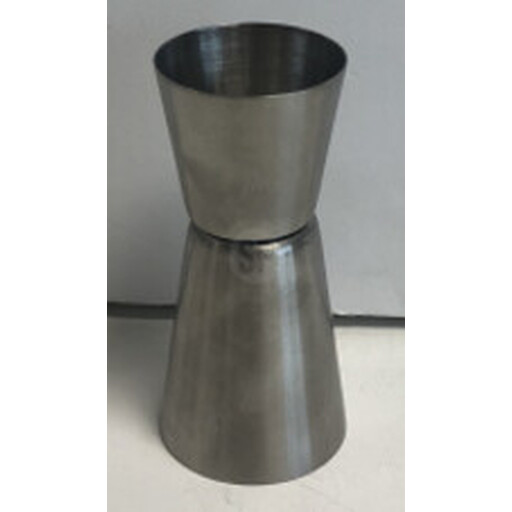
Why this product suits this profile: This stainless-steel model is aimed at households looking for a durable kitchen utensil for regular baking and cooking.
The product description states that the markings are etched in millilitres, cups and ounces. This means you are not reliant on printed markings.
According to the product description, the measuring cup is rust-, stain- and odour-resistant, as well as dishwasher-safe.
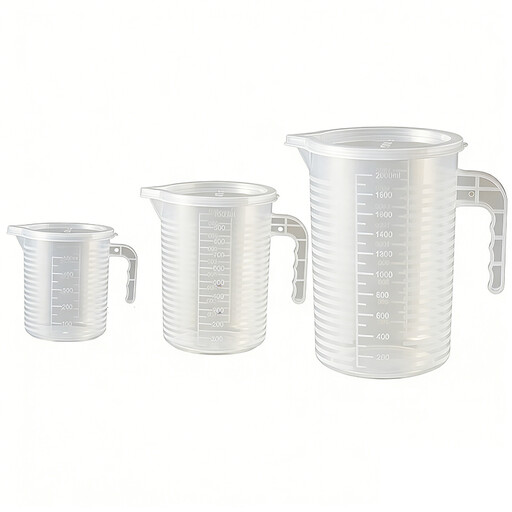
Why this product suits this profile: Three sizes cover smaller quantities as well as larger preparations for cooking, baking or portioning.
The graduated capacities reduce the risk of inaccurately reading small quantities in an oversized container. Check the available scales before buying.
According to the product name, the set contains 500-, 1000- and 2000-millilitre plastic models.
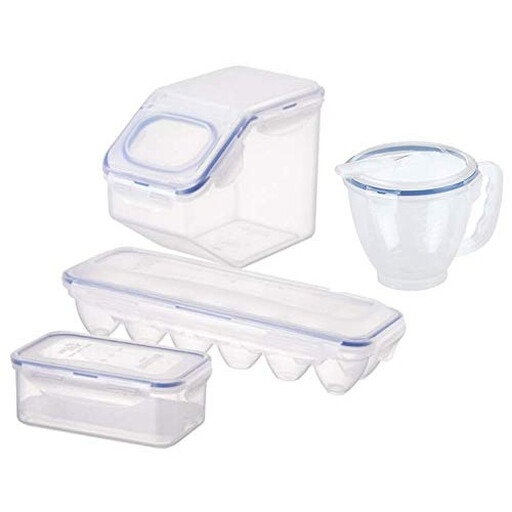
Why this product suits this profile: The set combines a 1-litre measuring jug with containers for butter, eggs and dry provisions.
The product description clearly states the measuring jug’s capacity. It also specifies the material, BPA-free construction and cleaning suitability.
According to the product description, the set is made from BPA-free polypropylene and is dishwasher-safe. It features four locking mechanisms.
Before first use, every measuring cup should be cleaned with warm water and mild washing-up liquid. Even with a dishwasher-safe measuring cup, you should check whether all components are suitable for machine washing. Lids, seals and markings may have different care instructions from the container itself.
Avoid abrasive sponges if the scale is printed. With glass, avoid sudden changes in temperature. Plastic containers should not be used with hot liquids unless the manufacturer specifies an appropriate temperature rating. Damaged, cracked or heavily scratched products should no longer be used with food.
We have put together a complete, regularly updated list of products that fully meet these strict selection criteria and the safety regulations applicable in the EU.
For everyday cooking, a clearly readable millilitre scale with suitable graduations is usually sufficient. For baking, the most accurate possible volume measurement is more important. For very small quantities, measuring spoons or kitchen scales are often more suitable.
That depends on your household. Glass is transparent and typically absorbs fewer odours, but it can be damaged by knocks. Plastic is lighter and often easier to handle every day. The key factors are the specific material, temperature guidance and cleaning recommendations.
For most kitchens, a 500 ml model is versatile. Families and anyone who regularly prepares soups, batter or drinks may find 1000 ml or a measuring cup set more practical. If you frequently measure different quantities, a set with several sizes offers greater flexibility.