
Lieferung heute & morgen

Qualitätsgarantie

Willkommens-Angebote freischalten: KOSTENLOSE Lieferung | Bis zu 80 % RABATT | Kostenlose 30-Tage-JoyPlus-Testphase
App herunterladen
Whether you are working on technical drawings, furniture making, renovation, sewing projects or schoolwork, measuring tools need to match the material, the measuring distance and the level of accuracy required. A ruler for paper serves a different purpose from a folding rule for interior construction or a square for woodworking.
Poor purchases are often caused not by the price, but by details that have not been checked. Three common pitfalls are:
The measuring length should match the task:
A flexible ruler is useful when measuring curves or uneven surfaces. For straight cuts and technical drawings, however, a rigid aluminium ruler provides more stable guidance.
Look for clearly printed or engraved graduations. For building and craft work in Germany, a millimetre scale is generally required. An additional imperial scale can be useful for imported plans, machinery or components.
A double-sided scale allows readings to be taken from different directions. According to the product details, the WORKPRO combination square features metric and imperial scales on both sides. The M&G ruler combines centimetres, millimetres and inches in a transparent plastic design.
The material affects weight, durability and suitability for different applications:
Additional functions should serve a specific purpose. A spirit level in a combination square helps with basic alignment. An integrated scriber can make marking out a workpiece easier. An adjustable stop is useful when the same distance needs to be transferred repeatedly.

Why this product suits this profile: The 30 cm ruler is lightweight, space-saving and designed for school, office work, drawing and simple craft projects.
The transparent design makes it easier to align the ruler on paper, while the scale includes centimetres, millimetres and inches.
30 cm length, transparent plastic construction and dual measurement markings in a lightweight, portable design.
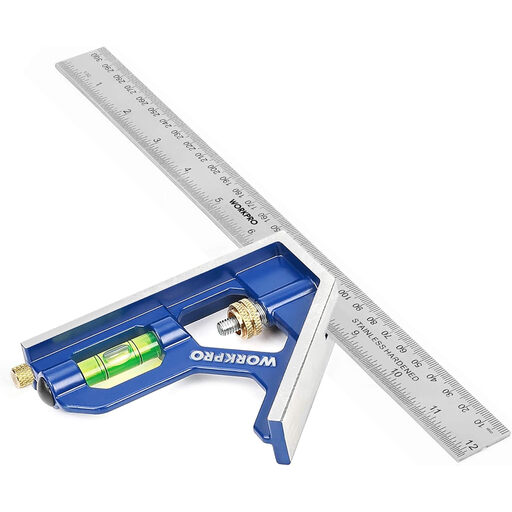
Why this product suits this profile: Designed for workshop use, woodworking and technical tasks, this model combines length measurement, 90- and 45-degree checks and marking out.
The scale is provided on both sides, while the stainless steel ruler, zinc alloy head, clamping screw, spirit level and scriber are all clearly specified.
Measuring range up to 300 mm, metric and imperial scales, plus several functions in one tool.
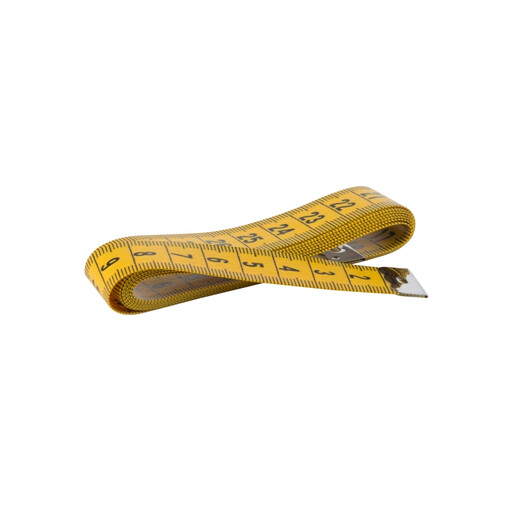
Why this product suits this profile: The 150 cm tailor’s tape measure is designed for sewing, patterns, body measurements, crafts and flexible workpieces.
The flexible PVC tape is printed on both sides and, at 1.9 cm wide, is designed for easy reading.
150 cm length, double-sided metric scale and PVC construction for flexible measuring tasks.
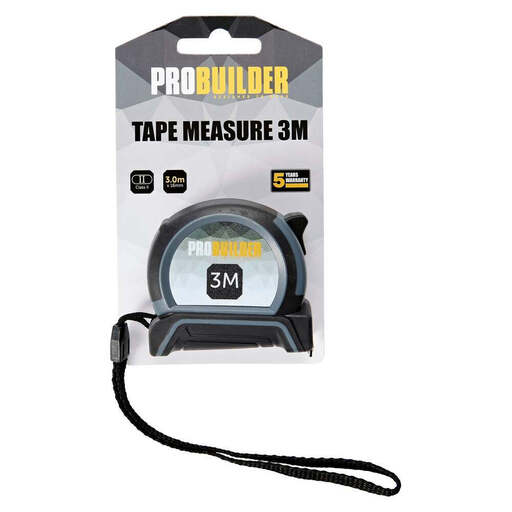
Why this product suits this profile: For assembly, furniture construction and renovation, the 3 m tape measure offers greater reach than a hand ruler while remaining easy to carry.
The product details specify a 3 m length, 1.6 cm tape width and EU Class 2 accuracy; the ABS case protects the steel tape.
3 m measuring length, belt clip and wrist strap; the tape is locked manually.
We have put together a complete, regularly updated list of products that fully meet these strict selection criteria and the safety regulations applicable in the EU.
Even suitable measuring tools need to be stored properly:
Before making the first important mark with a protractor, combination square or joiner’s square, check that the stop sits cleanly against the edge of the workpiece. For repeated tasks, a tool with a lockable guide is also worth considering.
For short marks and checking right angles, a joiner’s square or combination square is suitable. For longer distances, add a 2 m folding rule or a 3 m tape measure to your toolkit. A carpenter’s square with angle markings is useful when roof, frame or mitre angles need to be transferred frequently.
Their lifespan depends on the material, storage conditions and level of use. Plastic rulers can change shape when exposed to heat or bent excessively. Stainless steel and aluminium rulers should not be dropped, as their edges or stops may be damaged. With tape measures, dirt, moisture and uncontrolled retraction affect the condition of both the tape and the return mechanism.
For most tasks in Germany, a metric scale with centimetre and millimetre graduations is sufficient. An additional imperial scale is useful for international building plans, imported products, technical components or model-making templates. What matters is that both scales are clearly separated and easy to read without confusion.