
Lieferung heute & morgen

Qualitätsgarantie

Willkommens-Angebote freischalten: KOSTENLOSE Lieferung | Bis zu 80 % RABATT | Kostenlose 30-Tage-JoyPlus-Testphase
App herunterladen
Deciding to make your own ground meat, sausages, or fillings is a step towards greater control over freshness and ingredients. A home meat grinder makes this possible. However, the market is flooded with models whose performance claims and feature promises often create more confusion than clarity. Before you make a purchase, it's crucial to understand the common pitfalls that lead to an unused appliance collecting dust in a corner of your kitchen.
Many buyers are swayed by marketing buzzwords that have little practical meaning. Pay attention to these three points to make an informed decision:
To find the right electric meat grinder, focus on these three core parameters that determine its practical utility.
As mentioned, the nominal power is the crucial indicator of a machine's throughput capacity.
The longevity of a meat grinder is directly dependent on the materials used.
A good meat grinder becomes a versatile sausage maker or kitchen assistant with the right accessories.
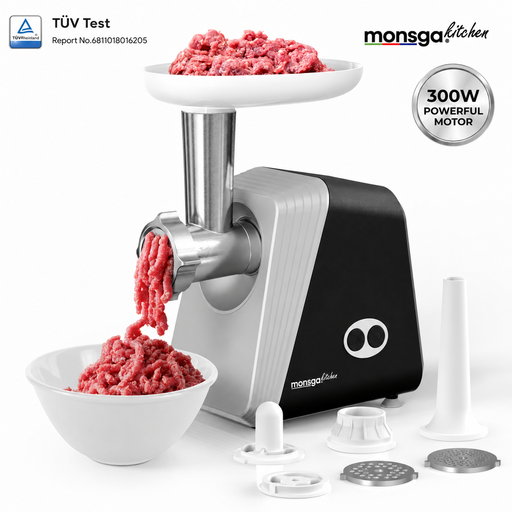
Why This Fits Their Persona: Ideal for those who want to occasionally prepare fresh ground meat for burgers or bolognese without investing in an expensive professional-grade machine. The device offers all the necessary basic functions to get started.
This model focuses on a solid basic set of features, including three grinding plates and a sausage stuffer, without advertising superfluous accessories. The specified nominal power of 300W is an honest rating for home use.
Features a reverse function for easily clearing jams. The accessories for sausage and kebbe allow for initial experiments beyond simply making ground meat.

Why This Fits Their Persona: Suitable for users who regularly process large quantities of meat, create their own sausage varieties, or grind game. The robust construction and powerful motor are designed for durability and heavy use.
This model avoids the trap of plastic parts in critical areas. The brushed aluminium body and internal components are designed for continuous heavy use. The high power rating is backed by a robust construction.
The powerful 2000-watt motor (peak power) ensures high throughput. The included accessories, including two sausage stuffers and three stainless steel grinding plates, are high-quality and practical.
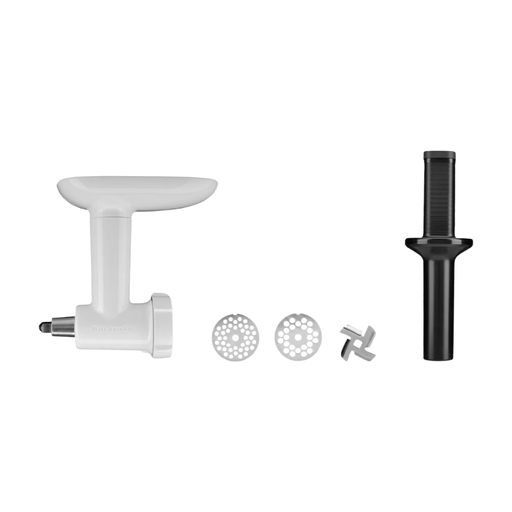
Why This Fits Their Persona: Perfect for anyone who already owns a KitchenAid stand mixer and wants to expand its functionality. This space-saving solution avoids the need to purchase another complete appliance.
As an attachment, it leverages the proven and powerful motor of the existing stand mixer. This eliminates the risk of buying a standalone unit with an underpowered motor.
High-quality construction designed to match the durability of the base machine. In addition to the meat grinder, the set also includes a purée attachment, further increasing its versatility.
We've compiled a complete, up-to-date list of products that fully meet these strict selection criteria and all relevant safety standards.
Disassemble the unit immediately after use. Most removable metal parts (auger, blade, grinding plates) should be hand-washed with warm water and dish soap, as harsh detergents in the dishwasher can damage the material (especially cast aluminium). Always follow the manufacturer's instructions. Pro tip: run a slice of dry bread through the grinder at the end. It will absorb the last bits of meat and fat, making cleanup easier.
No, you should never process deeply frozen meat. It can damage the auger, the blade, and the motor. However, slightly frozen meat (with a firm but not rock-hard consistency) is often easier to process than fully thawed meat because it holds its shape and is cut more cleanly.
A meat grinder uses an auger to press meat and force it through a grinding plate. This creates a uniform, strand-like texture (mince). A food chopper, on the other hand, uses rotating blades to chop the ingredients. The result is often less uniform, and the texture is different. For classic ground meat or sausage filling, a meat grinder is the right choice.