
Lieferung heute & morgen

Qualitätsgarantie

Willkommens-Angebote freischalten: KOSTENLOSE Lieferung | Bis zu 80 % RABATT | Kostenlose 30-Tage-JoyPlus-Testphase
App herunterladen
A meat knife should cleanly portion raw cuts, slice roasted joints into even pieces, and feel secure in the hand during extended use. In practice, however, neither the price tag nor a flashy product description alone will lead you to the right model. What really counts is the intended use, blade shape, material, and care requirements.
That’s why the Joybuy Product Recommendation Officer filters the relevant product features and highlights what hobby cooks, professional kitchens, and passionate home chefs should look for when buying.
A sharp kitchen knife can cut precisely straight out of the box. But long-term performance depends on factors such as steel quality, heat treatment, blade thickness, and care. Claims like “razor-sharp” are of limited value without technical details.
For choosing a meat-cutting knife, verifiable information is far more helpful: stainless steel, forged construction, blade length, hardness ratings, or recommended cleaning instructions.
A heavy cleaver is designed for specific jobs, such as splitting bones or thick ribs. For slicing roasts or carving, it is usually too bulky. The wide, robust blade can be less controlled for fine cuts.
If you regularly portion cooked meat, you’re better off with a carving knife or a slim meat knife. Bones, frozen foods, and hard objects should only be tackled with a model expressly intended for that purpose.
A 20 cm chef’s knife or a meat knife with a 20 to 22 cm blade covers most everyday tasks. For large roasts, a longer blade often enables a more even cut, while a shorter blade can be easier to control on smaller work surfaces and for precise movements.
Blade shape also matters: a straight edge is ideal for clean cuts through meat. A serrated blade can be useful for certain crusts and cooked roasts, but it produces a different cut pattern.
A stainless steel meat knife is easy to care for and, with proper cleaning, resistant to corrosion. However, “stainless steel” does not automatically mean uniform quality. Buyers should also look at the specific steel designation, any hardening treatment, and care instructions.
A forged meat knife is shaped from a heated piece of steel. Depending on the design, this construction can support stability and balance. For everyday usability, however, handle design, blade profile, and finish are equally important.
With a knife featuring details such as FRIODUR-ice-hardened or a specific hardness rating, these are brand-specific manufacturing or material specifications. Such values should not be considered in isolation: a harder knife may hold its edge well, but it often requires appropriate care and professional sharpening.
For many kitchens in the UK, 20 to 22 cm is a practical range. This length is suitable for cutting raw meat, poultry, stewing steak, and medium-sized roasts. A slightly flexible, narrow blade helps with carving. A wider blade offers more stability and can be useful for heavier cutting tasks.
For very hard materials, a dedicated cleaver is necessary. A standard meat-cutting knife should not be forced through bones or frozen foods, as the edge can chip or become permanently damaged.
A non-slip handle makes control easier, especially when cutting for longer periods. Plastic handles such as Fibrox or triple-riveted handles are common in professional kitchens. It is important that the handle and your hands stay clean and dry.
Always follow the manufacturer’s cleaning instructions. For many high-quality meat knives, hand washing is recommended, even if some models are described as dishwasher-safe. High temperatures, detergents, and contact with other cutlery can stress the blade and handle.
Cutting boards made of stone, glass, or ceramic are unsuitable for high-quality blades. Better choices are boards made of wood or suitable plastic materials. For storage, consider a knife block, magnetic strip, drawer insert, or blade guard.
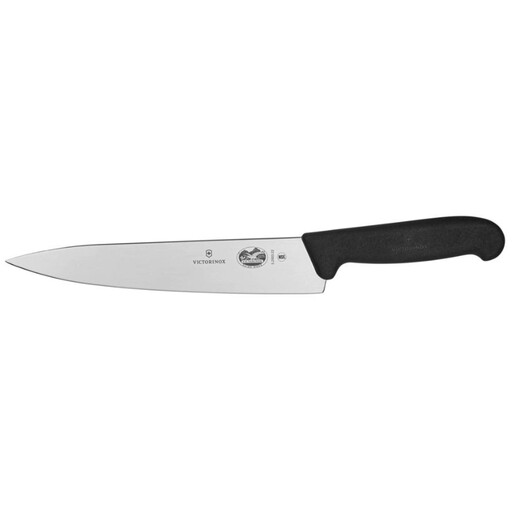
Why this product fits the profile: The straight 22 cm blade and non-slip Fibrox handle cover typical tasks for cutting meat, fish, and vegetables.
The blade length and handle material are clearly stated. This makes it easier to assess everyday usability than with vague sharpness claims.
22 cm stainless steel blade; ergonomic, non-slip plastic handle.
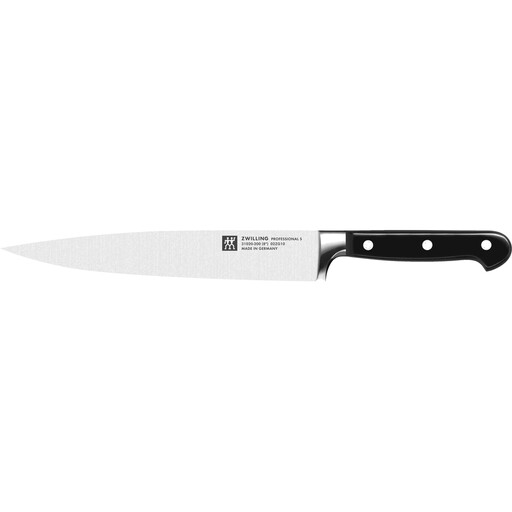
Why this product fits the profile: This forged meat knife features a 20 cm stainless steel blade, FRIODUR ice-hardening, and a triple-riveted handle.
The product data specifies construction, blade length, material, and care restrictions. The knife is expressly not intended for bones or frozen foods.
Forged 20 cm blade; FRIODUR ice-hardened stainless steel and finger guard.
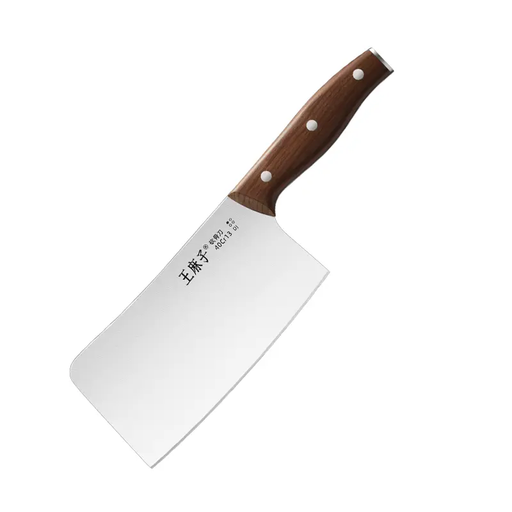
Why this product fits the profile: The wide, robust design is aimed at heavy cutting tasks such as splitting bones and pork ribs.
The construction is not classified as a universal carving knife, but is recommended for heavy work. This prevents unsuitable use for fine cutting.
Designed for bone and rib work; full-tang construction according to the product description.
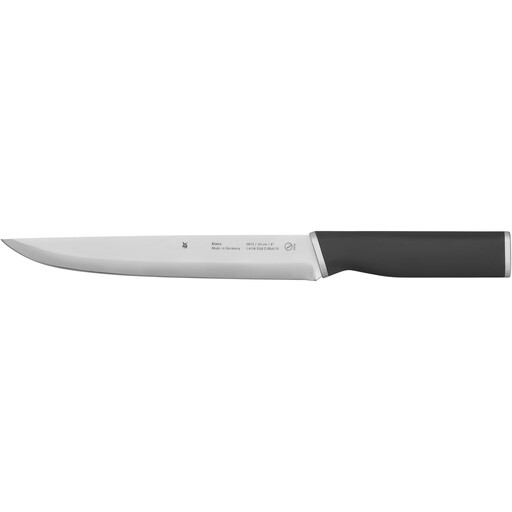
Why this product fits the profile: The slightly curved, flexible 20 cm blade is intended for raw, cooked, and roasted meat according to the product description.
The suitability for several types of meat is paired with a specific blade length and a hand-washing recommendation, rather than assuming unrestricted dishwasher safety.
20 cm blade; specially hardened, corrosion-resistant steel according to product specifications.
We have compiled a complete, regularly updated list of products that fully meet these strict selection criteria and the safety regulations in force in the EU.
For many households and professional kitchens, 20 to 22 cm is a versatile choice. Shorter blades offer more control for small portions, while longer blades can make even cuts easier on large roasts.
A carving knife is usually slim and designed for cooked meat and precise slices. A cleaver, on the other hand, has a wider and more robust blade for heavy cutting work. It should not automatically be used as a meat-cutting knife for fine cuts.
The lifespan of the edge depends on the steel, hardness, what you cut, your cutting board, and care. Regular hand washing, suitable cutting surfaces, and proper sharpening can maintain its performance. It is not possible to give a reliable general lifespan.