
Lieferung heute & morgen

Qualitätsgarantie

Willkommens-Angebote freischalten: KOSTENLOSE Lieferung | Bis zu 80 % RABATT | Kostenlose 30-Tage-JoyPlus-Testphase
App herunterladen
A meat knife needs to be more than just sharp. The blade shape, length, handle, maintenance requirements and intended use are all crucial factors. A knife for carving a roast has different demands to a boning knife or a cleaver for bones and ribs.
If you only focus on terms like "professional", "extra sharp" or "forged", you risk overlooking important details. Three common buying and marketing pitfalls crop up particularly often:
The blade length should suit the food and your working style:
A straight edge produces even slices. A serrated edge can be useful on certain roast surfaces, but it requires a different sharpening method than a smooth blade.
A stainless steel knife is corrosion-resistant, but still needs cleaning and drying. Terms like "forged kitchen knife" indicate a manufacturing process, but they don't replace concrete details about blade stability or care.
Pay attention to the following points:
A meat knife for bones must not be confused with a standard chef's knife. Hard bones, frozen food or other hard objects can damage fine blades. For such tasks, a designated cleaver or bone knife is required.
The handle must feel dry and secure in your hand. Non-slip plastic handles are low-maintenance in busy kitchen environments. Wooden handles can feel pleasant in the hand, but usually require more careful maintenance.
Check before you buy:
Glass, stone and ceramic boards can dull blades more quickly. More forgiving cutting surfaces are a better choice. For storage, consider a knife block, magnetic strip, drawer insert or blade guard. Loose knives in a drawer increase the risk of injury and can damage the blade.
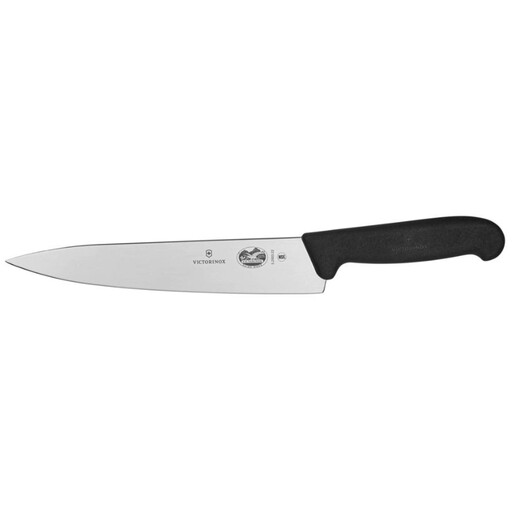
Why this product fits the profile: The straight 22 cm blade covers typical tasks when cutting meat, fish, fruit and vegetables. The Fibrox plastic handle is designed to be non-slip.
The product details specify the blade length, stainless steel and handle material. This makes it easier to assess suitability than relying on a purely marketing claim about sharpness.
22 cm straight edge; ergonomic, non-slip Fibrox handle; intended for domestic kitchens, catering and professional work areas.
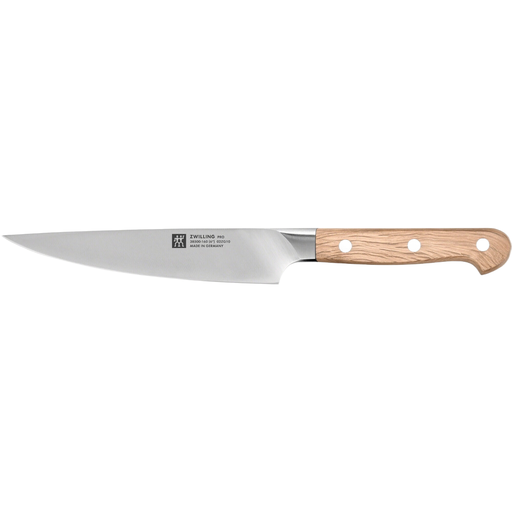
Why this product fits the profile: According to the product details, this model features a forged 16 cm blade made from special formula steel with FRIODUR ice-hardening and an ergonomic handle made from stone oak.
The details state the manufacturing process, blade length, hardening and handle material. Hand washing is recommended rather than general dishwasher use.
Forged blade; FRIODUR ice-hardening; riveted handle; 160 g product weight according to the description.
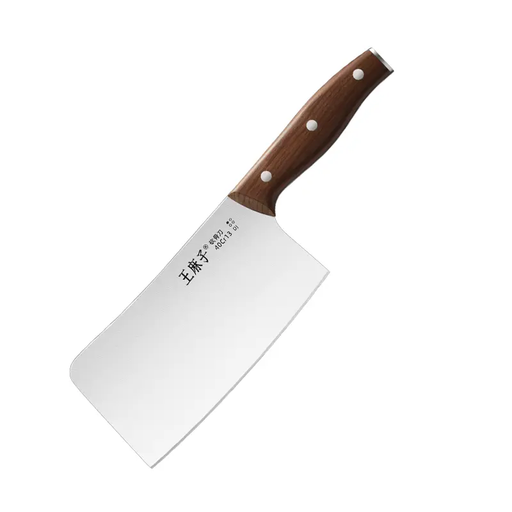
Why this product fits the profile: According to the product description, the robust construction is designed for heavy cutting tasks such as portioning bones and pork ribs.
It is not classified as a fine filleting or ham knife, but as a tool for robust tasks. This makes its intended use much clearer.
Robust construction; hardened steel according to the description; full tang construction and ergonomic handle.
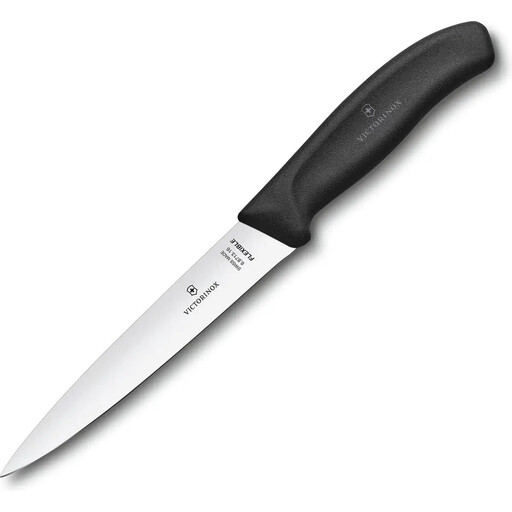
Why this product fits the profile: The 16 cm blade is described in the product details as flexible and suitable for filleting fish. The plastic handle is ergonomically shaped.
The flexible blade is designed for delicate filleting movements and therefore cannot be confused with a heavy cleaver.
Flexible 16 cm blade; straight edge; dishwasher-safe according to the product details.
We have compiled a complete, regularly updated list of products that fully meet these strict selection criteria and the safety regulations in force in the EU.
A honing steel realigns the cutting edge depending on the knife's construction, but it does not always replace sharpening with a whetstone or a suitable sharpening system. Serrated edges have different care requirements.
For roasts, straight blades of around 20 to 22 cm are usually practical. A longer blade can produce even slices if the joint is large enough. For smaller portions, a shorter model is often sufficient.
A meat knife is mainly used for slicing and carving. A boning knife typically has a narrower, often slightly flexible blade designed to separate meat from bones. Neither type should automatically be used for bones or frozen food.
The lifespan depends on frequency of use, chopping board, cutting technique, cleaning and storage. It is not possible to give a reliable general timeframe. Regular honing or professional sharpening, along with a gentle cutting surface, help maintain its usability.