
Lieferung heute & morgen

Qualitätsgarantie

Willkommens-Angebote freischalten: KOSTENLOSE Lieferung | Bis zu 80 % RABATT | Kostenlose 30-Tage-JoyPlus-Testphase
App herunterladen
A suitable meat knife should offer more than just a sharp blade. The blade shape, length, handle and care requirements all affect whether steaks can be cut cleanly, a roast can be portioned evenly or the blade loses its precision after only a short time. The range extends from small steak knives and carving knives to versatile 20 cm chef’s knives.
To make sure your choice is not based solely on marketing claims, it is worth taking a closer look at the features that really matter.
The term stainless steel describes increased resistance to corrosion, not complete immunity. Salt, acids, moisture and long dishwasher cycles can also affect stainless steel blades. Knives should therefore be rinsed and dried after use. For high-quality or specially hardened blades, hand washing is often the care method recommended by the manufacturer.
A serrated steak knife can often cut through firm crusts without crushing the food too much. This is practical for steaks, pizza and grilled dishes. For precise carving of a roast or cutting raw meat, however, a smooth edge is generally more suitable, as it allows controlled, long cuts.
A serrated edge is also not as easy to sharpen with a conventional honing steel. If you want to sharpen your knives yourself over the long term, you should take the type of blade into account when making your choice.
A meat carving knife with a blade length of 20 to 22 cm can make it easier to cut large roasts or poultry evenly. In small kitchens, when handling compact pieces of meat or at the dining table, an 11 to 12 cm blade may be more practical. Weight, balance and handle size are also important.
A classic carving knife is designed for long, clean cuts. A 20 cm chef’s knife, on the other hand, is also suitable for vegetables, fish and herbs. A chopping knife or cleaver is a different category altogether and should not be used for bones or frozen food without checking that it is specifically designed for those tasks.
A sharp smooth-edge meat knife is a good choice for raw cuts of meat, roasts and precise slices. It can be maintained with a honing steel or whetstone, provided the method is suitable for the blade.
A serrated steak knife set is suitable for several people and for immediate use at the table. The toothed edge grips firm surfaces, but is less flexible when making very fine cuts. Also check whether the edge is sharpened on both sides and whether replacement or sharpening services are available.
The handle should feel secure in your hand, even during extended use. Important features include:
“Dishwasher-safe” does not mean that cleaning in the dishwasher is the best way to care for the knife. Heat, detergents and contact with other cutlery can put strain on the blade and handle. For knives with wooden handles or particularly sharp, hardened blades, hand washing is generally preferable.
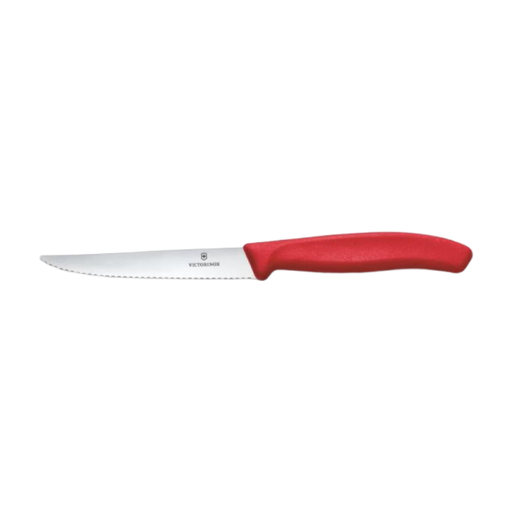
Why this product suits this profile: The 11 cm blade is designed for steaks, pizza and everyday use at the table. The ergonomic polypropylene handle and low weight of 28 g make it easy to handle.
The blade type and intended use are clearly stated. This makes it clear that it is a table knife rather than a versatile carving knife.
11 cm serrated edge, stainless steel blade, ergonomic handle and dishwasher-safe design according to the product details.
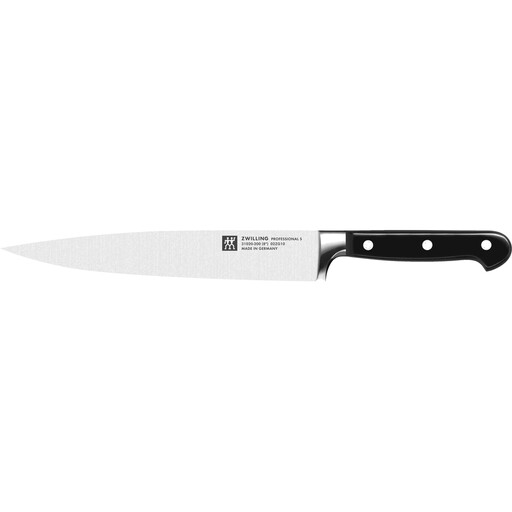
Why this product suits this profile: The 20 cm blade is designed for raw meat, roasts, poultry and goulash. The forged stainless steel blade with FRIODUR hardening and the handle with finger guard are aimed at users who cook regularly.
The product details explicitly recommend hand washing and rule out dishwasher use. This prevents the knife from being chosen incorrectly based on the term “easy-care”.
20 cm forged stainless steel blade, FRIODUR hardening, finger guard and a weight of 213 g.
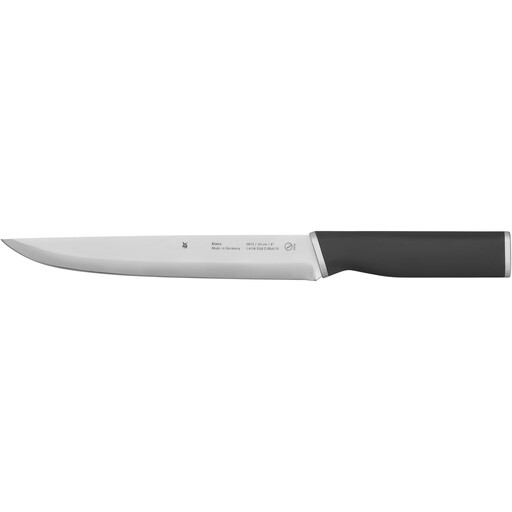
Why this product suits this profile: According to the product description, this knife is designed for roasted, cooked and raw meat. The slightly curved, flexible blade supports long cuts when carving roasts and larger pieces.
The care requirements are clear: hand washing and regular sharpening are recommended. This prevents the blade from being mistakenly treated as completely maintenance-free.
20 cm specially hardened steel, ergonomic handle, secondary bevel and stated hardness of 55–58 HRC.
We have put together a complete, regularly updated list of products that fully meet these strict selection criteria and the safety regulations applicable in the EU.
A suitable meat knife set can be a practical choice for families, hosts and catering businesses. For four to six people, steak knife sets with matching blade lengths are a good option. If you often carve roasts and also prepare vegetables, however, you will generally be better served by a single carving knife or a versatile chef’s knife.
For steaks served at the table, 11 to 12 cm is standard. For carving roasts and poultry, around 16 to 22 cm is suitable, depending on the size. The right length depends on the size of the food being cut, the space available and your personal handling preferences.
Some steak knives and sets are described by the manufacturer as dishwasher-safe. Hand washing is nevertheless often gentler on the edge, handle and surface. For knives with wooden handles or where machine cleaning is expressly prohibited, the dishwasher should not be used.
Suitable cutting boards, drying the knife immediately and storing it safely all help to reduce unnecessary wear. Smooth blades can be regularly maintained with a suitable honing steel or sharpening medium. Serrated edges require specialist sharpening. It is also essential not to use the knife for bones, frozen food or hard materials.