
Lieferung heute & morgen

Qualitätsgarantie

Willkommens-Angebote freischalten: KOSTENLOSE Lieferung | Bis zu 80 % RABATT | Kostenlose 30-Tage-JoyPlus-Testphase
App herunterladen
Anyone looking to buy meat snacks online will find a wide selection of beef jerky, beef jerky products, mini salami, corned beef and mixed snack boxes. However, the differences are not limited to flavour. Pack size, nutritional values, allergens, storage requirements and individual portions all determine whether a product is genuinely suitable for work, travel, sport or outdoor activities.
An eye-catching protein figure usually refers to 100 g, while individual bags often contain just 25 g or 60 g. For example, depending on the variety, Jack Link’s Original Beef Jerky lists around 35 to 41 g of protein per 100 g. A 25-g portion therefore contains considerably less protein than the figure on the front of the pack might suggest.
When comparing products, always check these three figures:
Sugar and salt content should also be taken into account. Several beef jerky varieties contain around 3 to 5.6 g of salt per 100 g. This is relevant when making everyday choices, especially if you regularly plan to take savoury snacks with you when you are out and about.
Many beef jerky products can be stored without refrigeration while unopened. Once opened, however, different recommendations may apply: depending on the pack, the contents may need to be eaten within 24 hours or a few days, or stored in the fridge.
One more point: some packs contain a small oxygen absorber. This helps preserve the product and is not suitable for consumption. Corned beef has different requirements again: an unopened tin can be stored at room temperature, but once opened, the contents should be used promptly and kept covered.
A multipack of meat snacks is practical for offices, travel or stocking up, but it is not automatically cheaper per 100 g. A large total quantity can also be inconvenient if the packaging cannot be resealed after opening.
For taking with you, individually wrapped products such as BiFi Salami Snacks or 25-g bags of beef jerky are easy to portion. For longer-term stocking up, 12-packs containing 60-g bags or multipacks may be more practical. That is why you should compare the price per 100 g and the number of individual portions.
Beef jerky typically consists of seasoned, smoked and dried strips of beef. On the product page, check whether beef is listed as the main ingredient and what other ingredients are included. Teriyaki Beef Jerky, for example, often contains soy sauce, sugar and wheat ingredients. Depending on the recipe, Sweet & Hot Beef Jerky also contains sweet and hot spices.
Mini salami, on the other hand, is usually made from pork or beef and preserved through maturation or smoking. BiFi Original Salami lists pork and beef, as well as beechwood smoke, among its ingredients. Its flavour and texture therefore differ noticeably from dried beef.
The nutrition table helps you assess marketing claims objectively. Among the products provided, protein values range from 14.3 g per 100 g for Eifeler Lard Meat to around 40 g per 100 g for certain beef jerky varieties.
Also consider:
Recipes and labelling may change. The information on the pack you receive is therefore always the definitive source.
Small, ready-to-eat bags are ideal for work or short train journeys. For hiking and camping, products that can be stored without refrigeration and have sturdy packaging are a practical choice. A meat snack box containing several varieties can be useful if you would like to compare different flavours such as Original, Teriyaki and Sweet & Hot.
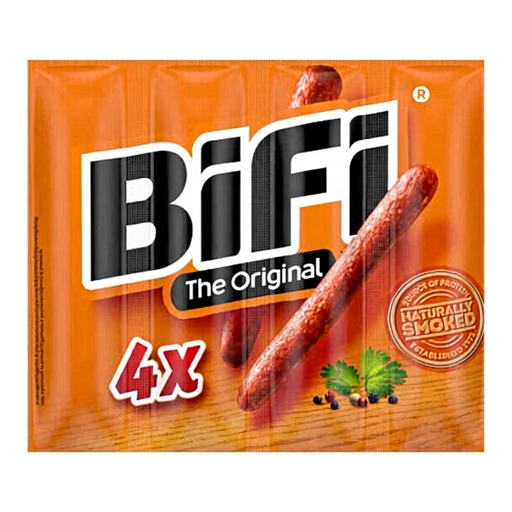
Why this product suits this profile: Four individually wrapped mini salamis, each weighing 18.5 g, are ideal for trying different options and enjoying a quick break. The pack size limits the amount available for each occasion.
The individual portions make the actual amount consumed easy to understand. Nutritional values such as 25 g of protein, 45 g of fat and 4.2 g of salt per 100 g are clearly stated in the product description.
Four individually wrapped portions; store in a cool, dry place according to the product information. Made with pork and beef, and smoked over beechwood.

Why this product suits this profile: The 12 small bags make it easy to plan supplies for the office, commute or day trips, without having to open a large pack straight away.
The portion size is not confused with the total quantity: 12 x 25 g equals 300 g. The product information also lists 41 g of protein and 5.6 g of salt per 100 g.
Can be stored without refrigeration according to the product information; ready-to-eat 25-g bags; contains soya and wheat, which should be checked before buying.
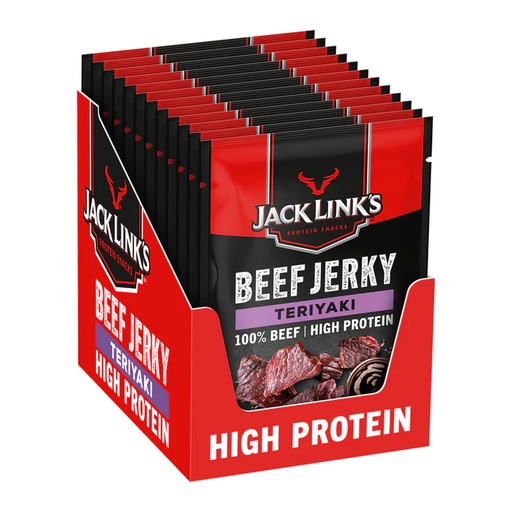
Why this product suits this profile: The 12 individual 60-g bags are designed for longer journeys, days outdoors and a well-planned office supply. The Teriyaki seasoning is ideal for shoppers looking for a sweet and savoury option.
The pack size and individual portions are clearly stated: 720 g in total. Before buying, take account of the sugar content of 21 g and the soya and wheat allergens.
38 g of protein per 100 g according to the product information; can be stored without refrigeration while unopened; 12 separate bags for planning your supplies.
We have put together a complete, regularly updated list of products that fully meet these strict selection criteria and the safety regulations applicable in the EU.
For short journeys and work, individually wrapped mini salami or 25-g bags of beef jerky are practical. For longer trips, larger individual bags or multipacks containing several portions may be more suitable. Check in advance whether the product can be stored without refrigeration while unopened.
The specific best-before date is shown on the packaging. Unopened products should be stored in a cool, dry place away from direct sunlight, in accordance with the storage recommendation. Once opened, shorter time limits may apply depending on the product; the instructions on the pack are definitive.
Both product groups can provide significant amounts of protein, but they differ in their fat, sugar and salt content. According to the information available, some beef jerky products contain around 35 to 41 g of protein per 100 g, while BiFi Original Salami lists 25 g per 100 g. For an informed choice, always compare the full nutrition table.