
Lieferung heute & morgen

Qualitätsgarantie

Willkommens-Angebote freischalten: KOSTENLOSE Lieferung | Bis zu 80 % RABATT | Kostenlose 30-Tage-JoyPlus-Testphase
App herunterladen
A meat tenderiser can help prepare cuts of meat more evenly before frying, barbecuing or marinating. However, meat pounders, meat hammers and steak tenderisers work in noticeably different ways. If you focus only on product images or terms such as “solid” and “professional”, you can easily overlook important details.
For home cooks, barbecue enthusiasts and professional kitchens, three typical purchasing issues are particularly relevant:
A meat pounder, also known as a meat hammer, often has two sides. One structured side can work on the surface of a cut either at specific points or across a wider area. A smooth side is used to pound meat to an even thinner thickness. This is useful for schnitzel, veal slices or chicken breast, as a similar thickness makes cooking times easier to predict.
A steak tenderiser with meat-fibre needles works differently. Several needles penetrate the meat and interrupt individual strands of fibre. This can help marinades penetrate the surface more easily. However, the result still depends on the cut, thickness, cooking method and hygiene. The term “make meat tender” is therefore no guarantee of a particular cooking result.
For occasional use, a simple meat tenderiser is often sufficient. If you regularly prepare steaks, schnitzel and barbecue meat, you should compare the tool’s cleaning requirements, handle and head design more carefully.
First, consider which foods you prepare most often:
A double-sided meat hammer can cover several tasks. With a steak tenderiser featuring needles, safe handling is particularly important. After use, the needles should be fully accessible and easy to clean thoroughly.
Look for specific material details rather than general advertising claims. For metal parts, rust-resistant surfaces are a sensible choice for the kitchen. Stable connections between the head and handle are also important, as is a surface without hard-to-reach cracks.
A CE marking is not automatically the decisive selection criterion for a simple manual kitchen tool. Instead, check whether the supplier provides information about food contact, cleaning and safe use. For coated or multi-part products, it is worth checking the product page and the packaging information.
A non-slip handle can improve control, particularly when your hands are not completely dry because of marinade or moisture. The weight should suit the way you work: a heavy meat hammer requires less additional force, but can be more awkward to use on delicate work surfaces.
Also check:
After use, the meat tool should be cleaned immediately with warm water and a suitable washing-up liquid, then dried completely. Raw meat must not come into contact with cooked food or equipment used for cooked food.
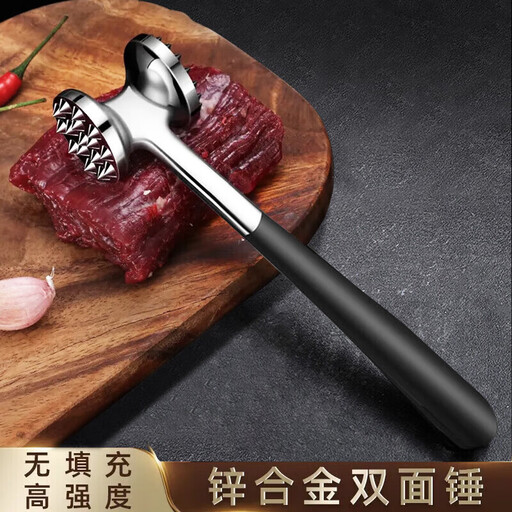
Why this product suits this profile: The double-sided design covers two essential tasks: working on the meat with a structured surface and flattening it with the smooth side. This makes the model suitable for occasional schnitzel and meat preparation.
The two sides make the intended uses clear. Before buying, you should still check the product-page information on cleaning and materials.
Smooth and structured working surfaces; non-slip handle according to the product description.
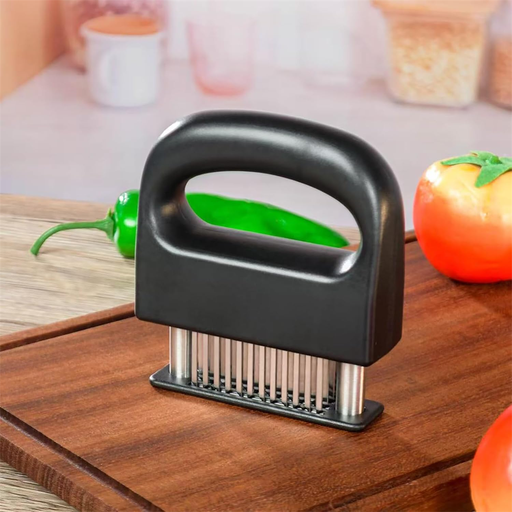
Why this product suits this profile: The needle design is intended for users who want to pierce steaks or other cuts of meat at specific points before marinating, offering a targeted alternative to pounding across the surface.
The design is clearly intended for needle-based tenderising and should not be confused with a traditional meat hammer. This makes it easier to match the tool to its intended use before buying.
Meat-fibre needle for targeted punctures; designed as a compact kitchen tool for meat.
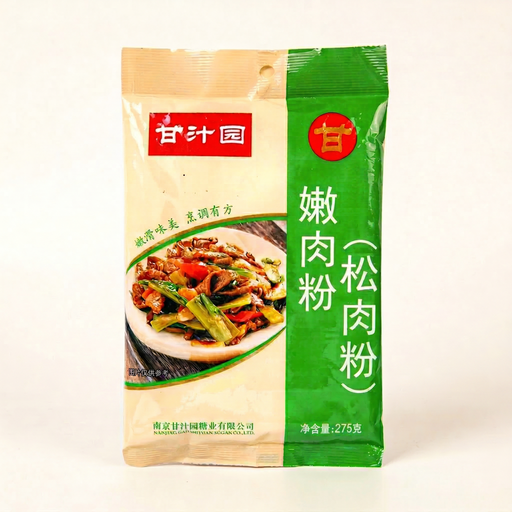
Why this product suits this profile: For users looking for a seasoning and marinating solution alongside a mechanical meat tenderiser, this powder may be of interest. It is not a tool, but a food product.
The product type is clearly described as a powder containing papain, salt, sugar, corn starch and spices. It is not intended for direct consumption and must be used according to the instructions.
275-g pack; according to the product details, intended for marinades and the preparation of different types of meat.
We have put together a complete, regularly updated list of products that fully meet these strict selection criteria and the safety regulations applicable in the EU.
Place the raw meat on a separate, non-slip chopping board. Work it with even pressure and avoid unnecessarily forceful blows, so that the meat fibres do not become shredded. When using needles, only pierce as deeply as necessary for the particular cut.
After tenderising:
For marinating powders, the ingredients, salt content, dosage and allergen information on the packaging are the key points to follow. Mechanical tenderising does not replace safe refrigeration or sufficient heat treatment.
A meat pounder works on meat with a smooth or structured striking surface. A meat-fibre needle creates many individual punctures. For schnitzel and evenly flattening meat, a hammer is usually the more obvious choice; for targeted preparation of steaks, a needle tool may be more suitable.
Its lifespan depends on the materials, connection points, frequency of use and cleaning routine. Regularly check the handle, head and needles for looseness, rust or damage. A damaged tool should no longer be used with food.
No. The cut, ageing, thickness and preparation method of the meat remain decisive. A tenderiser can work on the surface or individual fibres, but it cannot guarantee a particular result. Choose the tool according to the type of meat and your intended preparation method.