Those who regularly portion meat
If you often divide your shopping into freezer portions of different sizes, look for suitable bag sizes and a sealing process that’s easy to plan.


If you regularly pack meat in portions of different sizes, a bar vacuum sealer gives you more flexibility when choosing and cutting bags to size. The trade-off is that you’ll need worktop space and room to store it. For occasional, smaller portions, a hand pump may take up less storage space, but you’ll need compatible system bags or containers. When sealing juicy meat, follow the instructions for the specific appliance: a moist-food setting does not automatically mean you can vacuum-seal liquids in a bag, and vacuum sealing is no substitute for refrigeration or good hygiene.
If you often divide your shopping into freezer portions of different sizes, look for suitable bag sizes and a sealing process that’s easy to plan.
If you only freeze smaller portions occasionally, the size of the appliance isn’t the only thing to consider: bags, rolls and containers also need space.
If meat juices often collect while you’re portioning, check how to keep the bag opening clean and which parts of the appliance can be cleaned.
Start by choosing based on what you’ll use it for most often: varying portion sizes tend to suit a bar sealer, while a hand pump may be a better fit if you have limited storage space for appliances.
Suitable if: you regularly pack meat in different sizes and want to cut bags or rolls to fit.
Keep in mind: You’ll need space to fill and seal bags; with juicy meat, the features and cleanability of the specific model are key.
Suitable if: you pack smaller portions occasionally and prefer a compact appliance.
Keep in mind: Bags and containers must be compatible with the system; containers also take up space in the freezer.
| What matters to you | What to check before buying | Who it matters most to |
|---|---|---|
| Portion sizes and sealing process | Check the bag width, compatibility with rolls and bags, and the space you’ll need for filling. | If I freeze cuts of meat in different sizes, I want to prepare bags to fit. This matters most to around 33% of consumers whose main concern is varying portion sizes. |
| Worktop and storage space | Consider the appliance dimensions, worktop space and room for bags, rolls or containers separately. | If my kitchen has little spare space, I want to be able to store bags and containers easily too. This matters most to around 27% of consumers whose main concern is space. |
| Meat juices and cleaning | Check the model’s instructions, moist-food setting and how easy it is to access the parts that need cleaning. | If meat juices often collect while I’m portioning, I want to know how to keep the bag opening and appliance clean. This matters most to around 20% of consumers whose main concern is moisture. |
| Suitable freezer bags | Check that the bags are suitable for food contact and freezing, are compatible with the system, and that you can buy enough for your needs. | If I regularly pack meat, I want to be able to reliably buy suitable bags. This matters most to around 20% of consumers whose main concern is bag availability and material requirements. |
Bags that come into direct contact with meat must be intended for food contact. The Federal Office of Consumer Protection and Food Safety recommends checking the intended-use statement or a suitable label. You should also check the information on the specific bag to make sure it is suitable for freezing.
Vacuum packaging is no substitute for safe refrigeration. The German Federal Institute for Risk Assessment points out that inadequate temperatures during storage or transport can allow harmful germs to survive and multiply.
Handle good-quality meat hygienically, maintain the cold chain and freeze the portions afterwards.
A setting for moist foods doesn’t automatically mean you can vacuum-seal liquid marinade directly in a bag.
Check the instructions for the specific appliance and bag, and keep the bag opening clean before sealing.
A hand pump may take up little storage space, but you’ll still need to store compatible bags and containers. With a bar sealer, you’ll also need room to fill and seal bags.
Compare the total space required and check which bags, rolls or containers you’ll need for your usual packing routine.
The range includes bar sealers such as the VC 10 and VC 150, as well as the Vacu OneTouch hand-pump system.
Fresh & Save is a hand-pump system with compatible valve bags and freezer containers.
The VAC 385 and VAC 285 are bar vacuum sealers designed for different portioning needs.
The PC-VK 1080 is a bar vacuum sealer for use with embossed bags or film rolls.
The V.100 Premium X is a bar sealer with manual activation and accessories for containers.
This selection includes hand-held appliances with system bags and bar vacuum sealers for portioning and packing. Before using the bags in direct contact with meat or freezing them, check that the specific bags are suitable.
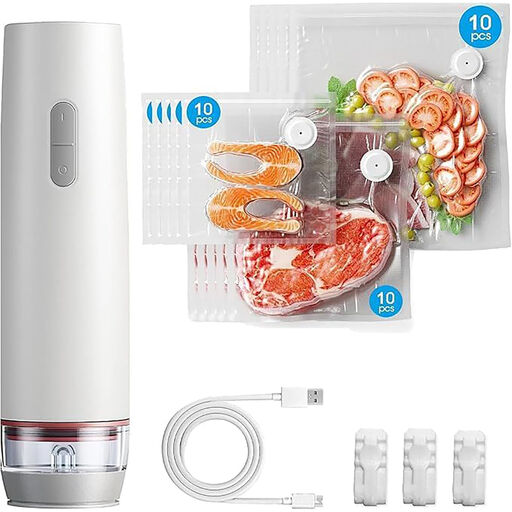 No image available
For smaller portions when a compact hand-held appliance matters more than being able to cut film rolls to size.
Features listed in the product name: 60 kPa and 30 reusable bags.
Check that the bags are suitable for food contact and freezing.
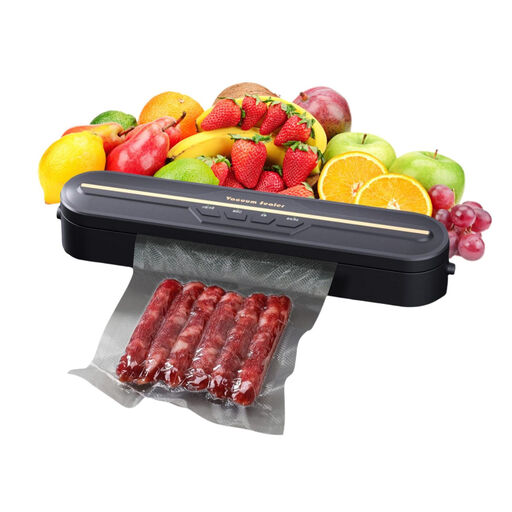 No image available
For different portion sizes if you’re looking for a bar vacuum sealer with a dedicated moist-food setting.
Features listed in the product name: 120 W, 28 cm sealing width, moist and dry modes, and 10 vacuum bags.
A moist-food setting doesn’t automatically mean you can seal free liquid in a bag; check the appliance instructions.
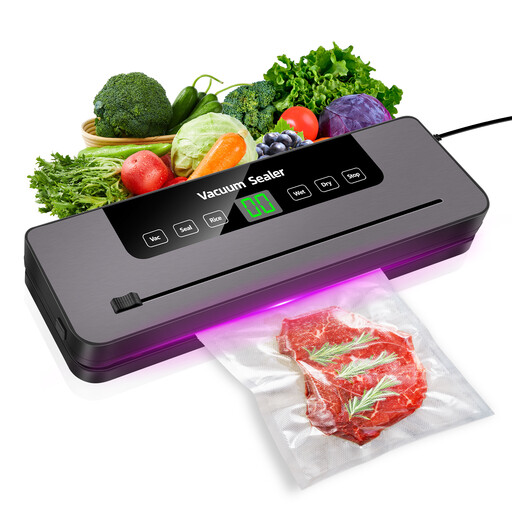 No image available
For portioning and packing if you’re considering a bar sealer with moist and dry modes.
Features listed in the product name: 10 bags and a setting for dry and moist foods.
Check that the included bags are suitable for food contact and freezing, and follow the instructions for juicy meat.
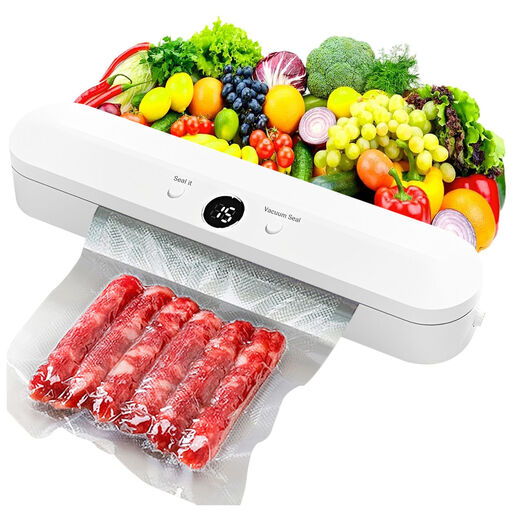 No image available
For different portion sizes if a dedicated moist-food setting is one of your selection criteria.
Features listed in the product name: 120 W, 28 cm sealing width, moist and dry modes, LCD display, and 10 vacuum bags.
Check the instructions for handling meat juices, and make sure the bags are suitable for food contact and freezing.
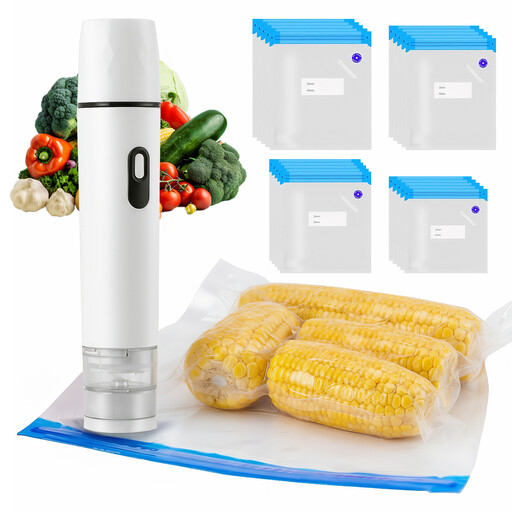 No image available
For smaller portions if you prefer a portable hand-held appliance to a bar vacuum sealer.
Features listed in the product name: 60 kPa and 20 reusable bags.
Check that the bags are compatible with the appliance and intended for food contact and freezing.
A hand pump may be enough if you pack smaller portions occasionally and are happy to use compatible valve bags. For film rolls that you can cut to size and seal, you’ll need a suitable bar sealer. With either system, check that the specific packaging is suitable for freezing.
Keep meat as cold as possible while handling it, then freeze it; vacuum sealing does not replace the cold chain. The consumer advice centre recommends thawing meat and fish covered in the fridge. Keep them separate from other foods while thawing and discard the liquid; label freezer portions with their contents and the date they were frozen.
Don’t assume you can based on the term ‘moist-food setting’ alone. Manufacturers distinguish between moist foods and liquid contents; Rommelsbacher recommends special containers for liquid foods. Follow the instructions for the specific appliance and bag, and keep the sealing area clean.
Check which bags or rolls are compatible with your chosen appliance and whether they’re intended for food contact and freezing. A starter set only includes the items listed in it; according to the manufacturer, the ZWILLING Fresh & Save set reviewed includes four bags and two containers.
Food contact materials on the EU market are covered by Regulation (EC) No 1935/2004. Check for a statement that the product is intended for food contact or another suitable label. The Federal Office of Consumer Protection and Food Safety notes that there are exceptions to the requirement to display the glass-and-fork symbol directly, for example for items that are clearly intended to come into contact with food. Check the product information to see whether a particular bag is also suitable for freezing.