
Lieferung heute & morgen

Qualitätsgarantie

Willkommens-Angebote freischalten: KOSTENLOSE Lieferung | Bis zu 80 % RABATT | Kostenlose 30-Tage-JoyPlus-Testphase
App herunterladen
A mechanical gaming keyboard should enable fast input, remain comfortable for typing and work with your existing hardware. However, product pages often promote RGB effects, high polling rates or particularly quiet typing sounds without clearly explaining the details that really matter. For buyers in Germany, this mainly creates three typical risks.
1. The wrong layout: A US QWERTY keyboard may work with Windows and macOS, but its key arrangement differs from that of a German QWERTZ keyboard. Special characters, the Y and Z keys and the key legends can all take some getting used to in everyday use. If you regularly write German text, search specifically for “German QWERTZ” or “ISO-DE”.
2. Unclear hot-swap compatibility: “Hot-swap” does not automatically mean that every switch will fit. Some models support 3-pin and 5-pin switches, while others use only magnetic Hall Effect switches. Before buying, check which sockets and switch types are supported.
3. RGB distracting from important specifications: A gaming keyboard with RGB may look appealing, but it says little about typing feel, stability or noise levels. More important factors include the construction, keycap materials, connectivity and spare-part compatibility.
The keyboard size determines which keys are included and how much space remains on your desk:
For German users, a genuine QWERTZ layout is usually the simplest option. If you buy a US version, check whether the keycaps and the desired key mapping can be changed.
Linear switches move smoothly without a noticeable tactile bump. They are often chosen for fast gaming input and fluid typing. Tactile switches provide noticeable resistance when activated, while clicky switches also produce a distinct clicking sound.
With a hot-swap keyboard, compatible switches can be replaced without soldering. This makes later customisation and replacing individual components easier. Do not overlook the “3-pin/5-pin” specification.
A gasket-mount keyboard suspends the positioning plate inside the case using cushioning elements. Combined with foam layers, this can reduce vibrations and hollow case sounds. However, the actual sound profile also depends on the switches, keycaps and the surface beneath the keyboard.
A wired mechanical keyboard does not require a battery and provides a consistent connection via USB-C. A wireless mechanical keyboard is more flexible and, depending on the model, may combine Bluetooth, 2.4 GHz and wired operation. With wireless models, pay attention to battery capacity, charging time and switching between devices.
PBT keycaps are generally more resistant to developing a shiny surface through wear than ABS keycaps. However, the material alone does not guarantee a particular lifespan; the profile, lettering method and daily use also play a part.
A rotary or slider volume control is practical if you often adjust audio while gaming, streaming or working. If you plan to use it as a keyboard for PC and Mac, check operating-system compatibility, function keys and any possible software limitations.
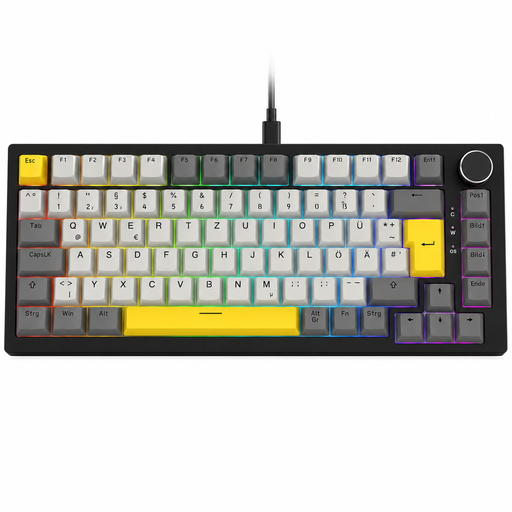
Why this product suits this profile: The compact format combines a German key arrangement with function keys, arrow keys and a volume control. The USB-C connection is ideal for PC workstations without the need to recharge.
The clearly stated QWERTZ layout reduces the risk of ending up with an unsuitable US key mapping. Hot-swap support for compatible 3-pin switches is also specified.
82 keys, RGB lighting, gasket-mount construction, five sound-dampening layers and a detachable USB-C cable.
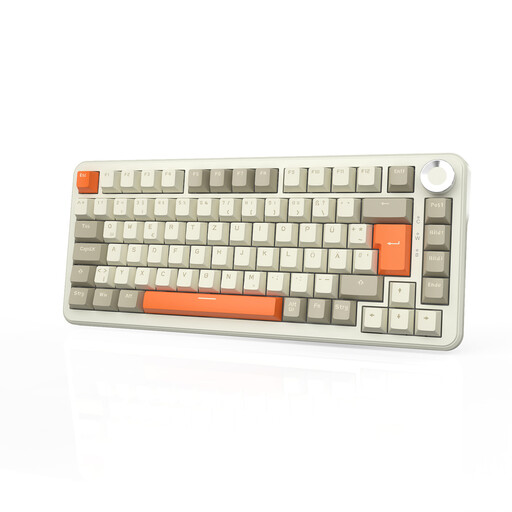
Why this product suits this profile: The tri-mode connection supports Bluetooth, 2.4 GHz wireless and USB-C operation. This model is designed for users who switch between a gaming PC, office computer and mobile devices.
The German QWERTZ version is clearly specified. Battery information is also provided for use with and without RGB, rather than simply making a general claim about long battery life.
82 keys, 8000-mAh battery according to the product details, PBT keycaps, hot-swap support for 3- and 5-pin switches, plus a volume control.
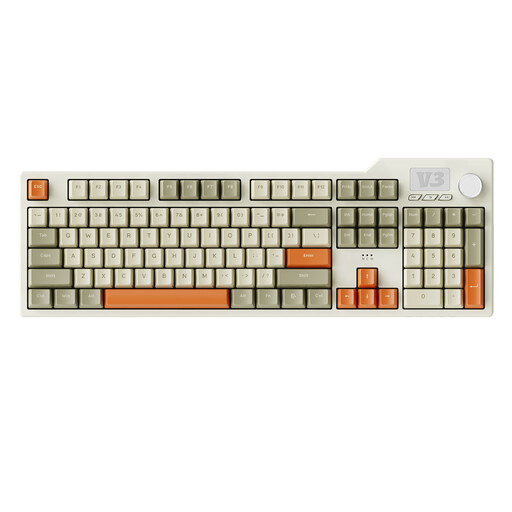
Why this product suits this profile: The separate number pad is well suited to programmers, prolific typists and office users who frequently enter numbers. The wired design is intended for a permanent workstation.
The specifications clearly state 104 keys, 3-/5-pin hot-swap support and five damping layers. This makes it easier to assess the size and customisation options before buying.
Full-size layout, PBT keycaps, Sea-Salt Linear switches, programmable macros and a volume slider.
We have put together a complete, regularly updated list of products that fully meet these strict selection criteria and the safety regulations applicable in the EU.
A QWERTZ keyboard is recommended for German texts and games with a German key layout. You should also check the size, switch type and operating-system compatibility. A 75% model saves space, while a full-size keyboard provides a number pad.
Its lifespan depends on the switches, keycaps, usage and care. Some product specifications, for example, quote up to 50 million actuations for certain switches. This figure is a manufacturer’s rating, not a guarantee of the actual service life of the entire device. Dust, liquids and damaged hot-swap sockets can shorten its lifespan.
RGB lighting increases energy consumption compared with having the lighting switched off. With wireless models, brightness, effect type, wireless standard and battery capacity all affect battery life. If you prefer a consistent connection without charging breaks, you can choose a wired mechanical keyboard with USB-C.