A mechanical gaming keyboard differs from conventional membrane keyboards primarily in its construction. Beneath each key lies a dedicated mechanical switch responsible for signal actuation. This design results in a more precise actuation point, a longer lifespan—often specified in millions of keystrokes—and distinct tactile and acoustic feedback. Choosing the right model depends on a range of technical parameters that should be tailored to the user's individual requirements.
By: Joybuy Product Recommendation Officer
Buyer's Guide: What to Look for When Choosing
The decision to purchase a mechanical gaming keyboard should be based on an analysis of its technical specifications. The following criteria are crucial for functionality and the user experience.
1. Switch Types
Switches define the typing feel and acoustics. There are three main categories:
- Linear Switches (e.g., Red): Offer a smooth, resistance-free keystroke down to the actuation point. They enable rapid, repeated keystrokes and are often preferred for gaming, as there is no noticeable "bump" to overcome.
- Tactile Switches (e.g., Brown): Provide noticeable but quiet feedback when the actuation point is reached. They represent a middle ground between linear and clicky switches, making them suitable for both typing and gaming.
- Clicky Switches (e.g., Blue): Produce noticeable tactile feedback and a distinct, audible click sound upon actuation. They are popular with heavy typists who appreciate clear feedback with every keystroke.
2. Form Factor and Layout
The size of the keyboard affects ergonomics and the amount of desk space it occupies.
- Full-Size (100%): Includes all standard keys, including the number pad. Suitable for users who frequently input numerical data.
- Tenkeyless (TKL, 80–87%): Omits the number pad, creating more room for mouse movement.
- Compact (e.g., 75%, 65%): Further reduces the size by arranging keys like the F-row or navigation keys more tightly or integrating them into function layers. These layouts are advantageous for mobile setups or minimalist desks.
3. Connectivity
- Wired: Offers the lowest latency and a stable connection, which can be decisive in competitive gaming.
- Wireless Keyboard: Models with a 2.4 GHz wireless connection provide a low-latency wireless experience. Bluetooth connectivity increases compatibility with a wide range of devices like laptops and tablets but tends to have higher latency. Tri-mode keyboards combine all three options.
4. Customisation
- Hot-Swap Keyboard: This feature allows mechanical switches to be replaced without soldering. Users can try out different switch types or easily replace faulty switches, increasing the keyboard's lifespan and degree of personalisation. Such a model is the foundation for a Custom Keyboard.
- Keycaps: The keycaps influence the feel and durability. PBT plastic is more resistant to wear and less prone to developing a shine than the more commonly used ABS plastic.
- Programmability: The ability to remap keys and create macros offers advantages in adapting to specific games or workflows.
5. Additional Features
- RGB Keyboard: Programmable RGB backlighting serves not only an aesthetic purpose but can also be functional, for instance, by highlighting specific keys.
- Keyboard with Volume Control: A dedicated rotary knob or media control keys allow for quick and intuitive volume adjustment without leaving the game or application.
Our Highlights for 2026
Based on the technical criteria mentioned above, we have compiled a selection of models that cater to different user profiles.
1. MageGee Typewriter Mechanical Gaming Keyboard
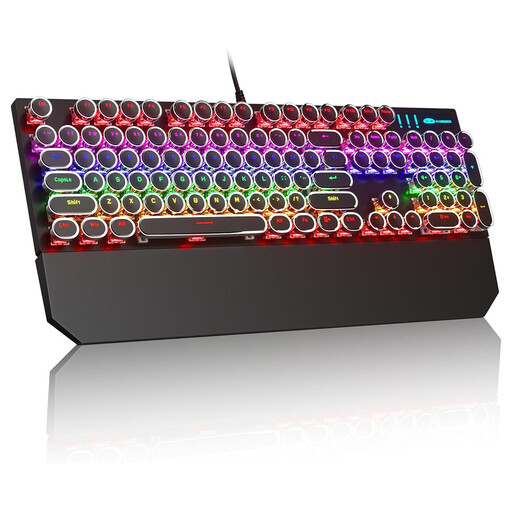
Why we recommend this product: This model combines a striking retro keyboard aesthetic with the functionality of a mechanical keyboard. The blue switches deliver clear tactile and acoustic feedback reminiscent of classic typewriters. The wired connection ensures stable performance for gaming and everyday tasks.
Advantages:
- Design: Round, "punk"-style keycaps for a distinctive look.
- Feedback: Blue mechanical switches for a precise and audible typing experience.
- Comfort: Includes a magnetically detachable wrist rest.
- Lighting: Adjustable RGB rainbow backlighting.
Who it's for: Users looking for a visually striking PC keyboard who appreciate the characteristic feedback of clicky switches for gaming or typing.
View Product: MageGee Typewriter Mechanical Gaming Keyboard
2. AJAZZ AK980 V2 Wireless Mechanical Keyboard
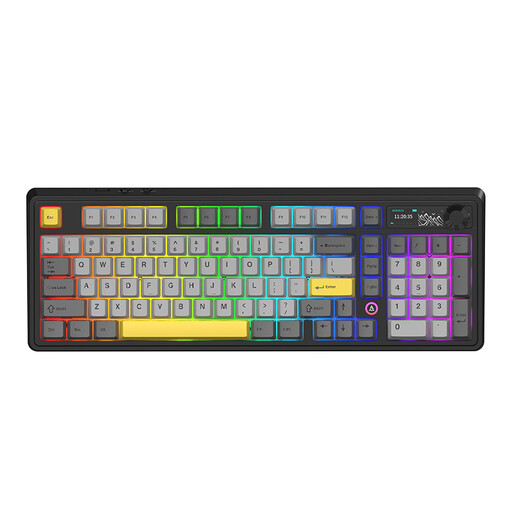
Why we recommend this product: The AJAZZ AK980 V2 is a feature-rich keyboard that prioritises flexibility and customisation. With its tri-mode connectivity (2.4 GHz, Bluetooth, wired), integrated TFT display, and multi-function rotary knob, it covers a wide range of use cases. The Hot-Swap Keyboard feature makes it a future-proof choice for enthusiasts.
Advantages:
- Connectivity: Flexible use as a Wireless Keyboard or wired.
- Feature Set: Smart TFT display for showing status information and a programmable rotary knob.
- Customisation: Hot-swap sockets for 3-pin and 5-pin switches.
- Battery Life: Equipped with a 10,000 mAh battery for long wireless usage times.
Who it's for: Users and gamers who need a highly customisable and versatile keyboard with maximum connectivity and advanced features like a display and a Keyboard with Volume Control.
View Product: AJAZZ AK980 V2 Wireless Mechanical Keyboard
3. AJAZZ AK820 75% Wired Gaming Keyboard
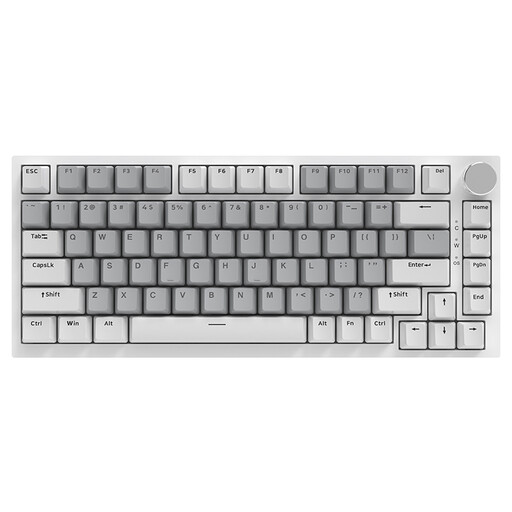
Why we recommend this product: The AJAZZ AK820 features a compact 75% layout that retains essential keys while freeing up valuable desk space. Its gasket-mount structure, where the circuit board is cushioned between gaskets, aims for a dampened and softer typing feel. Combined with its hot-swap capability, it is a solid foundation for a Custom Keyboard.
Advantages:
- Layout: Space-saving 75% format with 82 keys.
- Typing Feel: Gasket-mount structure and multiple layers of dampening foam for reduced noise.
- Customisation: Hot-Swap Keyboard design for easy switch replacement.
- Controls: CNC-machined rotary knob for volume control.
Who it's for: Users who prefer a compact setup, value a specific, dampened typing feel, and appreciate the ability to customise their switches.
View Product: AJAZZ AK820 75% Wired Gaming Keyboard
Discover More Options
If these models don't meet your specific requirements, you can find a broader selection of peripherals in our mechanical keyboard and mouse category.
Frequently Asked Questions (FAQ)
1. What is the primary advantage of a mechanical keyboard over a membrane keyboard? The main advantage lies in durability and precision. Each key has its own mechanical switch, which ensures a longer lifespan (often 50 million keystrokes or more) and a more precisely defined actuation point. This results in a more consistent and reliable typing experience, especially for fast inputs in gaming.
2. What does the term "hot-swap" mean for a keyboard? A Hot-Swap Keyboard allows you to change the mechanical switches without needing to solder. The switches can simply be pulled out of their sockets on the printed circuit board (PCB) and replaced with other compatible switches. This offers a high degree of customisation, as users can tailor the typing feel to their personal preferences by changing the switches.
3. Which switches are suitable for gaming? The choice of switch is subjective, but linear switches (e.g., Red switches) are often recommended for gaming. Their resistance-free keystroke allows for fast and repeated actuations, which can be advantageous in fast-paced gaming situations. Tactile switches can also be a good choice if you want noticeable feedback without a loud click.

