
Lieferung heute & morgen

Qualitätsgarantie

Willkommens-Angebote freischalten: KOSTENLOSE Lieferung | Bis zu 80 % RABATT | Kostenlose 30-Tage-JoyPlus-Testphase
App herunterladen
As a Joybuy Product Recommendation Officer, I see every day how difficult choosing the right equipment can be. Especially with mechanical gaming keyboards, the market is flooded with marketing promises that often fall short. Have you ever invested in a model, only to find that the keys are worn out after a few months or the typing feel doesn't meet your expectations?
This guide is designed to help you identify the crucial features and avoid common pitfalls, ensuring your next keyboard becomes a worthwhile, long-lasting addition to your setup.
Before we dive into the technical details, let's highlight the three most common issues that lead to disappointment.
To make an informed decision, focus on the following three core areas. These are the primary determinants of your keyboard's performance, feel, and lifespan.
The switches under each key define the typing experience. The three main types are:
An increasingly important feature is the hot-swap keyboard. This allows you to change the switches without soldering. It offers enormous flexibility: you can try out different switch types, easily replace faulty switches, or adapt your keyboard to new preferences.
The way the circuit board (PCB) is mounted in the case has a major impact on sound and typing feel. A Gasket Mount construction is a hallmark of high-quality models. Here, the PCB is "suspended" between silicone or foam gaskets. This dampens vibrations, produces a richer, deeper sound, and provides a softer, more flexible typing feel.
For keycaps, PBT keycaps (Polybutylene Terephthalate) are the more durable alternative to ABS. PBT is a harder, more textured plastic that is resistant to wear and the "shine" caused by skin oils. The legends are often applied using a double-shot or dye-sublimation process, making them extremely durable.
The layout determines the physical size of the keyboard. While a full-size keyboard (100%) offers all keys, including the number pad, more compact form factors are gaining popularity:
When it comes to connectivity, you have choices. A wired connection offers the lowest latency. A wireless keyboard provides more flexibility and a cleaner setup. Modern wireless models with 2.4 GHz radio technology achieve latencies that are perfectly suitable for competitive gaming, while Bluetooth allows connection to multiple devices like laptops or tablets.
Here are some models that represent a considered choice for different user profiles based on objective features.
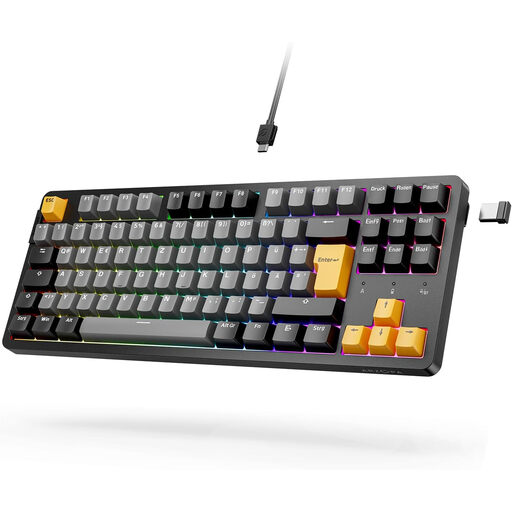
Why This Fits Their Persona: Ideal for users in Germany who need a keyboard for both gaming and productivity. The TKL format saves space without sacrificing essential keys, and the tri-mode connectivity allows for seamless switching between a gaming PC and a work laptop.
Instead of just focusing on RGB, this model offers a gasket-mount structure and durable PBT keycaps—features that directly improve typing feel and longevity.
Features a German (QWERTZ) layout, which is a significant advantage for users in Germany. It's also hot-swappable and offers flexible connection options (Bluetooth, 2.4G, wired).
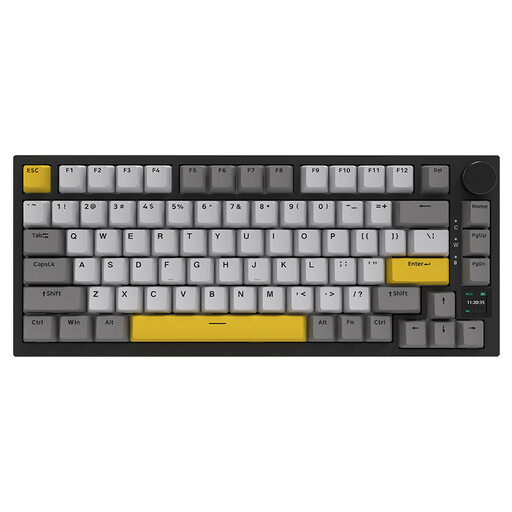
Why This Fits Their Persona: Perfect for tech enthusiasts who value customisation and innovative features. The 75% layout is compact, and the TFT screen offers a unique way to personalise and monitor status.
This model combines aesthetics with function. The TFT screen is more than just a gimmick; it provides useful information. The foundation is a high-quality gasket-mount structure with multi-layer dampening.
The integrated TFT color screen for displaying battery level, connection mode, or custom GIFs is a clear standout feature. Hot-swap capability and tri-mode connectivity complete the package.
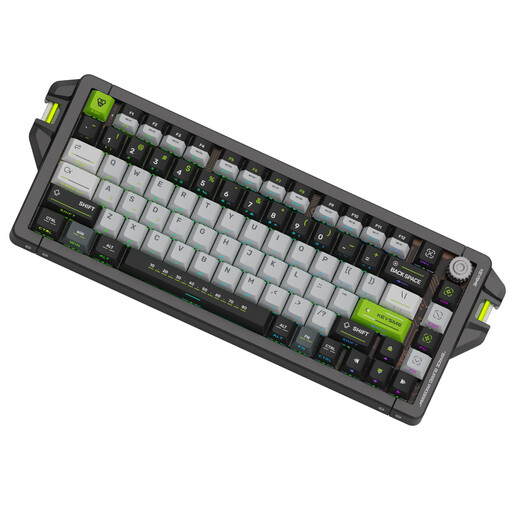
Why This Fits Their Persona: Designed for competitive players where every millisecond counts. This keyboard is engineered for maximum speed and precision to provide an edge in fast-paced FPS or other esports titles.
This is all about pure, measurable performance. Instead of marketing gimmicks, the focus is on an 8K polling rate, magnetic switches, and adjustable actuation points—all objective performance features.
The combination of an 8000 Hz polling rate (0.125 ms latency) and Rapid Trigger technology allows for extremely fast and repeated inputs. The CNC-milled aluminum case ensures maximum stability.
Customisation doesn't stop with the keyboard. Enhance your typing feel and aesthetics with high-quality keycaps that match your style.
1. What is the difference between PBT and ABS keycaps? PBT (Polybutylene Terephthalate) is a denser and more durable plastic than ABS (Acrylonitrile Butadiene Styrene). PBT keycaps do not develop a greasy shine over time, feel more textured, and their legends are often more durable. ABS is cheaper to produce but is prone to wear and shine.
2. Is a hot-swap keyboard worthwhile for beginners? Yes, a hot-swap keyboard can be very useful for beginners. It offers the freedom to change the typing feel by swapping out the switches without having to buy a completely new keyboard. If you're unsure whether you prefer linear or tactile switches, a hot-swap model allows you to try both affordably.
3. How important is the polling rate on an esports keyboard? The polling rate indicates how often the keyboard reports its status to the computer. A standard keyboard has a 1000 Hz polling rate (1 ms response time). An esports keyboard with 8000 Hz reports every 0.125 ms. For most gamers, the difference is barely perceptible, but in professional esports where fractions of a second matter, this minimal latency reduction can make a difference.