Newsletter writers with limited desk space
You need room for a mouse, notes or printed proofs alongside your keyboard, but still want to work on longer pieces of text.


For writing longer newsletter copy at a small desk, a 75% layout is a good starting point if you want arrow and function keys within easy reach. A 65% layout takes up less desk space, but you’ll need to use shortcuts for keys that aren’t directly accessible. Measure the space available for your keyboard, mouse and papers, and check the specific German layout and switch type. A 96% layout is worth considering if you need a number pad and have enough room for the extra width.
You need room for a mouse, notes or printed proofs alongside your keyboard, but still want to work on longer pieces of text.
You want a typing feel that suits you without unnecessarily disturbing others with a deliberately clicky switch type. Tactile Quiet is one manufacturer’s switch name, but it isn’t a noise measurement.
You switch between devices when drafting or proofreading, so check the connection options, operating system layout and device-switching features before you buy.
| Buying priority | What to check before buying | Who it matters most to |
|---|---|---|
| Desk space and keys within easy reach | Measure the available width for your keyboard and mouse. Compare the actual key layout and access to editing keys rather than relying on the layout name alone. | If I need room on my small desk for a mouse and proofing papers, I compare the key layout particularly carefully. Consumers with this as their main space-related priority account for around 36%. |
| Switch noise and typing feel | Check the exact switch type and, if possible, try out how it feels to type on. A switch name is no substitute for judging how loud it is in your own surroundings. | If I write for long periods with other people within earshot, I pay particular attention to the typing feel and noise. Consumers who prioritise this account for around 29%. |
| German keyboard layout | Check the layout version and key legends in the specific listing. If you switch operating systems, also check that the keyboard layout matches the selected mode. | For newsletters containing umlauts and frequent corrections, I want a German version with the right key legends. Consumers who place the most importance on a German layout account for around 21%. |
| Switching between devices and customisation | Compare the wireless and wired connections you need. If the keyboard is hot-swappable, check which switches are compatible with the specific model. | If I edit drafts on several devices or might want to change the switches later, I check the connections and compatibility carefully. Consumers with this as their main requirement account for around 14%. |
The Keychron K3 Max is available in several layout versions, so the specific configuration may not automatically be DE-ISO.
Before buying, check the selected layout version and the key legends.
Choosing the wrong version could mean extra hassle sorting things out or returning it.
The Keychron K3 Max is only compatible with certain low-profile mechanical switches for hot-swapping.
Before buying, compare the replacement switches with the specifications for the exact model.
If the replacement switches aren’t compatible, you may have to search again for a suitable option.
A smaller layout saves desk space, while a 96% layout retains the number pad. Each format therefore meets different space and key-access needs.
Measure the available width and check which keys you want within easy reach when writing and proofreading.
CHERRY lists 68 keys for the MX-LP 2.1 Compact Wireless, while a Joybuy description lists 69. Don’t assume these refer to the same key layout without checking.
Compare the full model designation and the key layout actually stated in the listing.
A different version could mean extra time spent clarifying the details or arranging a return.
The MX Mechanical Mini is a compact mechanical option for a tidy writing setup and switching between devices.
The K3 Max combines a low-profile 75% layout with a choice of ISO versions and several connection options.
The MX-LP 2.1 Compact Wireless is designed for particularly limited desk space, while the KW 550 MX LP offers a 96% layout with a number pad.
The 5075B Plus is another 75% option, with ISO layouts available for comparing different versions and hot-swappable switches.
The Joybuy products below are mechanical keyboards suited to writing in German. The specific models listed offer a German layout, more compact formats or a choice of connection types. Check the version you select each time.
 No image available
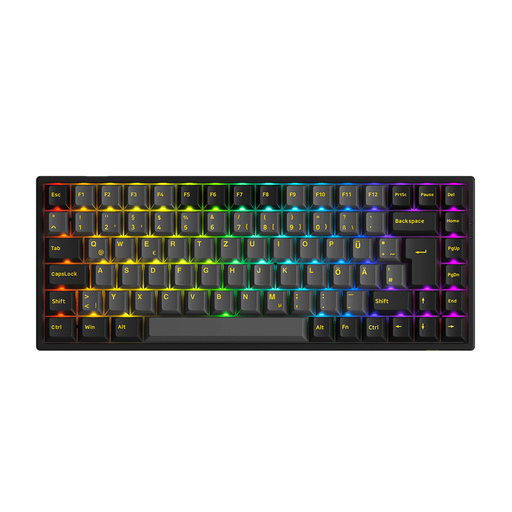
The 75% ISO-DE layout is a good fit if you’re looking for a compact design with German key legends. The Cream Blue switches are described as clicky, so they may be noticeable in a quiet, shared space.
The product name lists Bluetooth, 2.4 GHz, USB-C and hot-swapping.
 No image available
The product name specifies ISO-DE QWERTZ for German-language typing. Compare the TKL version’s key layout with the keys you need within easy reach when proofreading.
The product name lists V3 Pro Cream Yellow switches, a wired version and hot-swapping.
 No image available
The 75% ISO-DE layout is an option if you’re looking for a more compact keyboard with a German layout.
The product name lists three connection modes, hot-swapping and VIA compatibility, as well as Creamy Rye switches.
 No image available
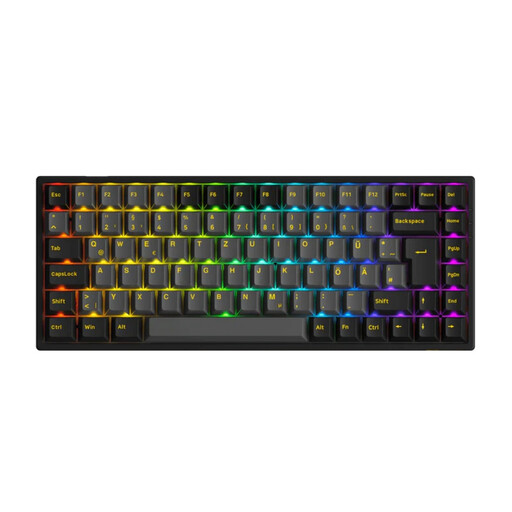
The 75% ISO-DE layout is designed to combine a more compact form with German key legends.
The product name lists V3 Pro Cream Yellow switches, Bluetooth, 2.4 GHz, USB-C and hot-swapping.
 No image available
The German QWERTZ layout listed in the product name is suited to writing in German; the switch type is described as Tactile Quiet.
The product name lists Bluetooth and Logi Bolt. Tactile Quiet is a switch name, not a measurement of how loud the keyboard will be at your desk.
For the specific layout, check the arrow keys, the function keys you use and, if needed, the number pad. A smaller format is only a practical advantage if you can still reach the keys you need.
Choose a model with the connection types you actually need, then check the operating system mode and key legends. Logitech lists the ability to switch between up to three devices for the MX Mechanical Mini; Keychron lists Bluetooth, 2.4 GHz and wired connectivity for the K3 Max. These details apply to the models named, not to every keyboard from those brands.
Follow the instructions for the specific model when cleaning or dismantling it. For the Keychron K3 Max, the product description says that hot-swapping doesn’t mean any switch will be compatible; it lists certain low-profile mechanical switches.
For online orders in Germany, the Verbraucherzentrale says you generally have 14 days from receipt to notify the seller that you wish to cancel. This is separate from your statutory rights against the seller if the goods are faulty: the EU’s Your Europe information site says that consumer purchases in the EU are covered for at least two years from receipt. A voluntary manufacturer’s guarantee doesn’t replace this right.
Check the details in the specific listing, including the CE marking, manufacturer information and German instructions with any required usage and safety warnings. The Bundesnetzagentur lists these points as part of its market surveillance; they don’t, by themselves, show that a model’s typing quality has been tested.