Considerate typists
If you’re editing longer texts while others are studying or sleeping within earshot, check the exact switch version first and treat extra features as a lower priority.


If other people in your student accommodation can hear you typing, check the exact switch variant. A version described as dampened or quiet is a useful indication, but it doesn’t confirm how noisy the whole keyboard is. For longer texts in German, the right layout and easy-to-reach editing keys matter too. A more compact format frees up space, but changes the key arrangement. Take the connection type and the space available on your desk into account as well.
If you’re editing longer texts while others are studying or sleeping within earshot, check the exact switch version first and treat extra features as a lower priority.
If you need to fit a book, notes and a mouse on your desk too, compare the keyboard’s footprint with the key arrangement you need when editing.
If you switch between devices while researching and editing, check the connection, operating system and key layout for the specific version.
Start by checking the switches and German layout that matter to you. Then compare the format, connection and how it will fit on your desk.
| What matters | What to look for when buying | Who it matters most to |
|---|---|---|
| Typing noise | Check the exact switch variant; the switch name alone doesn’t confirm how the complete keyboard sounds. | If I’m writing in a room where sound carries, I want to disturb others as little as possible. Around 29% of consumers prioritise quieter typing. |
| Layout and editing keys | Confirm DE-ISO or German QWERTZ for the specific version, and check where frequently used editing keys are positioned. | When editing, I want to work with a familiar character layout and easy-to-reach navigation keys. Around 24% of consumers prioritise their text layout. |
| Space for study materials | Compare the overall dimensions and key arrangement; a full-size keyboard includes a number pad, while a 75% layout is more compact. | If my book, notes and mouse all share the same desk, I want to keep enough space free. Around 18% of consumers prioritise the space available. |
| Typing feel and desk layout | Consider the profile and feel of the switches, and check that the keyboard, mouse and wrist rest will fit comfortably on your desk. | For longer writing sessions, I want an arrangement that feels comfortable to me. Around 18% of consumers pay particular attention to typing feel and desk setup. |
| Connection and customisation | Check whether it uses a cable or wireless connection, and whether features such as hot-swap are available on the exact version offered. | If I want to keep setup simple and make future adjustments easier, I compare the features of the specific version. Around 11% of consumers prioritise the overall effort involved. |
Switches in the same keyboard range can differ in feel and sound. A dampened switch version alone doesn’t tell you how loud the complete keyboard will be in your room.
Check the switch name for the specific version and, if possible, listen to the complete keyboard under similar conditions.
A smaller format saves desk space, but it can change the position or availability of keys you use frequently when editing.
Compare the key arrangement of the specific version with the editing tasks you usually do.
With the Keychron K2 Pro, the layout, switches and hot-swap feature depend on the version you choose.
Check all three details in the specific listing rather than relying on the model name alone.
The right to cancel if you change your mind, your statutory rights if goods are faulty and a retailer’s voluntary services all have different conditions.
Check the applicable returns policy, and treat a fault separately from simply changing your mind.
Worth considering if you’re looking for a wired keyboard with a choice of dampened switch variants.
The MX Mechanical combines low-profile mechanical keys with the ability to switch between several devices. The standard-size model and the Mini are different keyboards.
The K2 Pro ISO may suit writers short on space who want a customisable key layout.
The Pro Type Ultra is a mechanical keyboard with linear switches and several connection options.
The One 3 RGB may appeal to writers looking for a wired keyboard with replaceable switches.
This selection includes compact mechanical keyboards with German layouts, as well as the Logitech MX Mechanical with Tactile Quiet switches for switching between devices.
 No image available
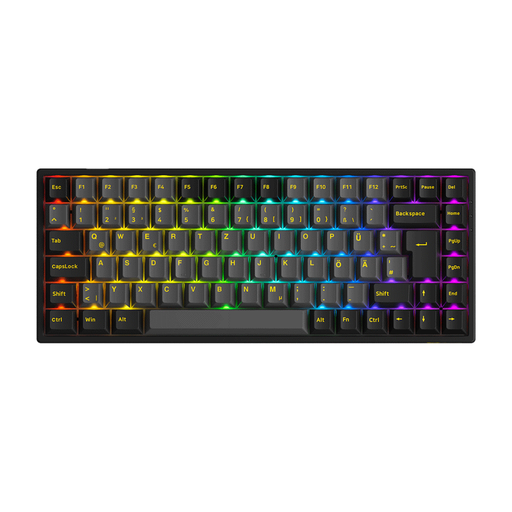
The 75% ISO-DE layout is a compact option for typing in German if you want to use less desk space for your keyboard.
Tri-mode: Bluetooth, 2.4G and USB-C. Hot-swap version with V3 Pro Cream Blue switches.
 No image available
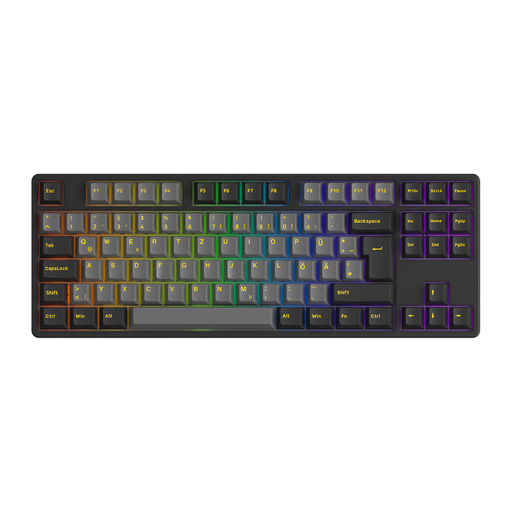
The TKL format and ISO-DE-QWERTZ layout make this a good choice if you’re looking for a more compact arrangement for typing in German.
Wired, with V3 Pro Cream Yellow switches and hot-swap.
 No image available
The 65% format is a compact option if you want a German key layout but have limited desk space.
Low-profile MX Speed switches and tri-mode connectivity via 2.4 GHz, Bluetooth or USB-C.
 No image available
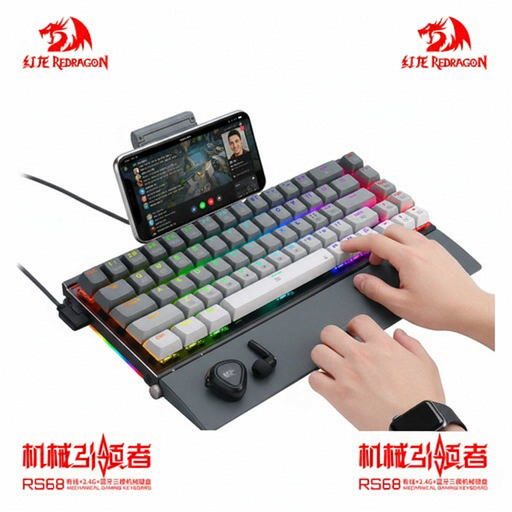
The 65% format with 68 keys is a compact way to leave room for other study materials.
Tri-mode connection via Bluetooth, 2.4 GHz or cable; hot-swap version with linear switches and a detachable wrist rest.
 No image available
The low-profile Tactile Quiet switches and device switching may suit you if you’re looking for a low-profile mechanical keyboard to use with several devices.
Bluetooth and Logi Bolt; Easy-Switch lets you switch between up to three devices.
No. CHERRY describes the MX2A Silent Red as having dampened switch actuation, but that doesn’t confirm how loud the complete keyboard will be in your room. Check the specific version and, if possible, listen to it while typing.
It depends on how often you enter numbers and how much space you need for your mouse and papers. Logitech distinguishes between the MX Mechanical with a number pad and the smaller MX Mechanical Mini. The German Federal Institute for Occupational Safety and Health also lists the numeric keypad and mouse as factors when choosing between a full-size and compact format.
Before buying, check what connection and setup you’ll need for the way you want to use it. The CHERRY KC 200 MX is wired; custom QMK/VIA key assignments on the Keychron K2 Pro require additional setup.
For a standard distance sale from a business seller, you generally have 14 days from delivery to cancel; exceptions may apply. According to information from the European Union, the statutory guarantee for faulty goods lasts for at least two years and is separate from a voluntary manufacturer’s warranty.
In Germany, a keyboard you no longer use shouldn’t go in your household rubbish. The German Environment Agency recommends taking old electrical equipment to recycling centres or suitable collection points.