What to look for when buying
For long passages when writing pitches, start by deciding on the key feel you want. Then consider noise, the keys you need and how the keyboard connects to your device.
| What to consider |
What to check |
Who it matters most to |
| Key feel when typing |
Check the switch type and whether you prefer a linear or tactile feel; try it out if you can. |
When I’m writing long passages, I want keys that feel right to me. Around 33% of consumers prioritise typing feel. |
| Typing noise |
Check the exact switch type. ‘Quiet’ is a manufacturer’s description, not a measured noise level for your workspace. |
If other people work or live within earshot, the typing noise should suit the room. Around 25% of consumers put low noise levels first. |
| Layout and space |
Check that you’re getting the German layout you want, along with the arrow and editing keys you need, and decide whether you need a number pad. For occasional number entry, the DGUV also lists compact keyboards without a number pad as a possible option. |
If I need space for my mouse while editing or use certain keys frequently, the layout needs to suit my workflow. Around 25% of consumers prioritise key layout and free desk space. |
| Connectivity and customisation |
Check that the keyboard can connect to your device, and whether you really need to switch between devices or customise the key layout. |
If I switch between devices while writing or want to customise keys for tasks I do regularly, these features matter. Around 17% of consumers put them first. |
Joybuy products for your writing space
The models below offer German layout options in different sizes, as well as wired and wireless choices for your home office.
 No image available
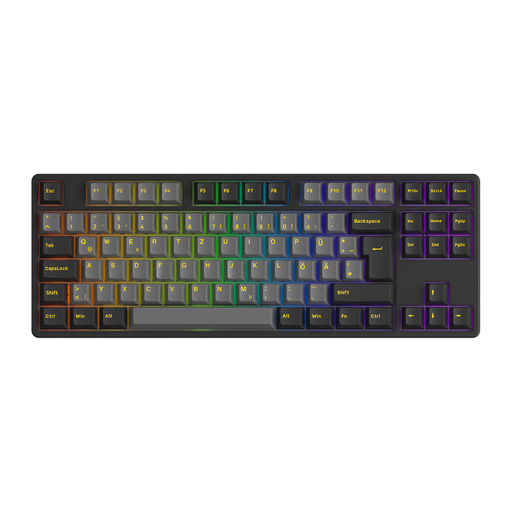
Akko 5087S V1 TKL, wired, ISO-DE, Cream Yellow
The TKL format with an ISO-DE layout is an option if you want a German key layout in a more compact form.
Wired; Akko V3 Pro Cream Yellow; hot-swappable; RGB.
View at Joybuy
 No image available
Ticktype EVO75, tri-mode, ISO-DE, Creamy Rye
The 75% layout with ISO-DE is a compact option if you want a German key layout and customisable key mapping.
Tri-mode; VIA-compatible; hot-swappable; Creamy Rye switches.
View at Joybuy
 No image available
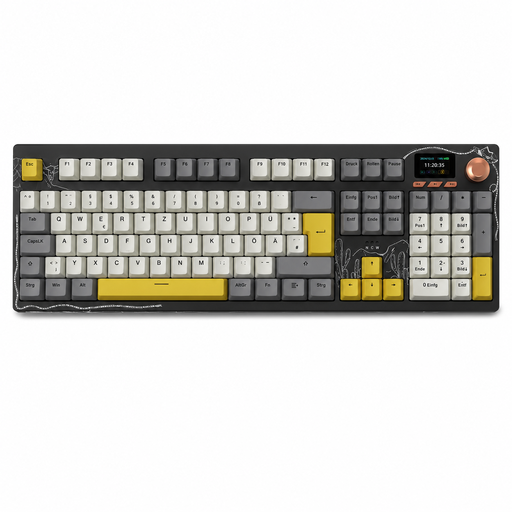
AJAZZ AK35I V4, German QWERTZ, tri-mode
The German QWERTZ layout is an option if you want to keep the familiar key arrangement when typing.
Bluetooth, 2.4 GHz and USB-C; hot-swappable; 10,000-mAh battery; 1.14-inch TFT colour display.
View at Joybuy
 No image available
Logitech MX Mechanical, Tactile Quiet, German QWERTZ
The Tactile Quiet version is an option if you want tactile feedback and switch between devices.
Bluetooth and Logi Bolt; Smart Backlighting. According to Logitech, Easy-Switch lets you switch between up to three devices.
View at Joybuy
 No image available
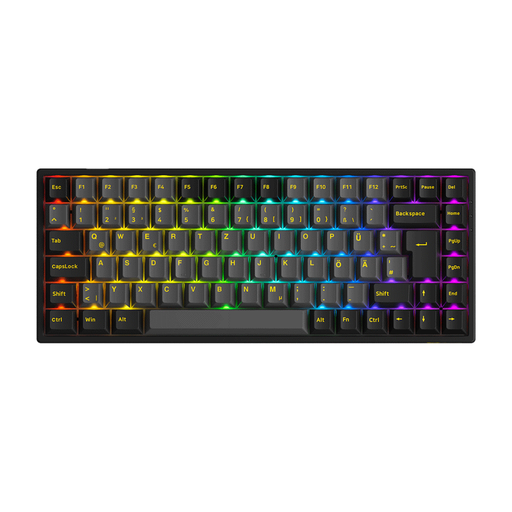
Akko 3084B Plus, 75%, ISO-DE, Cream Blue
The 75% format with ISO-DE is a compact option if you want a German key layout.
Tri-mode with Bluetooth, 2.4 GHz and USB-C; hot-swappable; RGB. The product details describe the Cream Blue switches as clicky, so check this version carefully if you want quieter typing.
View at Joybuy
Frequently asked questions
Do I need a number pad to edit a pitch?
Not just for writing. If you enter numbers frequently, consider a full-size keyboard. If you only enter a few numbers and mouse space matters more, the DGUV lists a compact keyboard without a number pad as a possible option.
How should I set up my keyboard in my home office?
Position your separate keyboard so you can move it to suit your work, with room for your hands in front of it. The DGUV distinguishes between mobile working and a permanently set-up teleworking space; this doesn’t automatically mean that the same workplace regulations apply to every home desk.
Can I return a keyboard bought online if I don’t like how it feels to type on?
For distance purchases from a retailer, there is generally a 14-day withdrawal period; statutory exceptions and the specific returns terms also apply. The EU consumer information service Your Europe distinguishes this right of withdrawal from claims for faulty goods, and states that new goods bought from a trader are covered by a legal guarantee of at least two years.
Does German law specify a particular model for a keyboard I buy for my home office?
The workplace guidance referred to here doesn’t specify a particular model for every private purchase. For a permanently set-up teleworking space, the DGUV says that the Workplace Ordinance applies and lists, among other things, a tiltable keyboard with clearly legible keys, separate from the screen. If your employer has set up your teleworking space, check the specific requirements for your workplace.


