
Lieferung heute & morgen

Qualitätsgarantie

Willkommens-Angebote freischalten: KOSTENLOSE Lieferung | Bis zu 80 % RABATT | Kostenlose 30-Tage-JoyPlus-Testphase
App herunterladen
A good mechanical pencil is a reliable everyday companion—whether for taking notes at university, making precise sketches in the design process, or keeping neat entries in your planner. But the market is saturated with models of widely varying quality. Choosing the wrong one can lead to frustration with constantly breaking leads, unreliable mechanisms, or uncomfortable grips. This guide will help you identify the crucial features and find a model that truly meets your needs.
Many buyers focus on appealing designs or seemingly low prices, overlooking technical flaws that make everyday use difficult. Pay close attention to these three points to avoid making the wrong choice:
To find the right mechanical pencil, you should focus on objective criteria that directly impact its functionality and longevity.
The choice of lead size depends directly on your intended use. Each size has specific advantages and disadvantages:
The material of the body affects not only the durability but also the feel and weight of the pencil.
The way the lead is advanced is another key distinguishing feature.
Based on the criteria above, we have identified several models that are well-suited for different user groups.
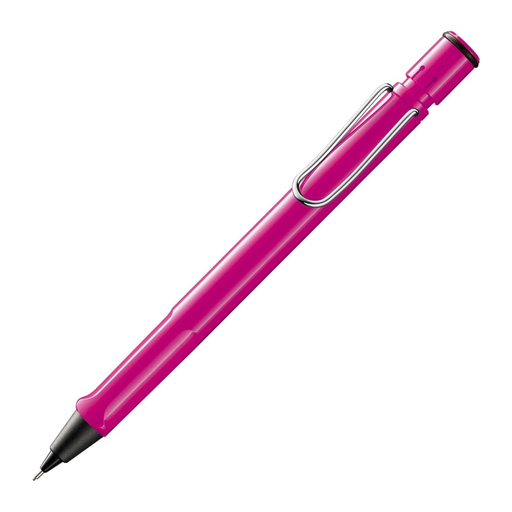
Why This Fits Their Persona: Ideal for long lectures and note-taking. The ergonomic grip profile prevents fatigue, while the robust ABS plastic withstands the rigours of university life. A reliable workhorse.
The body, made of durable ABS plastic, avoids the trap of cheap materials. The proven Lamy mechanism ensures reliable lead advancement without jamming.
Ergonomic grip indentations for fatigue-free writing. Robust metal clip for secure attachment.
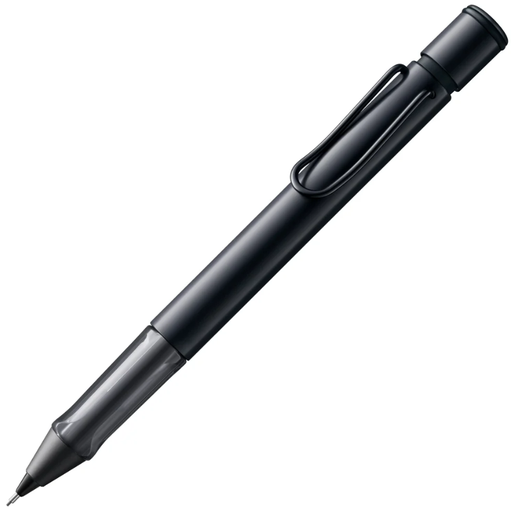
Why This Fits Their Persona: Perfect as a pencil for drawing and for precision work. The lightweight aluminium body and the fine 0.5 mm lead allow for a high degree of control. The transparent grip section offers an interesting glimpse into the mechanism.
The precise metal lead guide prevents the fine 0.5 mm lead from constantly breaking. The robust aluminium body is more durable than simple plastic pencils.
Lightweight aluminium body for good balance. Integrated eraser with a cleaning needle for lead jams.
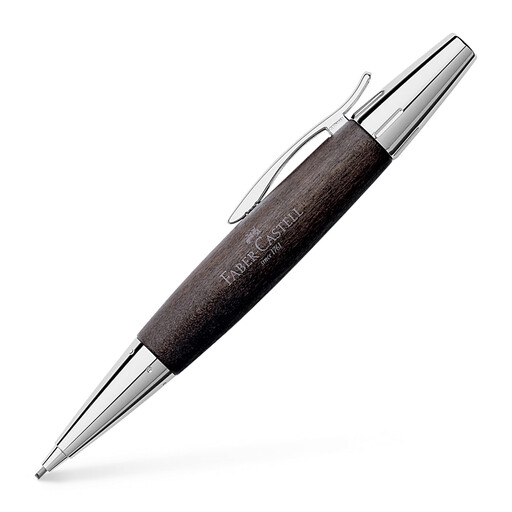
Why This Fits Their Persona: For professionals and collectors who value aesthetics and feel. The pearwood body and metal components create a writing instrument with character. The 1.4 mm lead provides a soft, rich script.
The high-quality twist mechanism is designed for longevity and avoids the weaknesses of simple push-button mechanisms. The combination of wood and metal is both robust and visually appealing.
Bulbous, ergonomic shape for excellent writing comfort. Break-resistant 1.4 mm lead for soft writing and sketching.
We have compiled a complete, up-to-date list of products that fully meet these strict selection criteria and German safety regulations.
Most mechanical pencils are refilled by pulling off the cap at the end (the eraser is often underneath) and dropping the new leads into the reservoir. On some models, the front section must be unscrewed. It's important to only use the lead size specified for the pencil to prevent the mechanism from jamming. This information can be found in the product description or on the packaging of the refill leads.
For daily writing at school, university, or in the office, a lead size of 0.5 mm or 0.7 mm is a great choice. 0.5 mm allows for a finer script, while 0.7 mm is slightly more break-resistant and therefore well-suited for people with a heavier hand.
A mechanical pencil advances the lead forward in small, fixed increments via a click or twist mechanism. The lead is usually thin (e.g., 0.5 mm) and is used up completely. A clutch pencil, on the other hand, uses much thicker leads (often 2 mm or more). Pressing a button releases the lead, allowing it to fall forward due to gravity. It can be extended to any length and sharpened with a special sharpener if needed.