Medal photographers using a tripod
If you’re taking close-ups with a camera set up on a tripod, triggering the shutter without touching the camera can help keep the framing steady. First, check which connections your camera supports.


You don’t always need a separate remote shutter release: for occasional shots, the self-timer may be enough, while a compatible camera app or remote release can make taking repeated shots easier. The key is to check that the cable connection or wireless link works with your exact camera model, and to consider whether you’ll be working right next to the camera or from a little further away. Triggering the camera remotely doesn’t automatically prevent missed focus or distracting reflections on the medal.
If you’re taking close-ups with a camera set up on a tripod, triggering the shutter without touching the camera can help keep the framing steady. First, check which connections your camera supports.
A remote can be handy when taking several views or photographing multiple medals with the same set-up, especially if you want to trigger the shutter repeatedly or control the focus. The functions available depend on the camera model and connection you choose.
If you’re only taking a few pictures, first check whether your camera’s self-timer or a compatible app will do the job before choosing any extra accessories.
A good fit if: you’re working close to the camera and the remote’s connector is specifically compatible with your camera model.
Keep in mind: the cable length limits where you can operate the remote. For example, Canon uses both E3 and N3 connectors.
A good fit if: you’d like to stand further away from the camera when taking repeated shots and your exact model supports the remote.
Keep in mind: pairing, battery requirements and supported functions vary by model. Canon’s stated range of up to 5 m applies to the BR-E1, not to Bluetooth shutter releases in general.
A good fit if: your camera has a compatible app, or you want to take individual shots without an additional remote.
Keep in mind: an app requires compatible devices and a configured connection; the self-timer’s functions depend on your camera.
| Priority | What to check before buying | Who is this important to? |
|---|---|---|
| Compatibility | Check the exact camera model, connection type or Bluetooth support, and the manufacturer’s compatibility list. | When choosing a remote for my existing camera, I want to make sure the connector or wireless connection will actually work. Around 36% of consumers put compatibility first. |
| Steady shutter release | Check whether the camera can be triggered without touching it, and make sure both the camera and subject are stable. | For close-ups, I don’t want to accidentally move the framing when triggering the shutter. Around 29% of consumers pay particular attention to minimising camera shake. |
| Operating distance | Compare your set-up with the cable length; consider wireless range and functions only for the specific model. | When photographing several medals or views with the same set-up, I want to trigger the shutter from a comfortable position. Around 21% of consumers prioritise operating distance. |
| Additional remote | Check whether the existing self-timer or a compatible app will do, and check the accessory’s battery type. | For occasional shots, I’d like to use the camera functions I already have first. Around 14% of consumers mainly want to avoid buying an additional remote. |
Even cameras from the same brand can have different connectors and support different wireless remotes.
Compare your camera’s full model name with the compatibility list and connector type for the specific remote.
Canon notes that close-up photography requires precise focusing. A remote shutter release won’t change the plane of focus by itself.
Set up the camera securely and check test shots for focus and framing before choosing any further accessories.
The right choice also depends on your camera’s connector, wireless support and the functions you actually want to use.
For your set-up, check the cable length or the specific wireless model’s compatibility, pairing process and battery type.
For compatible Canon cameras, options include wired shutter releases with different connectors, the Bluetooth BR-E1, or Camera Connect on supported models.
The MC-DC2 is a wired option for compatible cameras with the right accessory connector; the ML-L7 offers Bluetooth control for specific Nikon models.
The RMT-P1BT is a Bluetooth remote control for compatible Sony cameras.
The LUMIX DMW-RS2E is a wired option for a compatible camera connector.
The RM-WR2 is a Bluetooth option for the OM SYSTEM camera ranges listed on the manufacturer’s German website.
The products below are smartphone tripods or selfie sticks with remote controls. They’re suitable for medal photos only if you’re using a smartphone rather than a camera body.
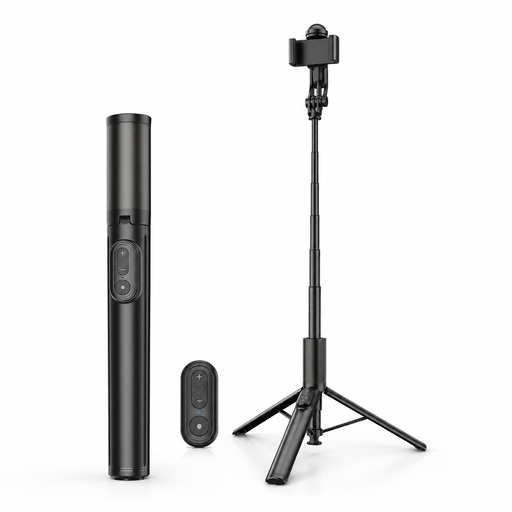 No image available
Described as suitable for smartphone photography, with a Bluetooth remote shutter release and hands-free positioning.
The description gives a range of around 10 m and a smartphone holder for devices up to 6.0 inches.
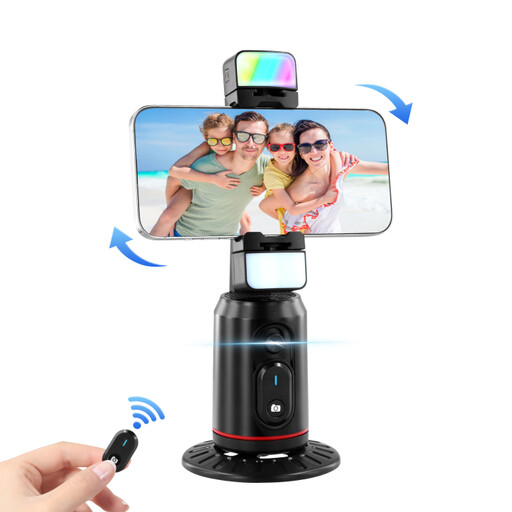 No image available
Described as suitable for smartphone photography with a tripod and remote control.
The product name lists 360-degree rotation, gesture control, a fill light and a smartphone holder.
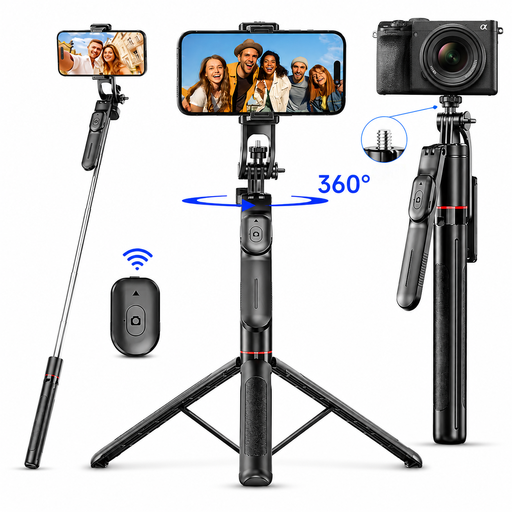 No image available
Described as suitable for hands-free smartphone photography, with a Bluetooth remote control and tripod function.
The specifications list an extension to 170 cm, a 360° rotating holder and a remote control range of up to 10 m. It’s described as compatible with iOS and Android smartphones.
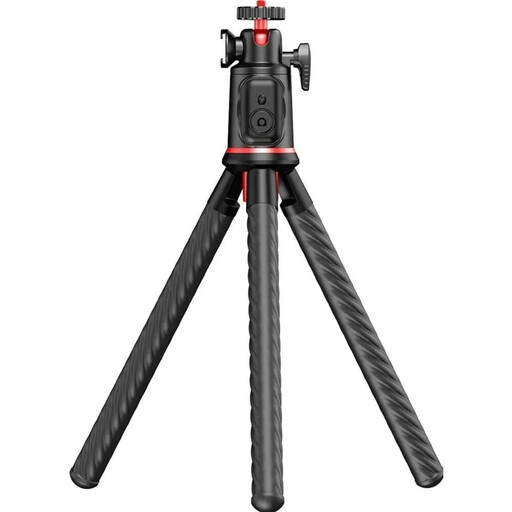 No image available
Described as suitable for smartphone photography, with a flexible mini tripod and Bluetooth remote control.
The specifications list Bluetooth 5.4, a range of up to 10 m, a 1/4-inch thread and a maximum load of 2 kg. According to the description, the remote control contains a button cell battery, which should be kept out of reach of small children.
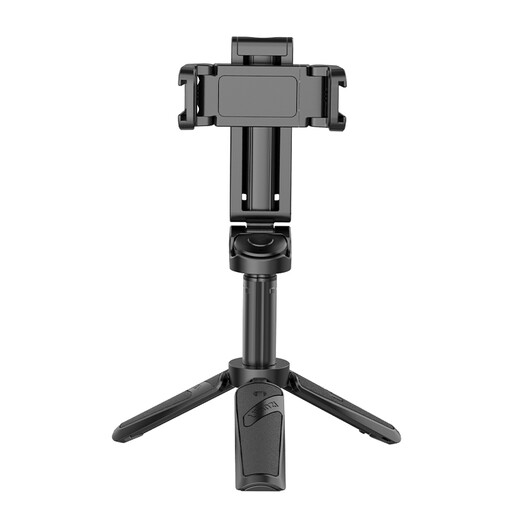 No image available
Described as suitable for hands-free smartphone photography, with remote control of the smartphone camera.
The product specifications list an extendable mini tripod and two cold shoe mounts.
A remote shutter release helps prevent camera shake caused by touching the camera, but it won’t correct inaccurate focus. Check sharpness in close-up shots. If you see reflections, adjust the lighting and shooting angle rather than expecting a different shutter release to solve the problem.
For compatible Canon EOS cameras, Canon describes pairing with Camera Connect and using Remote Live View with a touch shutter button. This doesn’t automatically apply to other cameras or apps; check the instructions for your model.
Check the battery type for the specific model. In Germany, the Federal Environment Agency says that used batteries should be taken to collection boxes in shops or to local collection points, not put in household waste.
When buying online from a trader, you generally have a 14-day right to cancel from the date of delivery; Your Europe, the European Union’s consumer portal, also highlights some exceptions. If goods are faulty, you have statutory rights against the seller; the EU specifies a minimum period of two years. This is separate from any voluntary manufacturer’s guarantee.
The Radio Equipment Directive provides the regulatory framework for radio equipment on the EU market. The German Federal Network Agency lists CE marking, product and manufacturer identification, instructions and warnings in German, and a declaration of conformity among the points it checks when monitoring the market. A CE image in a product listing alone doesn’t prove that an individual product is compliant.