Quiet-speaking session leader
If you speak quietly in a hall that may be echoey, your voice needs to remain clear above the background noise. RØDE and Audacity recommend positioning the microphone appropriately and making a test recording.


If you’ll be staying mostly in one place while leading the session, a wired lavalier microphone with a compatible input is a straightforward choice. If you’ll be moving around the hall, a wireless set is more practical. Whichever you choose, make a test recording from the place where you’ll actually be speaking, secure the microphone close to your voice, and make sure you have enough battery life or a reliable way to back up your files. A lavalier microphone can reduce background noise, but it won’t eliminate strong room echo.
If you speak quietly in a hall that may be echoey, your voice needs to remain clear above the background noise. RØDE and Audacity recommend positioning the microphone appropriately and making a test recording.
If you want to keep using your smartphone, camera or recorder, check the microphone input, the power supply required and whether you need an adapter. RØDE and Shure describe different connection requirements for their lavalier microphones.
If you’ll be changing position during the session or recording a hard-to-repeat event, wireless connectivity, battery life and, where available, a local backup recording are important things to consider. DJI and RØDE describe these features for their wireless sets.
A good fit if: you’ll mostly stay in one place and your recording device is within cable reach.
The trade-off: The connection must be compatible, including the required power supply; the cable limits how freely you can move.
A good fit if: you’ll be moving around the hall during the session and a cable would get in the way.
The trade-off: The transmitter and receiver need to be charged and connected correctly. Stated wireless ranges apply only under the specified test conditions.
A good fit if: the session would be hard to repeat or several people each need their own microphone.
The trade-off: An additional recording on the transmitter means more files to check and back up after the session.
| What to consider | What to check when buying | Who should pay particular attention? |
|---|---|---|
| Clear speech | Secure the microphone close to your voice; test for echo and clothing noise from the position you plan to use. | If you speak quietly and want your guidance to remain clear despite possible reflections in the room, speech intelligibility should be your priority. Around 33% of consumers put this first. |
| Connection and signal path | Check the input type, required power supply and adapter for the specific recording device. | If you want to use an existing smartphone, camera or recorder, make sure the connection will actually work. Around 27% of consumers prioritise compatibility with their recording device. |
| Freedom of movement | For a wireless set, check the receiver connection and test the signal in the hall. | If you move between a seating circle and another spot, a cable could get in the way. Around 20% of consumers put freedom of movement first. |
| Recording reliability | Listen to a test recording; with a wireless set, consider the transmitter and receiver battery life separately. | If the session would be difficult to repeat, you’ll want to check the recording level and saved files before you begin. Around 20% of consumers prioritise reliable recording. |
A plug of the right size doesn’t guarantee that the microphone and recording device will work together electrically. The RØDE Lavalier GO needs a suitable TRS input with plug-in power; for the MVL, Shure specifies a compatible mobile device connection or a CTIA-compliant adapter.
Before you buy, compare the connection and power requirements for the exact microphone and device models.
The RØDE Lavalier GO is a wired microphone. DJI offers the Mic Mini in sets with different numbers of transmitters.
Check the contents of the exact version, especially if you want to mic up more than one person.
DJI states its maximum range for an open, interference-free environment. This figure doesn’t predict how stable the connection will be in your particular community hall; microphone placement also can’t eliminate strong room echo.
Test the wireless connection and sound quality where you’ll actually be recording, then adjust the position and settings as needed.
A local recording on the transmitter is only useful if it’s actually made and backed up afterwards. The main recording can also become difficult to understand if the audio is distorted by clipping.
Record a few sentences before you begin, listen back and check that the saved recording is usable.
The wired Lavalier GO and the Wireless PRO set offer two different ways to record.
The MVL is a wired lavalier microphone for recording speech with compatible mobile devices.
The Mic Mini is a compact wireless microphone system. Sets differ in features, including the number of transmitters.
The ME 2 is a lavalier microphone for speech and compatible Sennheiser bodypack transmitters; the EW-D-ME2 set combines a microphone and wireless system.
The LARK M2S is a wireless microphone; the manufacturer describes several set options.
This selection includes wired lavalier microphones and wireless sets for recording speech in a community hall. For each model, check that the connection and set configuration suit your recording device and the number of people who’ll be speaking.
 No image available
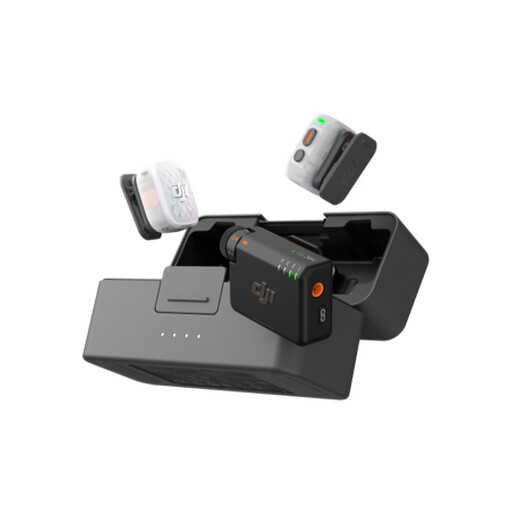
For sessions where you’ll be moving around and need to mic up two people; this version is listed as a set with two transmitters and one receiver.
 No image available
For recording mainly from one of the devices listed. Before buying, check that its microphone input and any adapter you may need are compatible.
 No image available
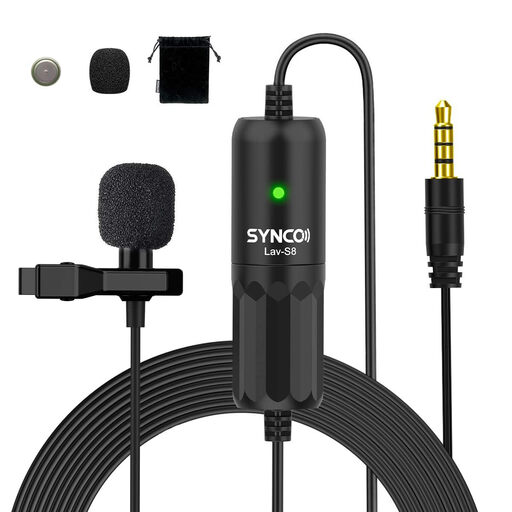
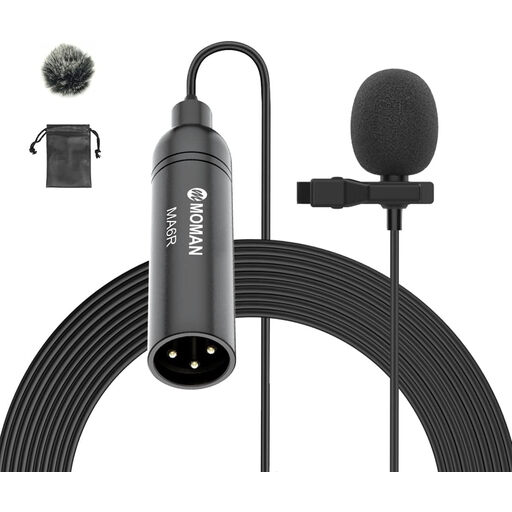
For wired recording when your recording device is within reach of the 6 m cable. The title specifies a 3.5 mm connection; also check that it’s compatible with the input on your particular device.
 No image available
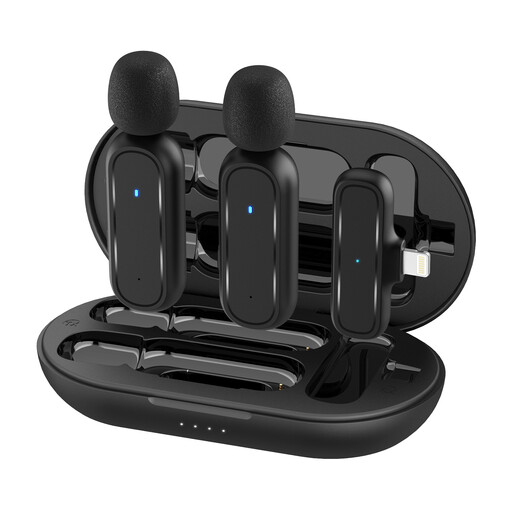
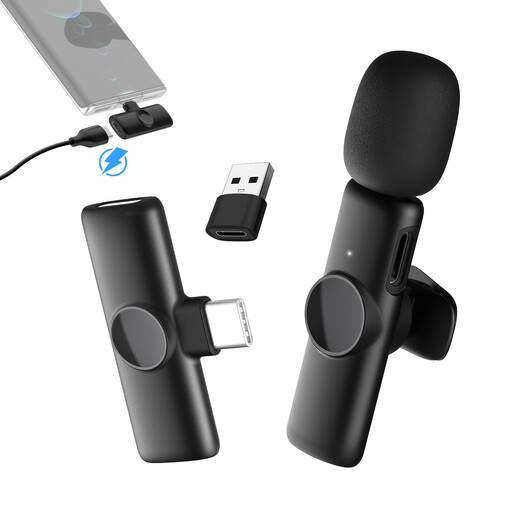
For recording on the move with a USB-C phone; the model name identifies this set as being for USB-C phones. Check that it’s compatible with the connection on your specific recording device.
 No image available
For recording on the move with a USB-C phone; the model name identifies this set as being for USB-C phones. Check your recording device’s connection before buying.
Attach it securely to your clothing and listen to a test recording made from the place where you’ll actually be speaking. For the ME 2, Sennheiser specifies a distance of 25 cm from the mouth; this is guidance for that particular model, not a universal distance for every lavalier microphone. Positioning the microphone close to you can reduce background noise, but it won’t eliminate strong room echo.
Check the input you’ve selected, record a few sentences and listen back. If the recording is distorted by clipping, lower the input level and test again. With a wireless set, consider the transmitter and receiver battery life separately; under interference-free test conditions, DJI gives battery life for the Mic Mini with one transmitter and one receiver as around 11.5 hours for the transmitter and 10.5 hours for the receiver.
If a product has a fault, your statutory consumer rights against the seller are separate from any voluntary guarantee. In its information dated 28 September 2026, the Verbraucherzentrale explains that, in Germany, repair or replacement are forms of the remedy you can initially request. Check the terms of any additional guarantee separately.
Section 201 of the German Criminal Code (StGB) makes it an offence to record another person’s non-public spoken words without authorisation. The Federal Ministry of Justice and the Federal Office of Justice include this provision in the text of the law. If participants will be speaking audibly or chatting, check in advance whether recording is permitted; the provision alone doesn’t determine whether every specific situation in a community hall counts as non-public.
No, not always. The Bundesnetzagentur lists general frequency allocations under which certain frequencies can be used without registration and free of charge, subject to the relevant conditions. Whether this applies to a particular set depends, among other things, on its frequency band and the conditions of the applicable allocation. The Bundesnetzagentur’s general allocation Vfg. 37/2026 specifies different expiry dates for the frequency bands listed.