
Lieferung heute & morgen

Qualitätsgarantie

Willkommens-Angebote freischalten: KOSTENLOSE Lieferung | Bis zu 80 % RABATT | Kostenlose 30-Tage-JoyPlus-Testphase
App herunterladen
A dead laptop battery right before an important deadline or in the middle of a long journey is more than just an annoyance. A high-performance laptop power bank promises a solution and independence from the wall outlet. However, the market is confusing and full of technical pitfalls that can quickly lead to a costly mistake. Before you invest, you should be aware of the most common marketing traps.
The 3 most common traps when buying a laptop power bank:
To avoid these problems, it's crucial to evaluate the technical specifications objectively.
A portable laptop charger must be precisely matched to your devices. Pay attention to the following three parameters to make an informed decision.
The power output, measured in watts (W), is the most important factor. It determines if and how quickly your laptop can be charged.
While mAh is the common marketing metric, watt-hours (Wh) are the more precise and, for air travel, more relevant unit.
The variety of ports and the technology used determine the charger's flexibility and efficiency.
Based on these objective criteria, we have identified various charging solutions for specific use cases.
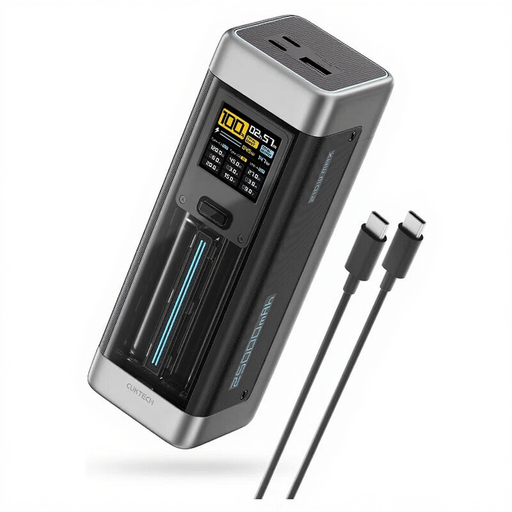
Why it's a match: Ideal for users who need maximum power on the go for high-end laptops (e.g., MacBook Pro) and other devices. The 25,000 mAh capacity is optimized for air travel and is sufficient for at least one full laptop charge.
It sidesteps the incompatible protocol trap by supporting the modern PD 3.1 standard, ensuring a stable and fast charge of up to 140W from a single port.
The high single-port output of 140W is designed for demanding creative and technical tasks on a laptop. The display shows real-time charging power and remaining capacity.
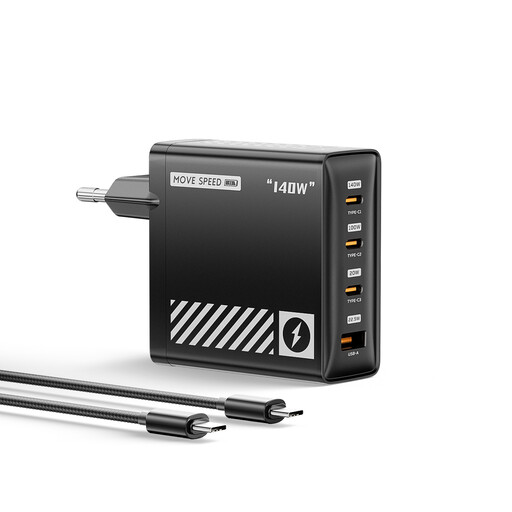
Why it's a match: Perfect for the desk in your office or home office. This stationary GaN charger replaces multiple individual power adapters and charges your laptop, tablet, smartphone, and headphones simultaneously.
Solves the problem of cable clutter and multiple power bricks. Smart power distribution ensures that each device receives the optimal charging speed without you having to worry about protocols.
Thanks to GaN technology, the charger is very compact despite its 140W total output and four ports. It can even power two laptops simultaneously at 65W each.
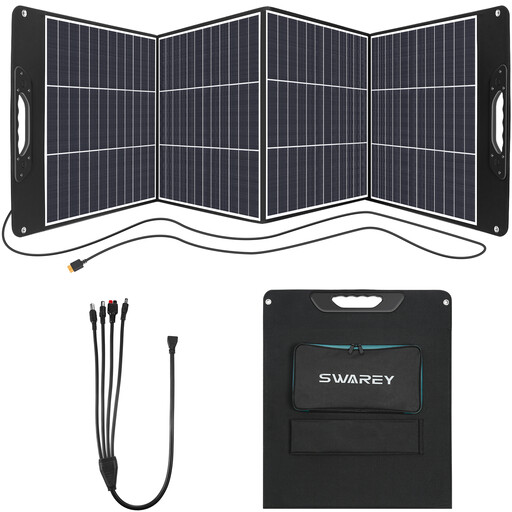
Why it's a match: For anyone who works or travels off the grid. This portable solar panel, combined with a power station or used directly, generates clean energy for laptops, cameras, and other devices.
Completely eliminates dependency on wall outlets. Instead of just storing energy, it actively generates it, offering true self-sufficiency during camping or power outages.
High conversion efficiency of 23% thanks to monocrystalline cells. It features direct outputs like USB-C PD, so compatible laptops can be charged even without an intermediary power station.
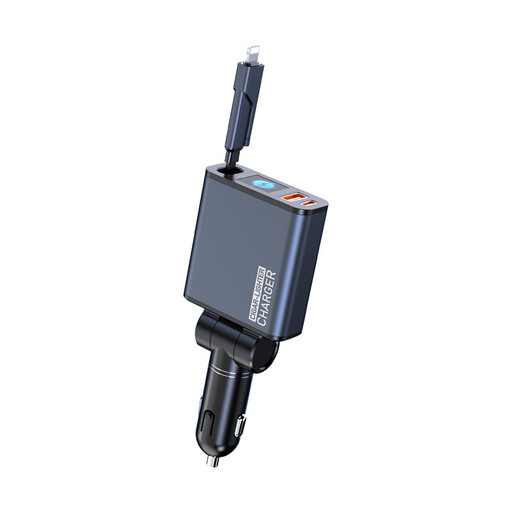
Why it's a match: This USB-C car charger transforms the 12V outlet into a powerful charging hub. Ideal for mobile professionals, families on road trips, or anyone who needs to stay productive in the car.
Conventional 12V adapters are too weak for laptops. This model bypasses that trap with QC5 certification and 160W of total power, enough to charge a laptop at full speed.
Two integrated, retractable charging cables (90 cm) keep the car interior tidy. No extra cables are needed to connect most common devices.
We have compiled a complete, up-to-date list of products that fully meet these strict selection criteria and safety regulations.
The easiest way is to check the wattage rating on your laptop's original power adapter. A power bank should be able to deliver at least the same wattage from a single USB-C port to ensure comparable charging performance. For most modern ultrabooks, 65W is sufficient, while high-performance workstations or gaming laptops may require 100W or even 140W.
Generally, yes. Most airlines limit the capacity of lithium-ion batteries in carry-on luggage to 100 watt-hours (Wh). A power bank with 25,000 mAh (or 25 Ah) and a typical cell voltage of 3.7 volts has a capacity of 92.5 Wh (25 Ah × 3.7 V). This is below the limit, so it can be carried in your hand luggage. It is forbidden to pack it in checked baggage. Nevertheless, always check your airline's specific regulations beforehand.
GaN stands for Gallium Nitride, a semiconductor material that is replacing silicon in modern chargers. The advantages are significant: for the same power output, GaN chargers are much smaller and lighter. They operate more efficiently, meaning less energy is lost as heat. The result is a more compact, cooler, and more powerful Power Delivery charger.