What should you look for when buying?
When choosing a fridge-freezer after a weekly shop, it’s important to decide which features matter most to you.
| Priority |
What to check |
Who is it important to? |
| Keeping food chilled and hygienic |
Check there’s space for covered pieces, that the temperature can be adjusted, and what the temperature is at the actual storage spot. |
If I want to store cut melon, I need an easy-to-reach spot for covered pieces and want to be able to check the temperature there. Around 31% of consumers prioritise chilled, hygienic storage. |
| Space for melon and the weekly shop |
Compare fridge capacity separately from freezer capacity, along with shelf depth and container dimensions. |
If I want to chill melon and other fresh produce at the same time, the fridge needs to have enough suitable shelf space. Around 25% of consumers prioritise usable fridge space after the weekly shop. |
| Running costs |
Compare annual consumption in kWh and the EU energy efficiency class for appliances with enough capacity. |
If I’m choosing an appliance for everyday use, I want to be able to estimate the annual consumption of a model that’s big enough for my needs. Around 19% of consumers prioritise low running costs. |
| Fitting your kitchen |
Measure the height, width, depth, door hinge and clearance; for built-in appliances, check the recess too. |
If space for a freestanding appliance or built-in recess is limited, the appliance needs to fit and the door must open easily in everyday use. Around 13% of consumers prioritise kitchen dimensions. |
| Extra freezer space |
Choose the freezer capacity and drawers to suit the amount of food you usually freeze. |
If I regularly freeze other foods, I need enough freezer space without confusing it with the space needed for fresh melon. Around 12% of consumers prioritise extra freezer storage. |
Brands and models to consider
These examples refer to specific models and aren’t a general assessment of each brand. According to the manufacturers, several of the appliances listed are no longer available.
Siemens
The freestanding KG39N2IAF and KG49NXIBF models offer different fridge and freezer capacities.
- Siemens Hausgeräte Deutschland lists the KG39N2IAF with a 260 l fridge capacity, 103 l freezer capacity and consumption of 104 kWh/year. For the KG49NXIBF, the figures are 311 l, 129 l and 142 kWh/year.
- According to Siemens Hausgeräte Deutschland, both exact models are no longer available. Don’t assume these figures apply to a different Siemens model without checking.
LG
The GBV7280BMB is an example of a larger freestanding fridge-freezer.
- LG Deutschland lists a total capacity of 387 l, consumption of 138 kWh/year and Total No Frost.
- Manufacturer claims about faster or more even cooling don’t prove that cut melon can be stored safely for longer. Check that the shelves fit your containers.
Liebherr
The CBNsda 572i combines fridge and freezer space with BioFresh drawers and NoFrost.
- Liebherr lists a total capacity of 360 l and external dimensions of 201,5 × 59,7 × 67,5 cm.
- BioFresh features aren’t a tested guarantee of safety or extended storage life for cut melon.
Beko
The freestanding B5RCNA346HG has a bottom freezer, No Frost and a reversible door.
- Beko Deutschland lists a width of 59,5 cm and a depth of 66,5 cm.
- Manufacturer claims about HarvestFresh and vitamins don’t indicate whether cut melon is safe to eat.
Miele
The KFN 4898 A-10 D is a specific example of features such as PerfectFresh Active and Freeze&Cool.
- Miele Deutschland lists these features for the KFN 4898 A-10 D.
- According to Miele Deutschland, this exact model is no longer available. Don’t assume the differently named KFN 4898 A-20 D is the same appliance without checking its identity.
Suitable products at Joybuy
The following Joybuy models offer a range of fridge capacities, extra freezer space and set-up options for your weekly shop.
 Image unavailable
LG GBBS727AEV Fit&Max, 375 l, energy efficiency class A, black
An option if you’re planning a larger fridge compartment and adjustable shelves for your weekly shop.
375 l total capacity, including 262 l of fridge space; four shelves, adjustable temperature control and FRESHConverter+ with a 0° zone. Total No Frost.
View at Joybuy
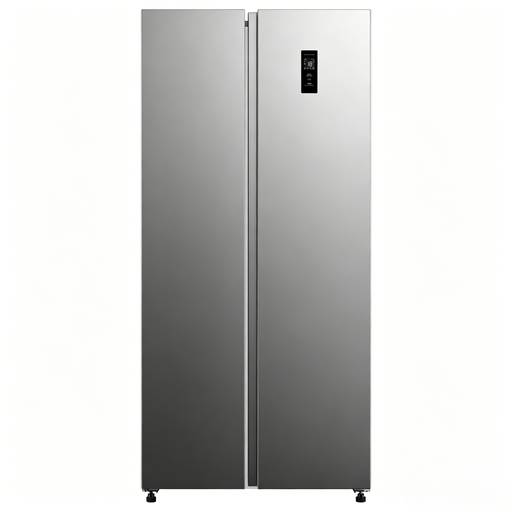 Image unavailable
Sonlu CC-520WE, side-by-side, 444 l, silver
This layout could suit you if you want to set the fridge and freezer temperatures separately and store several fresh foods together.
276 l of fridge space and 168 l of freezer space; four glass shelves in the fridge. No Frost and digital temperature control. Dimensions: 830 × 610 × 1785 mm; energy efficiency class E.
View at Joybuy
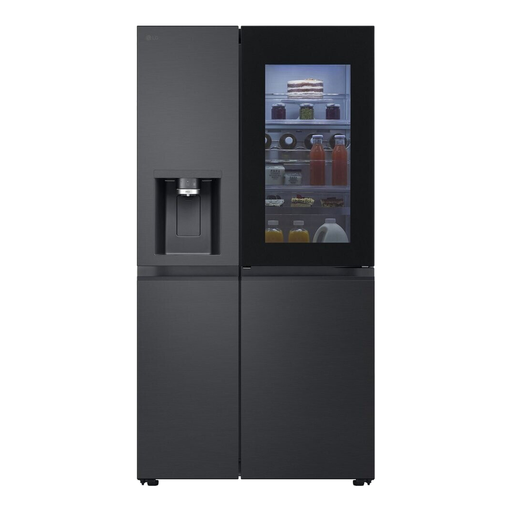 Image unavailable
LG GSXB90EVDD InstaView side-by-side, black
This model is worth considering if you need plenty of fridge space for your weekly shop and have enough room to fit it.
628 l total capacity, including 407 l of fridge space and 221 l of freezer space; 91,3 cm wide. No Frost, Multi-Airflow and Super-Cool function.
View at Joybuy
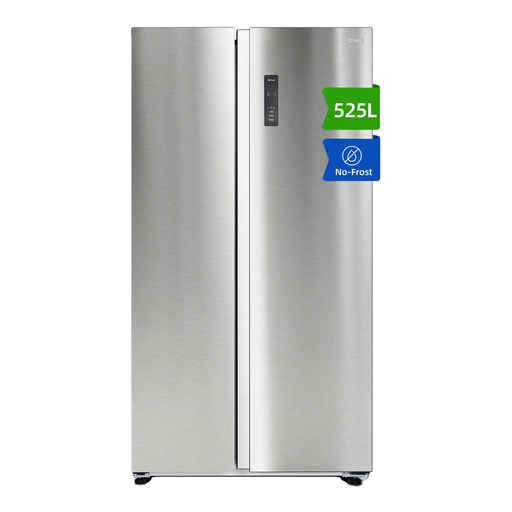 Image unavailable
CHiQ JR525WSE, side-by-side, 525 l, energy efficiency class E
An option if you need freezer space regularly as well as room for fresh food in the fridge.
333 l of fridge space and 192 l of freezer space; adjustable shelves, No Frost and touch controls.
View at Joybuy
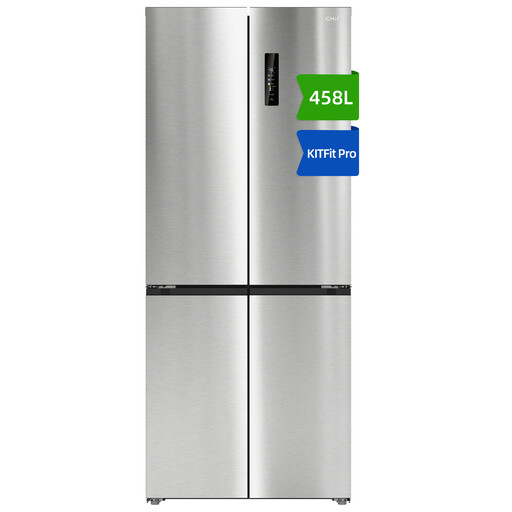 Image unavailable
CHiQ JR460WSE Cross-Door, 458 l, energy efficiency class E
Consider this model if space is limited and the stated door clearance needs to suit your kitchen.
300 l of fridge space and 158 l of freezer space. The description specifies a flush-fit KITFit Pro design with a 4 mm side clearance and 90° door opening, as well as No Frost and touch controls.
View at Joybuy
Frequently asked questions
Can I keep cut melon in the fridge until my next weekly shop?
Don’t plan to keep it that long. The Federal Centre for Nutrition recommends keeping packaged, pre-cut melon chilled for only a short time and eating it within a day. The BfR advises eating it promptly or keeping it refrigerated at all times. According to the BfR, melon left unrefrigerated for several hours should be thrown away as a precaution.
Is 7 °C cold enough for cut melon?
For pre-cut melon, the BfR recommends keeping it continuously chilled, preferably at +4 to +6 °C. The consumer advice centre gives 7 °C as a general guide for the top shelf of a fridge. So check the temperature where you actually store the melon rather than relying only on the thermostat setting.
How can I store and prepare melon hygienically?
Use clean hands, knives, chopping boards and worktops. Cover any pieces you’re not going to eat straight away and chill them promptly. The BfR warns that germs can pose a risk if melon is stored without refrigeration.
What information is shown on the EU energy label and product information sheet?
The EU energy label for household refrigeration appliances shows information including the efficiency class from A to G, annual consumption in kWh, and fridge and freezer capacities. The European Commission explains this labelling. It doesn’t tell you how long a particular melon can be stored safely.
What should I do with my old fridge when buying a new one in Germany?
Old electrical appliances must not go in household rubbish. The German Federal Ministry for the Environment explains that, under certain conditions, online retailers must also take back old appliances. When you buy, check whether return or collection can be arranged and what delivery or installation services are available.


