
Lieferung heute & morgen

Qualitätsgarantie

Willkommens-Angebote freischalten: KOSTENLOSE Lieferung | Bis zu 80 % RABATT | Kostenlose 30-Tage-JoyPlus-Testphase
App herunterladen
When buying men’s running shoes, shoppers often focus first on weight, colour or prominent technology names. However, other features are more important for genuine running comfort. A shoe can be lightweight but too tight in the forefoot. A soft midsole may feel comfortable, yet provide too little support during faster sessions. And a grippy tread is not automatically the right choice for asphalt.
This buying guide explains which details really matter when choosing men’s running shoes and which common purchasing mistakes you can avoid.
Lightweight running shoes can feel pleasantly dynamic during short road runs and speed training. On longer distances, however, sufficient cushioning, a suitable sole construction and secure heel hold are also important. Weight alone says little about stability or durability.
Cushioned running shoes can differ considerably in firmness, energy return and construction. A soft midsole is not automatically suitable for every running style. Comfortable cushioning can be useful for long training runs; during HIIT or rapid changes of direction, controlled transitions and a stable platform are often more important.
The same EU size can fit differently depending on the shape of the last. Foot length, foot width and the space in front of the toes are the key factors. Running shoes should generally leave a little room at the front. Feet can also swell more during longer runs. A roomy toe box or half a size larger may then be more suitable, provided it does not cause the heel to slip.
Pay attention to the material and positioning of the cushioning. EVA foam is common in many running shoes and can have different properties depending on the formulation. Multi-layer foam constructions or specialised plates can alter the way the shoe rolls through the stride and affect stability.
For long-distance running shoes, a consistently supportive midsole is usually more practical than an extremely soft sensation when standing still. If you are preparing for a marathon, also check whether the shoe feels sufficiently stable for your pace and training distance. A marathon running shoe is not necessarily the right choice for relaxed everyday runs.
Stable running shoes should guide the foot in a controlled way without restricting it uncomfortably. Check whether:
Technologies such as a widened platform, a TPU element or a reinforced heel construction can affect stability. However, this does not justify any general promise of injury prevention. If you already have discomfort, individual advice from a medical professional may be appropriate.
Breathable sports shoes with mesh or woven uppers allow air and moisture to circulate more easily. This is particularly relevant in warm weather and during longer sessions. However, very open mesh does not always provide sufficient protection on gravel paths or in trail conditions.
For men’s trail running shoes, the tread, rubber compound and lug arrangement are crucial. Wet surfaces or loose sand require considerably more grip than smooth asphalt. A versatile tread is practical for mixed routes, whereas an aggressive trail tread may roll less efficiently on the road.

Why this product suits the profile: This unisex model is designed for road running as well as the transition to paved and unpaved paths. Mesh and woven elements help support ventilation during regular training sessions.
The product description lists both a standard and a narrower fit. This makes it easier to match the choice to your foot width instead of deciding based solely on weight.
High-elastic EVA midsole, sandwich mesh and ROCKYTEC rubber outsole according to the product details.
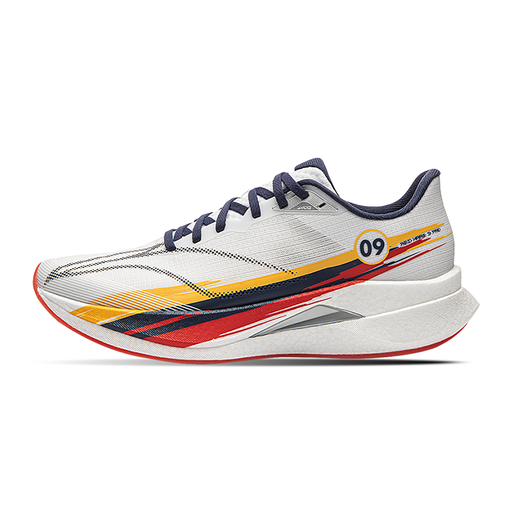
Why this product suits the profile: This model is aimed at runners who value a broad platform, a woven upper and pronounced roll-through during training and higher-mileage running.
The widened platform and stated TPU content address the common need for stability, without judging the model solely by its low weight.
Two-layer BOOM foam construction, BOOM-FIBER woven material and GCR rubber outsole according to the product description.
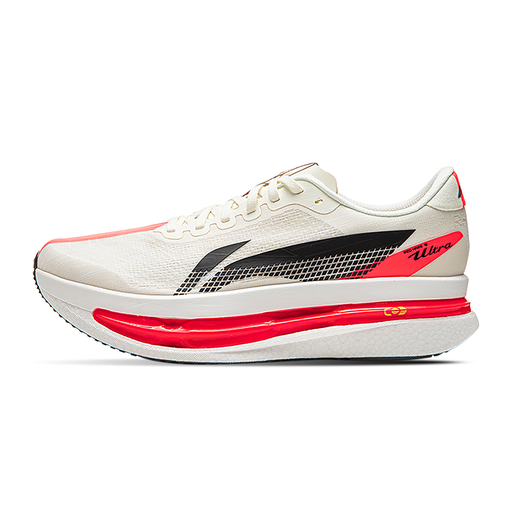
Why this product suits the profile: For intensive training, HIIT and ambitious race preparation, this model offers a three-part midsole construction and an integrated fibreglass support plate according to the manufacturer’s details.
The product details explicitly describe a close-fitting shape. If you need a roomy toe box, check the size chart and consider choosing half a size larger if necessary.
Three-layer BOOM midsole, breathable BOOM-FIBER upper and GCU outsole according to the product description.
Measure both feet in the afternoon and use the longer foot length as your guide. Wear the socks you use for running when trying the shoes on. There should be a little space between your longest toe and the front of the shoe, while the heel should remain secure.
Lifespan depends on body weight, running surface, training volume, sole material and care. It is therefore not possible to give a reliable fixed mileage figure. Check regularly for:
Clean running shoes according to the manufacturer’s instructions. Many models should only be cleaned with a damp cloth or by hand, then air-dried. Machine washing, strong cleaning products and direct heat can damage materials and adhesive bonds.
We have put together a complete, regularly updated list of products that fully meet these strict selection criteria and the safety regulations applicable in the EU.
There should be a small amount of space between your longest toe and the front of the shoe. The shoe should not press against your toes as your foot rolls forwards, but it should hold the heel and midfoot securely. If you have wider feet, models with a roomy toe box or half a size larger may be worth considering.
Replacement is advisable when the cushioning, tread, heel hold or upper noticeably deteriorates. As wear varies depending on the surface and training volume, the visible condition of the shoes should matter more than an arbitrary mileage figure.
Models with a moderate tread can work well on mixed routes. Deep lugs are primarily designed for soft, uneven or slippery surfaces and may roll more noisily and less smoothly on asphalt. For mainly road-based running, traditional road running shoes are generally the more suitable category.