
Lieferung heute & morgen

Qualitätsgarantie

Willkommens-Angebote freischalten: KOSTENLOSE Lieferung | Bis zu 80 % RABATT | Kostenlose 30-Tage-JoyPlus-Testphase
App herunterladen
A men’s jacket needs to perform reliably in everyday life, not feel restrictive on a walk, and depending on the model, offer protection when camping or hiking. The range stretches from a lightweight transitional jacket to a warming winter jacket for men. It’s precisely this variety that makes buying one so challenging.
Many product descriptions make big promises, yet key details are missing. Three common pitfalls are:
If you match the material, construction and intended use, you’ll significantly reduce the risk of a bad purchase.
With a waterproof men’s jacket, the product description should include specific details about the membrane, taped seams or water column. The water column is given in millimetres and describes the pressure a material can withstand under standardised conditions. However, it is not a sole guarantee of dry clothing: zips, seams, the hood and cuff finishes are equally important.
For city use, a water-repellent surface can be sufficient. When hiking or camping, an outdoor jacket for men with an adjustable hood, zipped pockets and windproof cuffs is more practical. These specifications should be understood as manufacturer or product claims, not as a blanket guarantee for every weather condition.
A lined jacket for men can be filled with synthetic fibre, fleece or down. Synthetic fillings are generally easy to care for and hold their shape even in changing conditions. Fleece works well as a warming mid-layer or as a standalone fleece jacket for men, but it doesn’t usually offer automatic protection from heavy rain.
A quilted jacket for men or puffer jacket for men distributes the insulation in chambers. Check the following:
The layering principle is often more flexible than a single very thick jacket: fleece, an insulation layer and weather protection can be combined depending on your activity.
Polyester and nylon are commonly used for outer materials because they are lightweight and relatively easy to care for. Elastane can improve freedom of movement. With a black men’s jacket, light abrasion marks and care instructions are also relevant, because incorrect washing can damage the surface or coating.
Measure your chest, shoulders and sleeve length before buying. With a 3-in-1 jacket for men, you should also check the measurements of the outer and inner jackets. If you plan to wear several layers underneath, don’t decide based on your usual ready-to-wear size alone – use the size chart for that specific model.
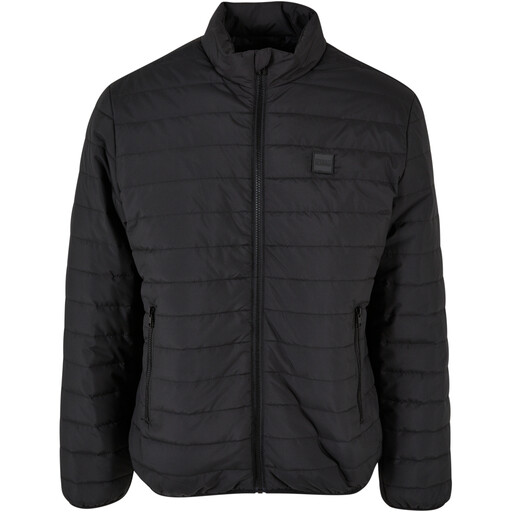
Why this product fits the profile: This lightweight black jacket is designed for everyday wear, commuting and mild transitional days.
The product details state 100% polyester, an insulating filling and an elasticated hem. This means the material and construction features are clearly described.
Regular fit, practical hand pockets and a lightweight polyester construction.

Why this product fits the profile: The longer cut, hood and zipped pockets make it suitable for cold commutes and winter leisure activities.
The details mention a wind- and water-repellent outer material, a full-length zip with chin guard and ventilation options.
Long cut, adjustable hood and zipped side pockets; described as having a down filling.
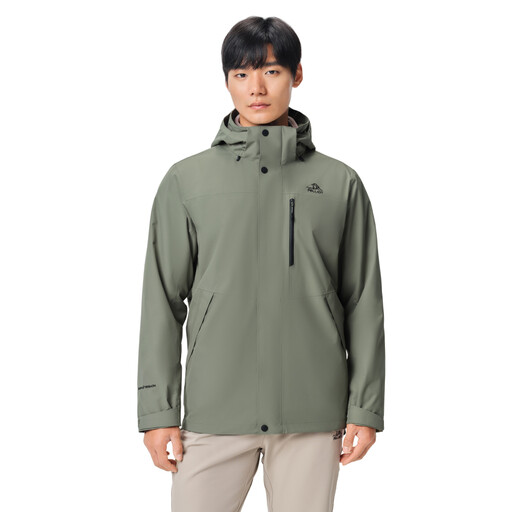
Why this product fits the profile: The combination of an outer jacket and a removable lining is designed for camping, hiking and fluctuating temperatures.
The product details state a water column of 35,900 mm H₂O according to JIS, breathability of 16,000 g/(m²·24 h) and abrasion-resistant materials. These values should be considered in relation to actual use.
3-in-1 construction, adjustable cuffs and separately wearable inner and outer jackets.
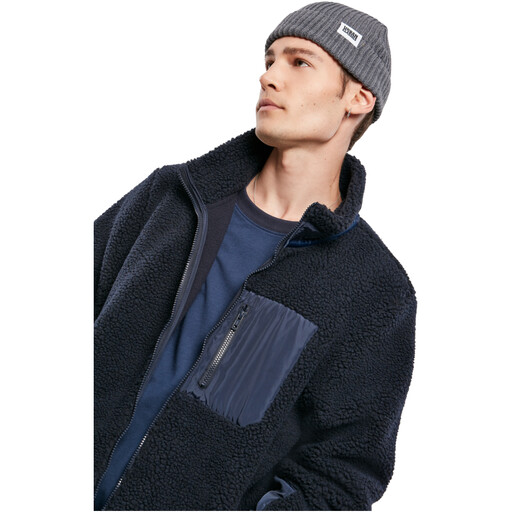
Why this product fits the profile: The combination of sherpa material, stand-up collar and dark navy colouring suits casual wear and urban outfits.
The material, composition and care instructions are clearly stated. The stand-up collar adds to weather protection, but does not replace a waterproof outer membrane.
Sherpa material, chest pocket with patch and side zip pockets.
We’ve put together a full, regularly updated list of products that fully meet these strict selection criteria and the safety regulations in force in the EU.
That depends on the temperature, precipitation and your activity level. For cold city commutes, longer puffer or quilted jackets are a good option. For changeable weather, a 3-in-1 jacket for men is more flexible, because the inner and outer jackets can be worn separately or combined.
It’s not possible to give a reliable lifespan. What matters is how often you wear it, friction, washing temperature and drying. Zips should be fully closed before washing the jacket. Coated models often cannot be tumble-dried; always follow the care label.
Look for a specific water column rating, details about seam construction, the hood and fastenings. A waterproof outer jacket can still feel less comfortable during high physical activity if the breathability isn’t adequately described. For everyday use, a windproof or water-repellent jacket is often sufficient.