
Lieferung heute & morgen

Qualitätsgarantie

Willkommens-Angebote freischalten: KOSTENLOSE Lieferung | Bis zu 80 % RABATT | Kostenlose 30-Tage-JoyPlus-Testphase
App herunterladen
A good performance jacket is a versatile companion that will see you reliably through changeable weather—whether on your daily commute, a weekend hike, or a challenging trek. However, the selection of models, materials, and features can be overwhelming. This guide is designed to help you understand the characteristics of different jacket types and make an informed decision that suits your activities and needs.
As a Joybuy Product Recommendation Officer, my mission is to provide you with clear, objective guidance to help you find the perfect jacket for your requirements.
Choosing the right jacket depends on three key factors: the material, the construction, and the functional details. Understanding these aspects will help you separate the wheat from the chaff.
The outer layer of a performance jacket is crucial for weather protection. This is where hardshell materials primarily come into play. A hardshell jacket is designed to offer maximum protection from the elements. Its most important properties are:
A fleece jacket is ideal as a warming mid-layer or for dry, cool days. It is lightweight, dries quickly, and offers excellent thermal insulation at a low weight.
A particularly flexible solution is the men's 3-in-1 jacket. It combines a waterproof outer jacket (shell) with a removable inner jacket, usually made of fleece or a synthetic insulation material. This system offers three wearing options:
This makes a 3-in-1 jacket an excellent transitional jacket for autumn and spring, as well as a fully-fledged winter jacket.
For use as a hiking jacket or trekking jacket, functional details are essential. Look for an adjustable hood that doesn't restrict your field of vision, adjustable cuffs, and an adjustable hem to prevent wind and rain from getting in. Sufficiently large and strategically placed pockets that are accessible even with a backpack hip belt increase practicality.
Here, we present three models that cover different requirements and use cases.
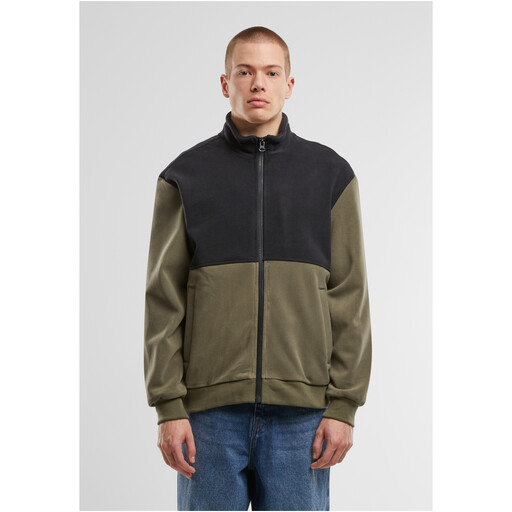
Why it stands out: This jacket from Urban Classics combines a modern colour-block design with the functional warmth of polar fleece. It is designed as a standalone jacket for cool, dry days or as a highly effective insulation layer under a hardshell.
Benefits at a glance:
Who is this jacket for? Ideal for men looking for a stylish and warm fleece jacket for everyday life, leisure, or as a flexible mid-layer within a layering system.
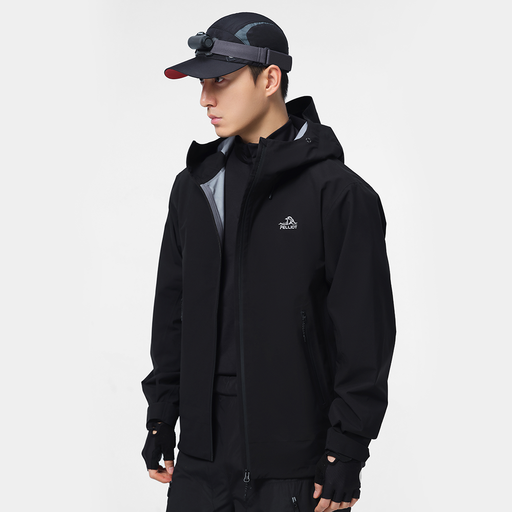
Why it stands out: This hardshell jacket from PELLIOT is designed for uncompromising weather protection. It offers stormproof, waterproof, and wind-resistant performance, paired with high breathability, making it an excellent choice for demanding outdoor activities.
Benefits at a glance:
Who is this jacket for? Suitable for outdoor enthusiasts who need a robust and reliable trekking jacket or hiking jacket that provides protection even in the harshest conditions and can be flexibly combined with various insulation layers.
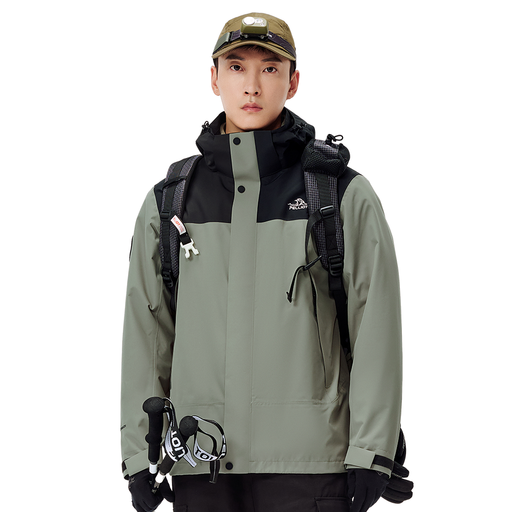
Why it stands out: This model is a classic men's 3-in-1 jacket that offers maximum versatility for all four seasons. It consists of a durable, weatherproof outer jacket and a removable thermal inner liner.
Benefits at a glance:
Who is this jacket for? Perfect for men seeking a single, adaptable jacket for a wide range of activities and weather conditions—from daily commuting and camping to mountain hiking.
If you're looking for a different type of outerwear for everyday or city use, a classic coat might be a suitable alternative. Discover our selection of [men's black coat] for more options.
A hardshell jacket is primarily designed for maximum weather protection: it is completely windproof and waterproof. Its material is less stretchy. A softshell jacket, on the other hand, focuses on breathability and freedom of movement. It is usually only water-resistant, not completely waterproof, but is more flexible and often more breathable, making it ideal for intense activities in drier weather.
To maintain the function of the membrane, performance jackets should be cleaned regularly. Always follow the manufacturer's care instructions. Generally, a gentle machine wash with a special detergent for technical apparel is recommended. Fabric softener should be avoided as it can clog the pores of the membrane. The water-repellent finish on the outer layer can be reactivated with heat (e.g., in a dryer on low heat, if permitted by the manufacturer) after a few washes or renewed with a waterproofing spray.
The water column is a unit of measurement for the waterproofness of technical textiles. It indicates how much water pressure a material can withstand before water penetrates. This is measured by placing a cylinder on the fabric and filling it with water. A water column of 10,000 mm, for example, means the material can withstand the pressure of a 10-meter-high column of water. For reliable protection in the rain, jackets with a water column rating of about 10,000 mm or more are considered very waterproof.